What Is Limp Percentage in Poker?
Limp percentage is a HUD stat showing how often a player just calls preflop instead of raising. Here is what it means, typical values, and how to exploit it.
On this page · 7 sections
Limp percentage is a heads-up display (HUD) stat that shows how often a player enters a pot by just calling the big blind preflop rather than raising. A high limp percentage is one of the clearest tells you will find in a database: it marks a passive, usually recreational player who is giving up the initiative before the flop is even dealt. Understanding this single number lets you adjust faster than almost any other stat on your HUD.
What limp percentage actually measures
There are two kinds of limps, and good tracking software separates them. An open-limp happens when a player is first to voluntarily enter the pot and only calls the big blind instead of raising. An over-limp (or limp-behind) happens when someone limps after one or more players have already limped. Most HUDs report open-limp percentage as the headline stat because it is the more damning one.
The number is calculated as the count of limps divided by the total opportunities to open the pot, expressed as a percentage. If a player open-limps 30 times over 300 opportunities, their open-limp percentage is 10 percent. Because it is a preflop stat, it stabilizes fairly quickly — a few hundred hands gives you a usable read.
Typical limp percentage values
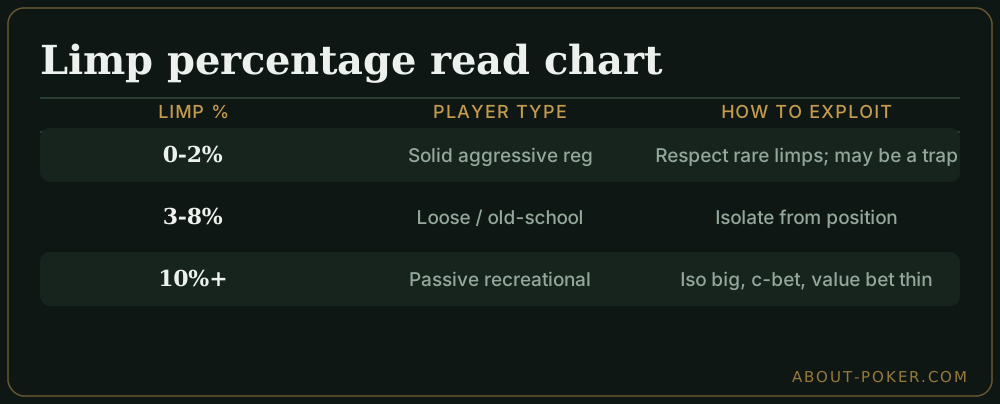
Against competent opposition you will see very low numbers, and the further you go up in stakes the closer to zero they get.
- 0 to 2 percent: A solid, aggressive regular. They raise or fold and rarely limp. Treat their limps, when they happen, as a possible trap or a deliberate multiway line.
- 3 to 8 percent: A slightly loose or old-school player who occasionally limps pairs and suited hands. Still competent but exploitable.
- 10 percent and up: A passive recreational player. This is your target. They are treating the limp as a “cheap look” at the flop and hemorrhaging expected value doing it.
Why open-limping loses money
Open-limping fails for three connected reasons. First, it surrenders the chance to win the pot immediately with a raise when everyone folds. Second, it caps your perceived range — regulars know limpers rarely hold premiums, so you get no respect and little fold equity later. Third, it invites a crowd: cheap entry pulls in more players, which lowers your equity share and makes the pot harder to navigate out of position.
Compare the lines with pocket sixes in a full-ring game. If you open-limp, you might see a five-way flop where your set-mining odds are your only real path to profit, and you have no initiative. If you raise, you either take the blinds down uncontested or play a heads-up pot with the betting lead. The raise is simply worth more chips over time.
A worked example
You are on the button with Ah Ts. The under-the-gun player, whose HUD shows a 22 percent limp percentage over 400 hands, open-limps. This is a textbook isolation spot. You raise to 4 or even 5 big blinds — larger than a standard open, because you want to punish the limp and play heads-up in position.
Say the limper calls and the flop comes Kd 7c 3h. You hold ace-high with a gutshot backdoor at best, but this opponent’s limping range is full of weak, unpaired hands and small pairs that missed. A continuation bet of half the pot will fold out most of the hands that beat you. Because limpers are both passive and rangy, your ace-high plus a c-bet is often the best hand or takes the pot down outright. This kind of thin, aggressive line is exactly what you want to develop when you read and use a poker HUD effectively.
How to exploit high limpers
Your plan against a frequent limper has three parts:
- Isolate relentlessly. Raise their open-limps with a wide value-and-playability range from position, sizing up to 4 to 6 big blinds to discourage callers behind and get heads-up.
- Bet postflop. Limpers fold too much to sustained aggression and rarely have the nutted ranges that solid regulars do. Fire continuation bets and second barrels on cards that miss their capped range.
- Value bet thin. When you hit, bet for value more often and slightly larger, because passive players call down with weak pairs far more than they raise.
Common mistakes reading the stat
The biggest error is treating all limps the same. A 2 percent open-limper who suddenly limps may be trapping with a monster or setting up a multiway pot with a suited hand — do not blast them the way you would a station. Second, watch the sample size: a 15 percent limp rate over 20 hands is noise. Third, do not confuse limp percentage with a low VPIP; a player can limp a lot and still be “tight” in raw hands played. Read it alongside VPIP, PFR, and aggression factor from your full HUD stat panel so you build a complete picture rather than reacting to one number.
Quick checklist
- Separate open-limp from over-limp when reading the stat.
- Treat anything at 10 percent or higher as a recreational, exploitable player.
- Isolate limpers with larger raises to play heads-up in position.
- Continuation bet and value bet thinner than usual against them.
- Respect the rare limp from a player whose baseline limp percentage is near zero.
Frequently asked
What is a good limp percentage in poker?
For a winning player, the ideal open-limp percentage in cash games is essentially zero. Open-limping into an unopened pot forfeits the chance to win it preflop and invites callers behind you. Any limp percentage above roughly 5 to 10 percent flags a weak, passive player.
Is limping ever correct?
Over-limping behind other limpers can be fine with speculative hands like small pairs or suited connectors when you close the action cheaply and multiway. Open-limping first into the pot is almost never the strongest play in No-Limit Hold'em and is a reliable sign of an inexperienced opponent.
How do I exploit a player with a high limp percentage?
Raise larger to isolate them heads-up, target their limps from position, and value bet thin postflop because limpers rarely have strong ranges. They fold to aggression more than solid regulars, so barreling and c-betting works well against them.