What Is Squeeze Percentage in Poker?
Squeeze percentage is a HUD stat showing how often a player re-raises after an open and a call. Learn what it means, typical values, and how to use it.
On this page · 7 sections
Squeeze percentage is a heads-up display (HUD) stat that measures how often a player re-raises preflop after there has already been a raise and at least one call. It is a more specialized cousin of the standard 3-bet stat, and it isolates one of the most aggressive and profitable preflop moves in the game: the squeeze play. Reading it correctly tells you whether an opponent is applying pressure with a wide, exploitable range or only ever squeezing the nuts.
What squeeze percentage measures
The situation is specific. Someone opens (raises), someone else calls the open, and the action reaches a third player. If that third player re-raises, the tracking software counts it as a squeeze. Divide those squeezes by the number of times the player faced this exact open-plus-caller situation and you get the squeeze percentage.
The reason the spot is powerful is that you are attacking two ranges at once. The original raiser now has to worry about acting with a live caller behind them, and the caller has already shown a capped range by flatting rather than 3-betting. The dead money from the open and the call sweetens the pot, so a well-timed squeeze wins a lot without a showdown. Because it is a narrow situation, this stat needs a larger sample than something like VPIP before you should trust it.
Typical squeeze percentage values
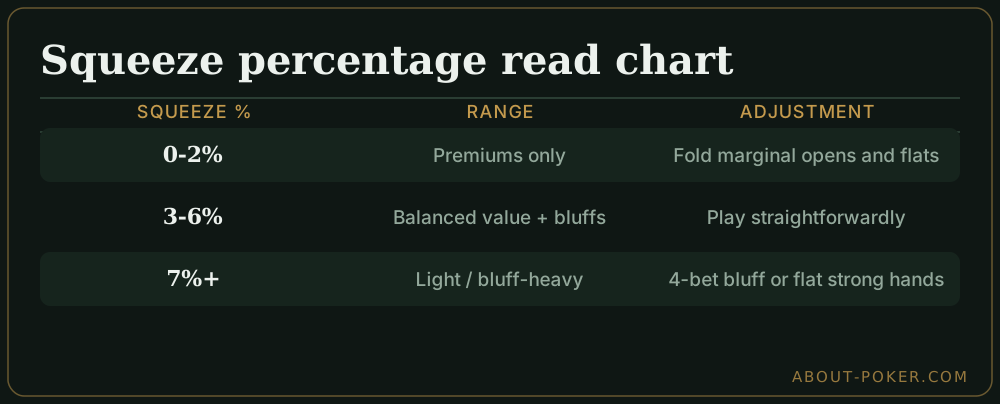
- 0 to 2 percent: A tight, cautious player who only squeezes premium hands like queens-plus and ace-king. When they squeeze, fold everything marginal.
- 3 to 6 percent: A balanced, competent regular blending value and bluffs. Respect their range but do not fold your strong holdings.
- 7 percent and up: An aggressive player squeezing light. You can flat in position with strong hands to trap, or 4-bet them wider as a bluff because their range is loaded with air.
Why the squeeze works
Two mechanics drive its profitability. First, the caller’s range is capped: strong hands usually 3-bet themselves rather than flat, so the flatter rarely has aces or kings. Second, the opener is often opening wide, especially from late position, and cannot continue against a re-raise with a large chunk of that range while a caller lurks behind. When you squeeze, you are betting that both players fold often enough to make the play immediately profitable, and when you get called you still have equity and the betting lead.
A worked example
You are in the big blind with Ac Ks. A loose button open-raises to 2.5 big blinds and the small blind, whose HUD shows a wide, passive flatting tendency, calls. You now have a premium hand, dead money in the pot, and a capped caller in front of you.
This is an ideal squeeze. You size up because there is an extra player in the pot — say to 12 big blinds rather than a standard 3-bet of 9 or 10. The larger size charges both opponents to continue and denies the small blind good odds to peel with a speculative hand. If both fold, you scoop a healthy pot preflop with ace-king. If the button 4-bets, you have a clear all-in or call depending on stack depth, and if the small blind cold-calls, you play a strong hand in position-adjacent fashion with the initiative. Recognizing which opponents flat wide enough to make this profitable is exactly the kind of read a well-built HUD gives you.
How to use the stat on both sides
When you are considering a squeeze: target situations where the opener is wide (late-position steal) and the caller is a passive, capped flatter. Squeeze both for value with premiums and as a bluff with hands that block continues, like ace-x suited. Size up per caller.
When you are facing a squeezer: check their squeeze percentage. Against a 2 percent squeezer, over-fold your opens and flats. Against a 9 percent squeezer, tighten your open-flatting but be willing to 4-bet bluff or flat your strong hands to punish their light range. Cross-reference with the advanced steal and postflop stats to confirm whether their aggression continues after the flop.
Common mistakes
The most frequent error is squeezing too small. A normal 3-bet size gives the caller good odds to peel and defeats the purpose; you must size up for the dead money and the extra player. Second, players squeeze into ranges that are not actually capped — if the “caller” is a strong reg who flats aces to trap, your bluff runs into a monster. Third, ignoring sample size: because the exact open-plus-call spot is uncommon, a squeeze percentage over 50 hands is close to meaningless. Anchor it against the player’s overall HUD stat profile rather than reading it alone.
Quick checklist
- Squeeze percentage is a 3-bet made specifically after an open and at least one call.
- Balanced value sits around 3 to 6 percent; treat 7 percent-plus as light and exploitable.
- Size up per caller — a squeeze should be bigger than a standard 3-bet.
- Target wide openers and capped, passive callers.
- Demand a large sample before trusting the number.
Frequently asked
What is a good squeeze percentage in poker?
A balanced regular squeezes somewhere around 3 to 6 percent of the time when the situation is available. Much higher and they are squeezing too light and can be 4-bet or flatted in position; much lower and they only squeeze premiums, so you should fold most marginal hands to them.
What is a squeeze play in poker?
A squeeze is a re-raise made after one player has opened and at least one other has called. You are applying pressure to two ranges at once, exploiting the fact that the caller is usually capped and the opener now faces a raise with players behind. It is one of the most profitable preflop bluffs.
How big should a squeeze be?
Because there is a caller in the pot, squeeze bigger than a normal 3-bet. A common rule is roughly the size of the open plus one extra bet per caller, often landing around 4x to 5x the original raise. In position you can go a touch smaller; out of position, size up.