Adjusting to Antes in MTTs
Adjusting to antes in MTTs: how antes sweeten the pot, widen stealing and defending ranges, and change your push-fold math once the ante stage begins.
On this page · 6 sections
Adjusting to antes in MTTs is one of the most important gear changes in tournament poker. The moment antes are introduced, every pot contains extra dead money before the action even begins, and that single fact shifts the entire game toward aggression. If you keep playing the tight, showdown-oriented ranges that made sense before antes, you leave chips on the table on every orbit.
The reason is pure arithmetic. A bigger starting pot means a bigger reward for winning it, while the cost of attempting a steal stays roughly the same. That improves the price on stealing, defending, and shoving all at once, and the players who widen correctly quietly accumulate chips while everyone else waits for hands.
How antes sweeten the pot
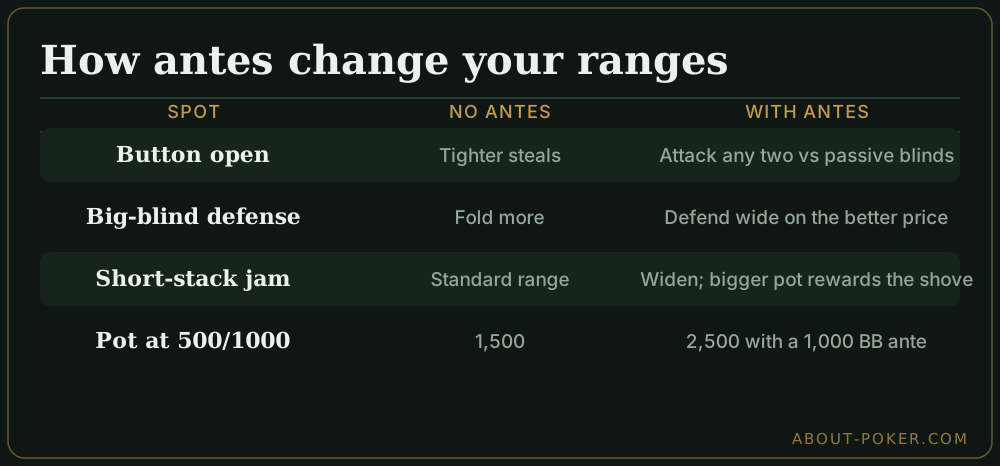
Consider a hand with blinds of 500 and 1,000. Before antes, the pot you are fighting over preflop is 1,500. Add a 1,000 big blind ante and the pot is 2,500 before anyone acts — a 67 percent increase in dead money. Now a standard 2.2 big blind steal is risking 2,200 to win 2,500 instead of 1,500. The pot has become far more worth taking.
Most modern tournaments use the big blind ante, where only the big blind posts a single ante equal to one big blind. It keeps the game fast and clean while producing the same effect. The strategic consequences are identical to the classic per-player ante, covered in the core playing with antes guide: more dead money, more incentive to fight for it.
Wider stealing ranges
Because the pot is bigger, your break-even steal frequency drops. Roughly, a min-raise steal that risks about one big blind to win the 2.5 big blind pot only needs to succeed a bit over a third of the time to profit immediately, ignoring what happens when called. That low bar is why late position becomes a printing press once antes are live.
From the cutoff, button, and small blind, open wide. Any two cards is an exaggeration, but hands like K7 offsuit, Q9 offsuit, and any suited connector become clear opens from the button when the blinds are not fighting back. This is the heart of ante stealing in tournaments: attack the dead money before someone else does.
Defend your big blind wider
Antes cut both ways. When you are in the big blind facing a steal, you are getting a better price to defend because the ante money is already yours in the pot. Against a 2.2 big blind open into a pot that now holds your ante contribution, you often only need to call one more big blind or so to see a flop, so you defend a very wide range and stop folding hands that can flop equity.
This does not mean call with trash and give up. It means widen your flatting and three-betting ranges to punish the wide stealing ranges antes encourage, then play well postflop with position awareness. Folding your big blind too much in the ante stage is one of the most common and costly leaks.
A worked example
Blinds 1,000 / 2,000 with a 2,000 big blind ante, so the pot is 5,000 before the flop. You are on the button with 25 big blinds and it folds to you holding J8 suited. You open to 4,400 (2.2 big blinds).
You are risking 4,400 to win 5,000 immediately. If both blinds fold more than about 47 percent of the time — which they routinely do at this stack depth — the raise profits before you ever see a flop, and that ignores the equity J8 suited holds when called. Without the ante, you would be risking the same amount to win only 3,000, a materially worse price. The ante is exactly what turns this marginal button open into a clear, profitable steal.
Push-fold math shifts too
Short-stacked play changes with antes as well. Because the pot is larger, a shove risks the same stack to win more dead money, so your jamming ranges widen and the mathematically correct shove sizes reach a bit deeper. Nash and other push-fold charts are calculated with antes precisely because they inflate the reward for taking the blinds and ante uncontested.
The practical upshot: once antes appear, treat every steal as cheaper, every big-blind defense as better priced, and every short-stack jam as more attractive. Recalibrate your whole preflop game the instant the ante stage begins.
Checklist for the ante stage
- Widen your late-position opening ranges the moment antes are introduced.
- Defend your big blind wider — the ante gives you a better price to see a flop.
- Attack the players who still fold too much; the dead money rewards constant pressure.
- Use ante-inclusive push-fold charts, not old no-ante ranges, when short.
- Do not overcall into raisers just because pots are bigger; keep position and equity in mind.
Frequently asked
How do antes change tournament strategy?
Antes add dead money to every pot, which raises the reward for winning it and makes stealing far more profitable. You open wider, defend your big blind wider, and jam a wider range in push-fold spots because the immediate pot is bigger relative to your risk.
What is a big blind ante?
A big blind ante is a single ante posted by the big blind each hand that equals the size of the big blind, replacing the older system of every player posting a small ante. It speeds up the game and produces the same dead-money effect.
Should I steal more once antes kick in?
Yes. With antes in the pot, a successful steal wins more chips for the same raise size, so your break-even success rate drops. This is why the ante stage is the stealing stage and blinds get attacked relentlessly from late position.