Rebuy & Add-On Strategy
Rebuys and add-ons change the early math of a tournament. Learn how to play the rebuy period, when to reload, and whether to take the add-on, with numbers.
On this page · 5 sections
Rebuy tournaments flip the usual survival logic on its head. In a freezeout, busting ends your tournament. In a rebuy, busting early just means reaching into your pocket and reloading. That single option changes how aggressively you should play in the opening levels — and it turns the “should I take the add-on” decision into a straightforward value calculation. This page covers how to play the rebuy period, when to reload, and how to think about the add-on.
Rebuys and add-ons, defined
A rebuy is the option to purchase more chips during a defined early window — the “rebuy period,” often the first hour or two. Typically you can rebuy only when your stack is at or below the starting stack, and you can always rebuy after busting. Some events allow unlimited rebuys; others cap them.
An add-on is a separate, one-time purchase offered at the end of the rebuy period. Unlike a rebuy, any player can take the add-on regardless of stack size, and it usually comes at a favorable chip-per-dollar rate — often the best value chips in the whole event.
The strategic upshot: a rebuy event is really a higher buy-in tournament in disguise. If the buy-in is $100 with unlimited rebuys and an add-on, your true cost to play it well might be $300-$500. That has to fit your bankroll and variance tolerance before you sit down.
How to play the rebuy period
Because reloading is cheap and available, the rebuy period rewards controlled aggression. The chips are, in a sense, “on sale,” and a big stack going into the freezeout phase (after rebuys close) is extremely valuable. So:
- Gamble with equity. Get it in with strong draws, big pairs, and coinflips you’d sometimes pass in a freezeout. Busting just means a reload, and doubling up early builds a stack you keep for the rest of the tournament.
- Don’t gamble blindly. “Loose” doesn’t mean handing chips to opponents with no equity. You’re taking +EV or breakeven gambles to build a stack, not spewing.
- Track your spend. Set a mental cap on rebuys that fits your bankroll. The format punishes players who tilt-reload past what the event is worth to them.
This is the direct opposite of freezeout discipline, and it’s why the same player should play these two formats very differently early. (For a related format where you re-enter with a fresh seat instead of topping up chips, see rebuy and re-entry strategy.)
The add-on decision
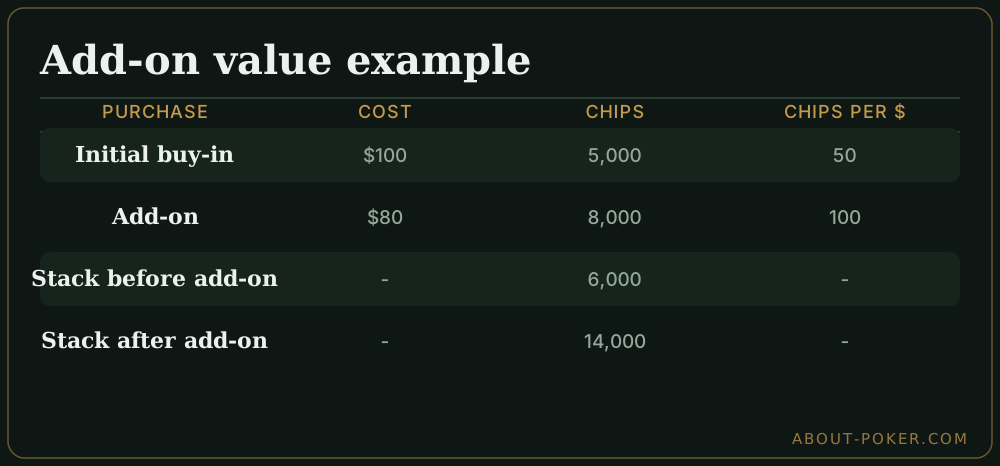
The add-on is usually a clear take, and the math shows why.
Suppose the starting stack is 5,000 chips for a $100 buy-in — that’s 50 chips per dollar. The add-on offers 8,000 chips for $80 — that’s 100 chips per dollar, twice the value of your original buy-in chips. If you intend to keep playing, buying chips at double the initial rate is almost always correct.
A worked example
You’re at the end of the rebuy period with 6,000 chips. Blinds are about to jump to 200/400, so you have roughly 15 big blinds — a workable but not comfortable stack. The add-on is 8,000 chips for $80, at double the chip-per-dollar rate of the buy-in.
Take it. Your stack more than doubles to 14,000 chips (35 big blinds), moving you from a short, shove-or-fold-leaning stack into a flexible, postflop-playable one — and you bought those chips at the best rate available all tournament. The only scenarios where you’d pass are if you already have a huge stack where 8,000 chips barely changes your big-blind count, or if you’ve decided the event isn’t worth further investment for your bankroll.
Now flip it: you’re the chip leader with 90,000 chips (225 big blinds). The same 8,000-chip add-on raises you to 233 big blinds — a negligible edge. Here the add-on is close to neutral in chip-equity terms, though many pros still take it purely because the price per chip is good and every chip has some value.
The bottom line
Play the rebuy period with more aggression than a freezeout — the reload option lets you gamble to build a stack — but keep your total spend inside your bankroll. When the add-on comes, take it whenever it beats your buy-in’s chip-per-dollar rate and you plan to keep playing, which is nearly always. Treat the whole event as the higher-stakes tournament it really is, and budget accordingly.
Frequently asked
What is the difference between a rebuy and an add-on?
A rebuy lets you buy more chips during a set early period, usually only when your stack is at or below the starting amount (or has busted). An add-on is a one-time chip purchase offered at the end of the rebuy period that any player can take regardless of stack size, typically at a good chip-per-dollar rate.
Should I always take the add-on?
Usually yes, if the add-on gives you more chips per dollar than the initial buy-in and you plan to keep playing. It's often the best-value chips you'll buy all tournament. The main exception is when you already have a massive stack where the extra chips barely move your equity, or when you don't want to invest more into a soft-ROI event.
How should I play during the rebuy period?
Looser than in a freezeout. Because you can reload, busting early isn't fatal, so you can gamble to build a big stack with strong draws and coinflips. Just make sure the extra rebuys fit your bankroll — the format's whole point is a higher buy-in in disguise.