Playing Too Many Hands
Playing too many hands is the biggest leak in low-stakes cash. Learn the right VPIP, how position tightens your range, and a fix that saves real money.
On this page · 6 sections
Playing too many hands is the single most common and most expensive leak in low- and mid-stakes cash games. It rarely feels like a disaster in the moment, because each loose call is small. But those calls stack up over thousands of hands, and every one of them drags you into the flop with a hand that is hard to play well. Fixing this one leak often turns a small loser into a small winner.
Why Loose Play Quietly Bleeds Chips
The trouble with weak hands is not that they never win, it is that they win small and lose big. Hands like K8 offsuit, Q9 offsuit, J7 suited, and small offsuit connectors make top pair with a bad kicker, second-best flushes, and dominated straights. When you flop something with these hands, you tend to win a small pot from a hand that missed, and lose a large pot to a hand that has you dominated.
You also pay a hidden tax: you enter far too many pots out of position. When you call a raise from the small blind with a speculative hand, you are committing to playing every street with worse information than your opponent. Even a good player loses money in that seat over time. The fix starts before the flop, and it starts with folding.
What the Right Frequency Looks Like
There is no single magic number, but strong regulars cluster in a predictable range. In a 9-handed full-ring game, winners play roughly 15-20% of hands overall. In 6-max, where there are fewer players to beat, the range widens to about 22-26%. In a tracker these show up as VPIP figures, and a healthy sign is that your PFR (hands you raise with) sits only a few points below your VPIP. A large gap between them means you are calling far too much.
Compare that to the typical losing player, who runs a VPIP of 35, 40, or higher, with a PFR stuck down around 10. That profile screams “sees flop, hopes for the best.” If your numbers look like that, you have found your biggest leak.
Position Changes Everything
The reason a fixed hand range is wrong is that position is worth a huge amount. From under the gun in a full-ring game you should open only your strongest 10-12% of hands, because seven or eight players still get to act behind you. On the button, you can open 45% or more, because only the two blinds remain and you will have position for the rest of the hand. Learning to widen and tighten by seat is the heart of good cash game preflop strategy, and it is why playing the button profitably is so valuable.
A Worked Example
You are on the cutoff in a 6-max 50NL game with 100 big blinds. A tight player opens under the gun to 3bb. You look down at A8 offsuit. It is tempting to call, an ace is pretty, and you have position on the blinds.
Fold. Against a tight UTG range, A8 offsuit is dominated by almost every ace they raise, from AT through AK, and it plays badly postflop. When you flop an ace, you are often crushed; when you flop nothing, you have to give up. This is a textbook hand you win a little with and lose a lot with. The same hand is a clear open if it folds to you on the button, because now you are the aggressor with position and a much wider set of opponents. Same cards, completely different decision, driven entirely by position and initiative. Even trap-looking aces like ace-rag need this discipline.
Common Mistakes That Widen Your Range
Several habits push players into playing too many hands without realizing it:
- Calling raises with “pretty” cards like suited aces and offsuit broadways out of position, hoping to flop big.
- Limping into pots with speculative hands instead of folding or raising, which invites the field in and denies you initiative.
- Defending the small blind too wide, the worst seat at the table, where you will be out of position for the whole hand.
- Playing every suited hand, when many suited hands (like Q4 suited) flop only weak draws and dominated pairs.
A Simple Fix You Can Apply Tonight
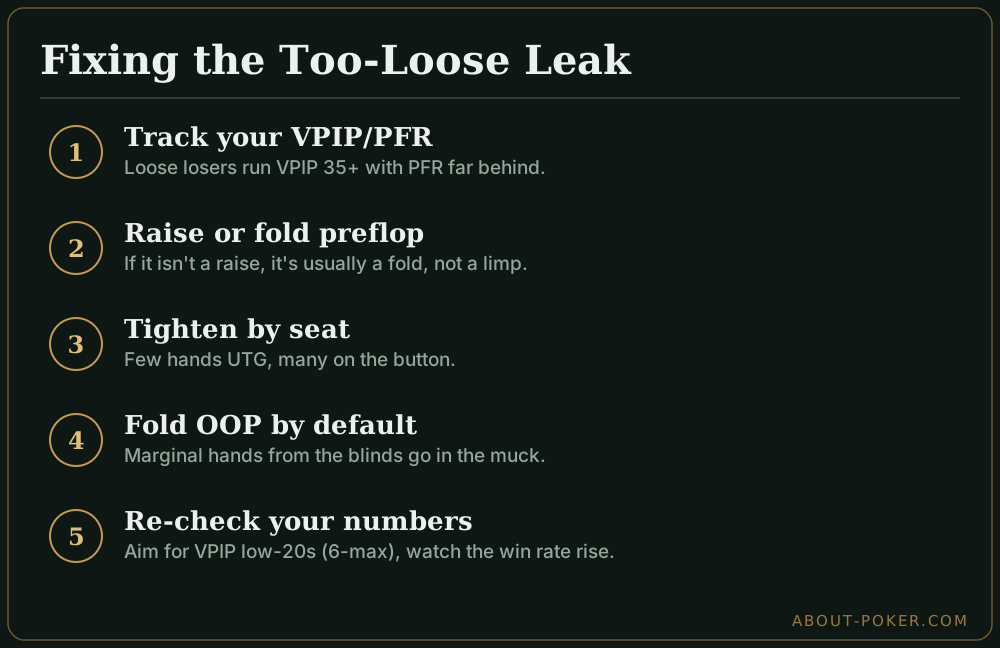
You do not need to memorize perfect charts to plug this leak. Apply three rules:
- Raise or fold, rarely call, before the flop. If a hand is not good enough to raise, it is usually not good enough to limp.
- Tighten by position. Play few hands early, more on the button, and defend the blinds selectively.
- When in doubt out of position, fold. The default for a marginal hand from the blinds or early seats is the muck.
Track your VPIP and PFR for a week. If your VPIP drops from 35 to the low 20s and your win rate climbs, you have found and fixed the most profitable leak in the game.
Frequently asked
How many hands should you play in cash games?
In a full-ring 9-handed game a solid winner plays roughly 15-20% of hands from all positions combined, which shows up as a VPIP of about 18-22 in a tracker. Six-max play is looser, closer to 22-26%, because there are fewer players left to act. The exact number matters less than playing tight early and wider on the button.
What is a good VPIP for a winning cash player?
For 6-max online cash, a VPIP in the 22-26 range with a PFR a few points below it is typical of solid regulars. Full-ring winners run tighter, around 15-20. If your VPIP is above 30 and your PFR is far behind it, you are almost certainly playing too many hands and calling too much.
Why is playing too many hands a leak?
Weak hands make weak pairs, dominated top pairs, and second-best flushes and straights. You reach the flop with a range that is hard to play profitably out of position, so you either fold too often or pay off with hands that are behind. Tightening up removes the worst of these spots automatically.
Does position change how many hands I should play?
Yes, dramatically. From under the gun you might open 10-12% of hands; on the button you can open 45% or more because you act last on every street and have fewer players to get through. Playing the same range from every seat is a classic form of playing too many hands.