Playing Ace-Rag in Cash
Ace-rag hands look playable but are easily dominated. Learn when to open, fold, and turn weak aces into bluffs in cash games without spewing chips.
On this page · 6 sections
Ace-rag is one of the most misplayed groups of hands in low- and mid-stakes cash games. The ace looks strong, so players open it too wide, call raises with it, and then pay off when they flop top pair with a bad kicker. Understanding when an ace is an asset and when it is a liability is one of the fastest ways to stop leaking chips.
What ace-rag actually is
Ace-rag means an ace with a small, unconnected kicker. The offsuit versions — A2o through roughly A9o — are the weakest. The suited versions, A2s through A6s (sometimes called “wheel aces”) and A7s-A9s, are meaningfully stronger because they add flush and straight potential plus nut-blocker value.
The core problem is domination. When you hold A6 and the flop comes ace-high, you are thrilled — until you realize that a better ace (AK, AQ, AJ, AT) has you crushed, while a worse ace has already folded preflop. You win small pots and lose big ones. That reverse implied-odds dynamic is why weak aces bleed money when played out of position.
Opening ranges: position is everything
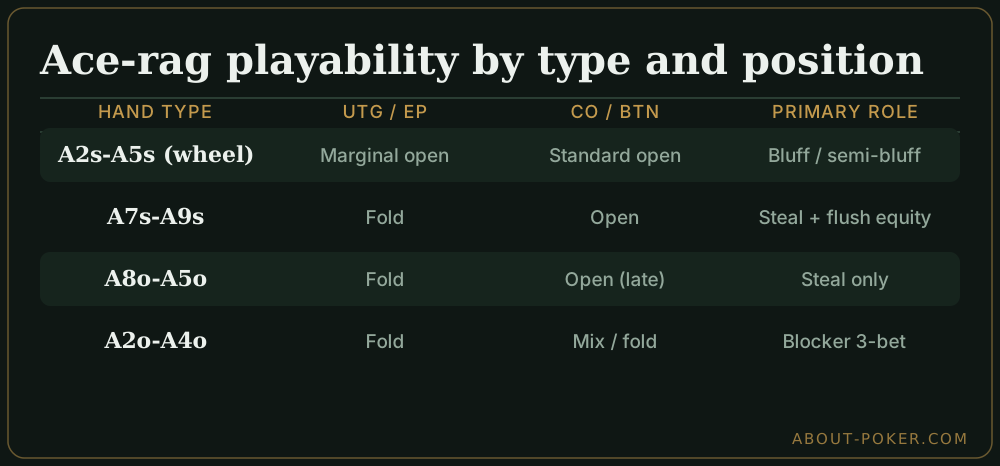
From early position in a full-ring game, fold the offsuit weak aces outright. A8o under the gun is dominated by every ace behind you and flops almost nothing you can stack off with. Suited wheel aces (A2s-A5s) can sneak into a mid-position opening range because the suitedness and straight potential give them a real reason to continue past the flop.
As you move to the cutoff and button, the calculus flips. On the button, most of your ace-rag hands become profitable steals because you close the preflop action range and play in position. This is exactly the leverage discussed in playing the button in cash games — position turns marginal hands into openers. A quick guideline:
- UTG / EP: fold offsuit rags, open only A2s-A5s at most
- MP / HJ: add A9s-A7s and stronger offsuit aces (ATo+)
- CO / BTN: open most suited aces and offsuit aces down to about A8o-A5o
For the full framework of how ranges widen by seat, see the cash game preflop strategy guide.
A worked example
You open A6o from the cutoff to 3bb and the button calls. Effective stacks are 100bb. The flop comes A-9-4 rainbow. You have top pair, weak kicker.
You bet 33% pot as a standard c-bet. The button calls. Now the turn is a 2, and the button calls a second barrel. On the river you must ask: what worse ace calls two streets? Almost none. A9, A4, and better aces are still here; nothing worse is. This is the moment to check and give up the third barrel rather than fire a bet that only gets called by hands that beat you. Betting for “value” here is a classic leak — you are value-owning yourself against a range that has you dominated.
Contrast that with A6s on a 6-4-2 flow with a flush draw: now your equity is robust, your draws are live, and you can barrel with real backup. The suitedness changes everything.
Turning weak aces into bluffs
The best use of a weak ace is often as a bluff or semi-bluff, not a value hand. An ace in your hand is a blocker: it makes it less likely your opponent holds AK or AA, so a 3-bet bluff with A5s from the button against a cutoff open is a standard, profitable play. You block their strongest continues and you have a hand that flops flushes and wheels when called.
This blocker logic also helps when defending. If you are in the big blind facing a steal, suited aces are excellent calls and occasional 3-bets — see defending the big blind in cash for how these fit a defense range. The offsuit rags, by contrast, are usually pure folds against a raise: they realize equity poorly out of position and get dominated too often to call profitably.
Common mistakes with ace-rag
- Cold-calling raises out of position with offsuit aces. You are dominated and can’t realize equity. Fold or 3-bet-bluff, don’t flat.
- Barreling top pair weak kicker on scary boards. Once a competent opponent has called two streets, worse hands have folded. Pot control instead.
- Treating A5o like A5s. The suited version is a playable bluff candidate; the offsuit version is a fold in most spots.
- Over-valuing “any ace” preflop. An ace is not a license to play the hand. Kicker and suitedness decide whether it’s profitable.
- Ignoring stack depth. Deeper stacks amplify domination costs, so tighten your weak aces as effective stacks grow.
A quick decision checklist
Before you put money in with an ace-rag hand, run through this:
- Is it suited? Suited aces play a full class better than offsuit.
- What’s my position? Late position widens the range dramatically; early position folds most of it.
- Am I the aggressor or the caller? Raising with these hands is far better than calling with them.
- How deep are we? Deeper stacks punish domination harder — tighten up.
- On the flop, do worse hands continue? If top-pair-weak-kicker only gets action from better, stop betting for value.
Play ace-rag as what it is: a hand that wants to be a late-position steal or a nut-blocking bluff, not a hand you go to war with. Discipline here separates winning cash players from the crowd that keeps paying off the dominating ace.
Frequently asked
What counts as an ace-rag hand?
Ace-rag means an ace paired with a low, unconnected kicker — hands like A2 through A9 offsuit, and the weaker suited aces like A2s-A6s in the wrong spots. The 'rag' is the small side card that rarely makes top pair worth stacking off with.
Should you open ace-rag from early position?
Generally no. Offsuit weak aces like A6o or A8o are folds under the gun in a full-ring cash game because they are dominated by every ace your opponents continue with. Suited weak aces can sometimes open from late position but not from early seats.
Why is ace-rag a domination trap?
When you make top pair with an ace, a stronger ace has you outkicked and a weaker ace is folding. So the pot you win is small and the pot you lose is large — the classic reverse implied odds problem that makes weak aces losing hands out of position.
Are suited aces better than offsuit aces?
Much better. The flush and wheel-straight potential of a suited ace adds equity and gives you nut-blocker value for bluffing. A5s plays far better than A5o and can even be opened or 3-bet as a bluff where the offsuit version is a clear fold.