Reverse Implied Odds Explained for Beginners
Reverse implied odds are the chips you lose when your draw hits but still finishes second-best. A beginner guide to spotting and pricing dominated draws.
On this page · 5 sections
Reverse implied odds are the chips you expect to lose on later streets when your draw completes but still leaves you second-best. They are the evil twin of implied odds. Where implied odds measure the money you win when you hit and hold up, reverse implied odds measure the money you bleed when you hit and lose anyway. If you have ever thought “I made my hand and still lost,” that is reverse implied odds talking — and learning to see them coming will save you a lot of chips.
Why raw equity can lie
When you count outs, every card that improves your hand looks like a winner. But some of those outs make a hand that is still beaten. A card that turns your King-high flush into a made flush feels great — until an opponent tables a bigger flush and you pay off a big bet. That card was an “out” that actually cost you money.
This is the trap. A draw’s raw equity treats every improvement as a win, but reality does not. Reverse implied odds are the correction: they shave value off draws that hit into trouble, and they explain why two draws with the same number of outs can be worth wildly different amounts.
The hands that hurt
Some draws are famous for bad reverse implied odds:
- Low and middling flush draws. You hit your flush and get stacked by a higher one. The lower your flush, the worse this gets.
- The dumb end of a straight. With 8-7 on a 6-5-4 board you can make a straight that loses to a bigger straight.
- Weak top pairs and small two pairs. They improve into hands that still lose to sets and better two pairs.
- Dominated one-card draws. Chasing a King when the board threatens the nuts.
The common thread: these hands complete into a made hand that is easy to overvalue and easy to lose big with. Your best hands win small pots and your “wins” occasionally cost you your stack.
A worked example
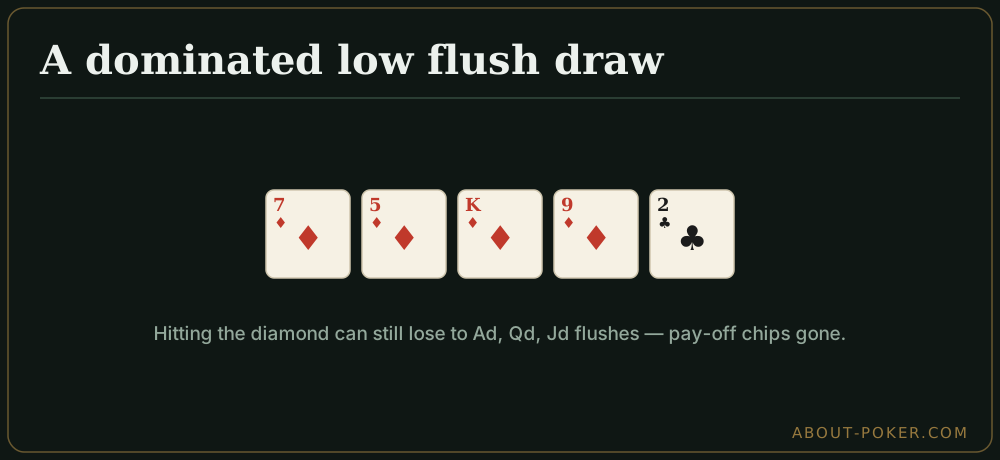
You hold 7d 5d on a Kd 9d 2c board — a flush draw, but the second-lowest possible flush if a diamond arrives. You have roughly nine outs to a flush, giving your draw about 35% equity by the river on paper.
Now think about what happens when the diamond hits. Against a random opponent you win most of the time. But against someone who keeps betting large on a Kd 9d 2c board, their range is loaded with big diamonds — Ad, Qd, Jd draws. On the exact card that completes you, a meaningful chunk of their range makes a flush that crushes yours. Say that on the times you hit and face a big river bet, you are beaten 30% of the time and pay off $80 each time. That expected loss is real, and it comes straight out of the value of your draw.
Your paper equity said 35%. After accounting for the pots you lose when you “hit,” and the extra chips you pay off in them, the draw might play more like 25% — and that is before considering the times you miss entirely. Suddenly a call that looked fine on pot odds is a loser.
How to price it at the table
You will not compute reverse implied odds exactly mid-hand, and you do not need to. Use a simple mental discount:
- Ask: is my draw the nuts? If yes, reverse implied odds are near zero — chase freely.
- Ask: could hitting still lose? If the same card that helps me can crush me, apply a discount.
- Match the discount to the danger. Low flush against an aggressive, capped-out opponent on a wet board? Big discount, often a fold. Nut flush draw? No discount at all.
For a deeper dive with more numbers, see reverse implied odds.
The beginner takeaway
The single most useful habit is to stop treating all outs as equal. Before you call to chase a draw, picture the world where you hit. If that world is mostly happy, take your pot odds at face value. If that world contains a bigger flush, a bigger straight, or a set, quietly shade your draw down and lean toward folding marginal spots. Reverse implied odds turn “I hit and still lost” from a bad-luck story into a mistake you can see coming — and avoid.
Frequently asked
What is reverse implied odds in poker in simple terms?
Reverse implied odds are the extra chips you expect to lose when you complete your draw but still end up with the second-best hand. They are the mirror image of implied odds and make some draws worth far less than their raw equity suggests.
How do you calculate reverse implied odds?
There is no single formula. Estimate how often your completed hand is still beaten and how many chips you will pay off when it is, then subtract that expected loss from the upside of hitting. If the losing outcome is common and expensive, discount the draw heavily.
Which hands have the worst reverse implied odds?
Low flushes, the bottom end of a straight, weak top pairs with poor kickers, and second-nut draws. These hands hit and lose often enough that their apparent equity overstates their real value.
What is the difference between implied and reverse implied odds?
Implied odds are the chips you win on later streets when your draw hits and holds up. Reverse implied odds are the chips you lose when your draw hits but is beaten. Every draw carries some of both.