Runner-Runner Odds
Runner-runner odds explained: the real probability of backdoor flushes and straights, why backdoor equity is worth about 4%, and when it changes decisions.
On this page · 6 sections
Runner-runner refers to needing both the turn and the river to complete a draw that has not yet come together on the flop. The most common examples are the backdoor flush, where you hold two cards of a suit and need two more, and the backdoor straight, where you have three to a straight and need the two missing cards. These draws feel like long shots because they are, but they carry a small, precise amount of equity that good players fold into their decisions.
The exact math on a backdoor flush
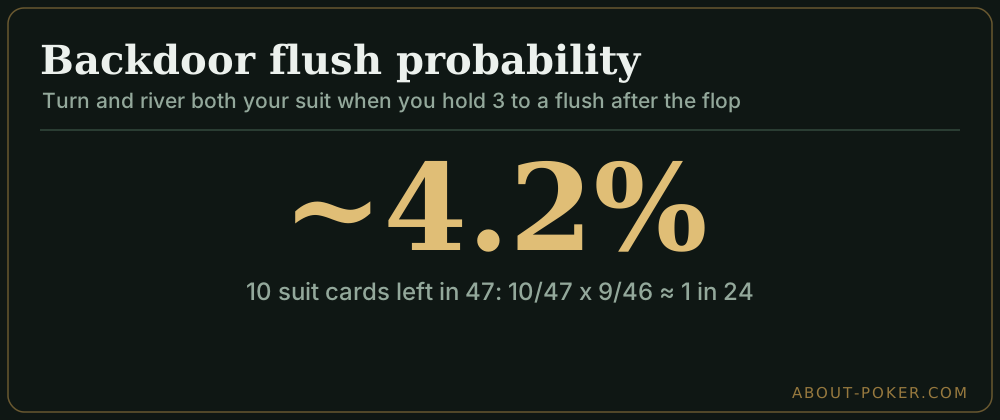
Start with the most familiar case. You hold two hearts, and the flop brings one more heart, giving you three hearts total and needing two more. There are 13 hearts in the deck, you can see three, so 10 hearts remain among 47 unseen cards. The turn must be a heart, then the river must be a heart. The probability is 10/47 multiplied by 9/46, which works out to about 4.2%, roughly one in twenty-four.
If instead your two hole cards are suited and the flop shows two more of that suit, you already have four to a flush and that is a normal flush draw, not runner-runner. The true backdoor case is when you have exactly three to a suit after the flop. The takeaway is simple: a backdoor flush is worth about 4% of equity. For the far stronger case where you already hold four cards to a flush, see flush draw odds.
Backdoor straights are similar but messier
A backdoor straight draw depends on how connected your cards are. If you hold something like Jc Td and the flop comes 9-x-x with no other help, you have several ways to get there, but each requires two specific ranks in a row. A typical backdoor straight is worth roughly 3-4% as well. Open-ended backdoor shapes, where many turn cards give you an open-ender, sit at the higher end. Gutshot-only backdoors sit lower.
The reason to know these numbers is not to chase them directly. It is to recognize when a hand that looks like air actually carries hidden equity worth continuing with.
Why solvers care about 4%
Four percent sounds trivial, but in modern strategy it is often the deciding factor between a fold and a continue. Two hands can look identical, both missing the flop, but one has a backdoor flush plus a backdoor straight and two overcards while the other has nothing. The first hand might have 20% or more equity once you add up overcards and backdoors, while the second has closer to 6%. That gap is exactly what determines which hands make good bluffs and which should be given up.
Backdoor equity also improves your realization. Because you can pick up a real draw on the turn, you get to see more rivers profitably and you gain the ability to barrel credibly when a scare card arrives. That semi-bluffing potential is worth more than the raw 4% suggests.
A worked example on the flop
You hold Ah Qh on a flop of 8h 5c 2d. You have no pair and no made draw, but look closer. You hold two overcards to the board, worth roughly six outs to a top pair. You also have a backdoor flush draw in hearts, worth about 4%, and a slim backdoor straight to nothing useful. Add it up and your total equity against a single top-pair hand is around 25%, not the near-zero it looks like at a glance. That is enough to defend against a small continuation bet and enough to make a check-raise bluff credible, because when a heart peels off on the turn you now hold a genuine flush draw and can barrel with real backup.
Contrast that with A♠ Q♣ on the same board: same overcards, but no backdoor flush, so a few percent less equity and one fewer scare card to fire on. The suited version is the clear continue; the offsuit version is closer.
Common mistakes with runner-runner
The biggest error is calling on the flop hoping to hit runner-runner as your primary plan. At 4-5%, you would need to win more than twenty times the amount you call, which almost never exists. Backdoor draws are a supplement to a decision, never the whole reason for it.
The second mistake is ignoring them entirely. Beginners often fold hands with meaningful backdoor equity because they see no made hand, giving up 20-25% equity spots that should continue. Learning to count these outs, the same skill covered in poker outs, fixes both errors at once.
A third mistake is double-counting. When you promote a backdoor draw into a real draw on the turn, use the current outs, not a blend. On the flop the backdoor is worth roughly 4%; on the turn, if it has become a real flush draw, use the standard nine-outs figure from the rule of 4 and 2.
Quick reference for the felt
When you flop a bare backdoor flush draw, credit yourself about 4% and treat it as a tiebreaker toward continuing. When you have overcards plus a backdoor flush plus a backdoor straight, you are often in the 20-25% range and should defend or semi-bluff. Never call a significant bet on backdoor equity alone. And remember that the value of a backdoor is not just the times it completes; it is the extra turns you can barrel and the extra rivers you realize your equity on. That hidden upside is why solvers keep these small draws in their continuing ranges.
Frequently asked
What are the odds of hitting a runner-runner flush?
Hitting a backdoor flush requires the turn and river to both be your suit. With two of your suit already on the flop, you have 11 cards of that suit left in 47 unseen. The chance is about 11/47 times 10/46, roughly 5.1%, or one in twenty. That is why a backdoor flush draw is worth only a small slice of extra equity.
How much equity is a backdoor draw worth?
A single backdoor draw, whether flush or straight, is worth roughly 4% of pot equity on the flop. Combined backdoor flush and straight potential can add up to 6-8%. Solvers use this small edge to justify continuing or bluffing with hands that have no made value yet, since the extra outs improve fold equity and realization.
Is it correct to chase a runner-runner draw?
You should almost never call purely to hit runner-runner, because at 4-5% you need enormous implied odds. Instead, treat backdoor equity as a tiebreaker that adds value to hands you already have a reason to continue with, such as overcards, a gutshot, or a bluffing candidate. The draw becomes a real semi-bluff only after the turn brings a second card to your draw.