Thin Value Explained for Beginners
Thin value means betting a hand that beats only a narrow slice of calls. Learn when a thin value bet profits, and see a clear river example.
On this page · 6 sections
Thin value is value betting at the razor’s edge. A normal value bet is comfortable: you clearly beat the hands that call. A thin value bet is uncomfortable: you beat the calling range only by a little, and it is genuinely close whether betting is right. Learn to find these spots and you unlock a stream of small, reliable profits that most beginners leave on the table by checking too much.
If you are new to the broader idea, start with value betting for beginners and come back — thin value is just the same concept pushed to its edge.
The core test for thin value
A bet is thin value when the hands that call you are worse more than half the time, but only just. You are not crushing the calling range; you are nudging ahead of it.
The single question that decides it: of all the hands that call this bet, is my hand better more often than worse? If yes — even 55/45 — betting profits over the long run. If the answer flips to no, betting loses, and you should check.
Notice this is a question about the calling range, not your opponent’s whole range. Weak hands that fold do not matter; they cost you nothing when you check either. Only the hands that put chips in when you bet decide whether thin value pays.
Why size small
Bet size controls which hands call, so it controls whether your value is real. Fire a big bet and only strong hands continue — meaning you have converted a thin value bet into a bluff that gets called by better hands. That is a disaster.
To collect thin value, you must keep the marginal worse hands in the pot. That means small sizing: roughly a third to half of the pot. A small bet lays your opponent a tempting pot-odds price, so they call with the middling hands you beat. The smaller size also limits your loss on the times you are behind, which matters because the spot is close by definition.
A worked river example
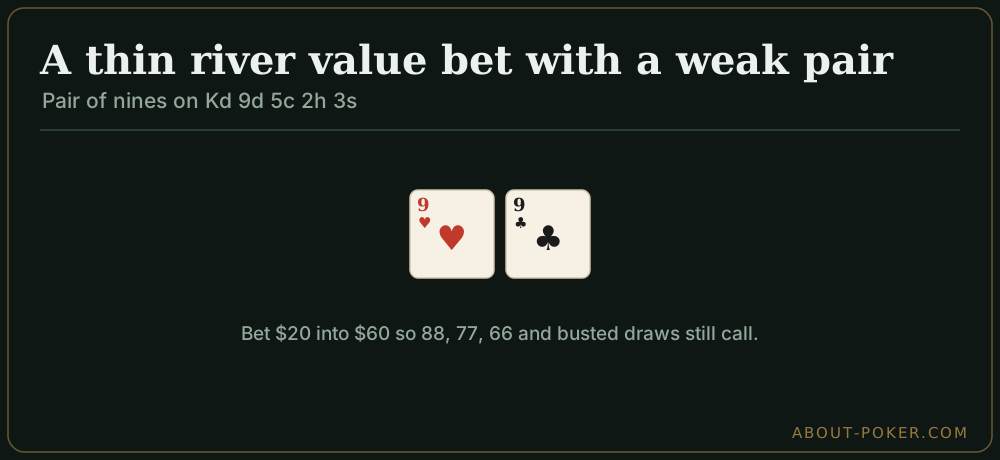
You hold 9h 9c on a final board of Kd 8d 5c 2h 3s. Your nines are just a pair — a second pair below the king, on a king-high board. The pot is $60.
Your opponent checks to you on the river after calling a flop bet. Their range is full of missed draws, weak kings that would have raised, and small and middling pairs like 88, 77, 66, and 55 that got to showdown cheaply. Run the test: against the hands that would call a small bet — 88, 77, 66, 55, and busted draws that turn into bluff-catchers — your pair of nines is ahead of most of them. Better hands (any king, two pair) will not fold, but the smaller pairs will pay a small bet to catch you bluffing.
So you bet $20 into $60, about a third of the pot. If your opponent calls with 88, 77, 66, 55, and the occasional stubborn draw more often than with kings, your nines win the showdown a majority of the time, and the bet shows a small profit. That small edge, repeated across thousands of similar spots, is exactly what expected value rewards. A pot-sized bet here would be a mistake — only kings call, and you are crushed.
The three ranges you have to separate
The hardest part of thin value is not the arithmetic; it is keeping three different ranges straight in your head. Beginners lose money because they blur them together.
- The opponent’s whole range — every hand they could hold here. This is the biggest group and the least useful, because most of these hands fold to any bet.
- The value target — the specific worse hands you are betting to get paid by. In the example above that is 88, 77, 66, and 55, plus the occasional stubborn ace-high.
- The calling range — the only group that decides your profit. It is the value target plus any better hands that also call (kings, two pair). Your bet is good when the value target is the bigger part of this group.
The discipline is simple: ignore the folds, and ask whether the worse hands calling outnumber the better hands calling. If they do, even barely, bet. If a bet chases out every worse hand and only better hands stick around, you have crossed the line into betting for no reason.
How opponent type shifts the line
Thin value is not a fixed play — where the line sits depends heavily on who you are betting into.
- The calling station. Against someone who cannot fold a pair, thin value expands dramatically. You can bet third pair, weak top pair, even ace-high in some spots, because their calling range stays full of worse hands. This is the single most profitable place to hunt for thin value.
- The nit. Against a player who only calls the river with a genuine hand, thin value shrinks toward zero. Their calling range is mostly hands that beat you, so a “value” bet just isolates yourself against better cards. Check and take the showdown.
- The aggressive raiser. Some opponents rarely call but often raise thin themselves or as a bluff. Against them, betting a marginal hand invites a raise you cannot profitably call, so checking to induce their bluff — or simply to realize your showdown value — is cleaner.
Read the caller first, then decide. The same pair of nines is a clear bet against a station and a clear check against a nit.
When to skip the thin bet
Thin value is not free. Skip it when:
- You will get raised often. If checking behind avoids a raise you would have to fold to, the small value you give up is worth the safety.
- The calling range is mostly better. Against a player who only calls with genuine hands, your marginal holding is behind the callers — check and take the free showdown.
- You have a bluff-catcher, not a bet. Some hands are strong enough to call a bet but too weak to bet themselves. Betting them turns a comfortable showdown into a lose-more spot.
Thin value is a mindset as much as a play: keep asking whether the hands that actually call are worse than yours, and be willing to bet small when the answer is a quiet yes.
Frequently asked
What is thin value in poker?
Thin value is betting a hand that beats only a small portion of the hands that will call. You are ahead of the calling range, but barely, so the edge is slim. Thin value bets win a little money often rather than a lot rarely.
When should you bet thin for value?
Bet thin when the hands that call are more often worse than yours than better, even if only slightly. If your hand beats more than half of the calling range, a thin value bet shows a profit over time, especially against players who call too much.
What size should a thin value bet be?
Small. A thin value bet uses a size like a third to half the pot so that marginal worse hands still call. Betting big turns a thin value bet into a bluff, because only better hands continue against a large bet.
Is thin value the same as a bluff?
No. A thin value bet still expects worse hands to call more often than better hands. A bluff expects better hands to fold. The line between them is whether your hand is ahead of the range that actually calls.