Value Betting Explained for Beginners
A value bet is a bet you want called by worse hands. Learn what value betting is, how to size it, and a clear river example any beginner can copy.
On this page · 4 sections
A value bet is one of the simplest ideas in poker and also one of the most misunderstood. A value bet is a bet you make because you expect a worse hand to call. You are not trying to make anyone fold. You are trying to get paid. If your opponent folds every time you bet, a value bet earns nothing; its whole purpose is the call.
Most of the money in poker comes from value betting, not from spectacular bluffs. Learning to bet the right hands, for the right size, at the right time is the core skill that separates winning players from break-even ones.
What makes a bet a value bet
Ask one question before you bet: when I get called, is my hand usually better than the hands that call? If the answer is yes, you have a value bet. If the answer is no, you either have a bluff or a mistake.
This is why “how strong does my hand feel” is the wrong frame. What matters is the relative strength of your hand against your opponent’s calling range. Top pair is a monster against someone calling with second pair and draws. The same top pair is a trap against someone who only continues with two pair or better. The hand is identical; whether betting it makes money depends entirely on what calls.
Value betting is the mirror image of bluffing. A bluff wants better hands to fold; a value bet wants worse hands to call. Understanding both sides is the foundation of the bluff-to-value ratio that keeps your betting balanced.
Sizing a value bet
The goal of sizing is to win the most money, not to guarantee a call. A tiny bet gets called by everything but wins little. A huge bet wins big on the rare call but folds out most of the worse hands you wanted to pay you.
The sweet spot is the largest size that a meaningful chunk of worse hands still calls. This depends heavily on your opponent:
- Calling stations pay off almost any size. Bet big — pot or more.
- Thoughtful, tight players fold to large bets, so a smaller two-thirds-pot bet keeps more of their weak hands in.
- The board matters too: on a scary, draw-heavy runout, worse hands call less, so trim your size.
A useful default when unsure is about two-thirds of the pot. It extracts value from a wide range without pricing out too many second-best hands.
A worked river example
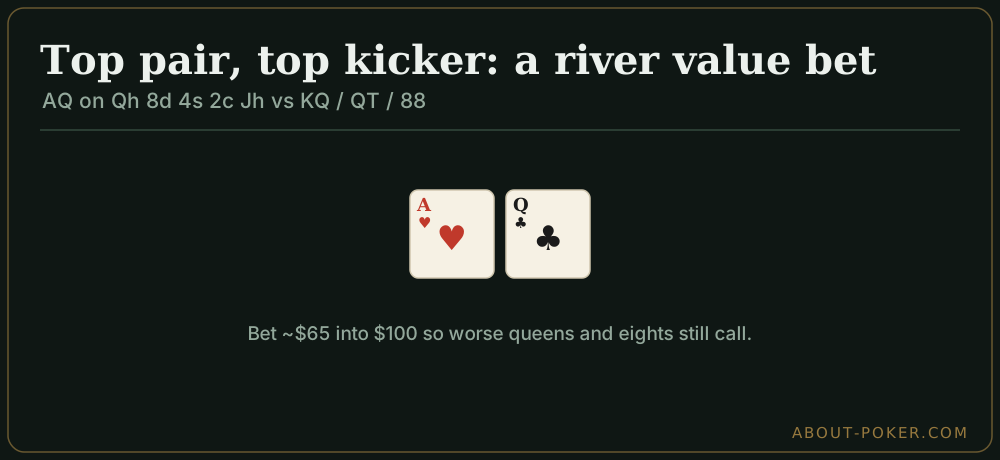
You hold Ah Qc on a final board of Qh 8d 4s 2c Jh. You have top pair, top kicker. The pot is $100 and you both have $200 behind.
Your opponent has called a flop bet and a turn bet with what you read as a pair of queens with a worse kicker (like KQ or QT), some eights, and a few busted heart draws. Now think through the value question: hands like KQ, QT, and 88 are all worse than your AQ and will often call one more bet. That makes betting for value correct.
How much? A pot-sized $100 bet folds out the weaker queens and most eights — they will not call $100 with second-best pairs. A $65 bet, by contrast, is a price that KQ, QT, and even some eights will grudgingly pay. Over many repetitions, the smaller bet gets called far more often by worse hands, so it wins more total money even though it risks less per hand. That extra profit from the calls of worse hands is exactly what expected value measures.
If instead your opponent’s line only made sense with two pair or a set, AQ is no longer ahead of the calling range, and betting turns from value into a costly mistake. Check and reconsider.
Putting it together
Value betting rewards discipline more than daring. Before every bet on a later street, run the checklist: Is my hand better than the hands that call? What is the biggest size those worse hands still pay? Does the board let them keep calling? When all three line up, fire — and when they don’t, save your chips.
The math backing all of this is the same pot odds logic your opponents use to decide whether to call. You are simply setting a price that worse hands are willing to pay, and collecting the difference over the long run.
Frequently asked
What is a value bet in poker?
A value bet is a bet made when you believe you have the best hand and you want a worse hand to call. You are betting to get paid, not to make the opponent fold. Every dollar a weaker hand calls with is profit for you.
How is a value bet different from a bluff?
A value bet wants a call from worse hands; a bluff wants a fold from better hands. Value betting is your primary source of long-run profit, while bluffing balances your range so opponents cannot simply fold to every bet.
What size should a value bet be?
Size to the largest amount a worse hand will still call often enough to be profitable. Against calling stations, bet bigger; against tight, thoughtful players, moderate sizing gets called by more hands. Two-thirds pot is a reliable default.
Can you value bet a mediocre hand?
Yes. If enough worse hands will call, even a middling holding like top pair with a weak kicker can be a value bet. The question is never how strong your hand feels, but whether the hands that call are worse than yours.