22 vs two overcards: Preflop Odds & Equity
Pocket deuces against two overcards is the classic poker race. 22 is a slim ~52/48 favorite. Here are the exact preflop equities and the math behind them.
On this page · 5 sections
You raise 2♠ 2♦, someone shoves, and you are staring at two overcards like K♣ Q♥. The table calls it a race, and they are right. A small pair against two overcards is the textbook coin flip — the pair is a slim favorite, usually around 52/48, and the whole hand comes down to whether the big cards pair up.
The headline equity
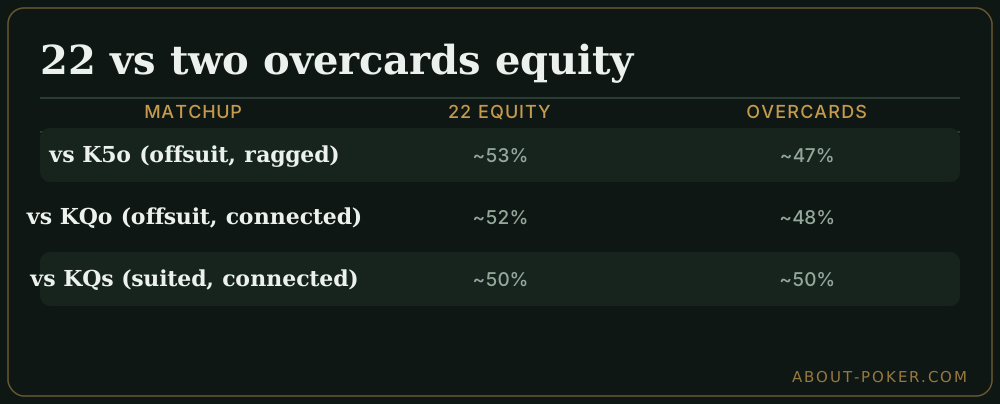
“Two overcards” covers a family of hands, so the exact number shifts a little with suits and connectedness. Here is the range you will actually see, cross-checked against Monte Carlo runs:
| Matchup | 22 equity | Overcards equity |
|---|---|---|
| 22 vs two offsuit, disconnected overcards (e.g. K5o) | ~53% | ~47% |
| 22 vs KQo (offsuit, connected) | ~52% | ~48% |
| 22 vs KQs (suited, connected) | ~50% | ~50% |
The pattern is clean: the more the overcards can do, the closer the race gets. Two ragged offsuit overcards leave the deuces a small favorite; suited and connected overcards claw all the way back to even.
Why the smaller pair wins the race
The deuces are already a made hand. To lose, they need the overcards to improve; to win, they just need the board to miss the big cards. That head start is why even the worst pair in the deck is a favorite over two bigger cards.
Count what the overcards are chasing against K Q:
- Pair the king: three kings remain.
- Pair the queen: three queens remain.
- Together that is six outs to a bigger pair, plus any straights and flushes the specific cards can make.
Six live cards across five board cards works out to the overcards pairing roughly 48-52% of the time. That pairing is where almost all of their equity lives. When the board bricks — no king, no queen, no straight or flush — the deuces win with a pair of twos. This is the same engine that drives the closely related AK vs 22 matchup.
A worked example
Use the rule of 4 and 2 to feel the swings. Deal 2♠ 2♦ all in against K♣ Q♥, a 52/48 race preflop.
Flop comes K♦ 8♠ 3♥. Now the overcards have top pair, and the deuces are drawing to just two remaining twos. Two outs times four (two cards to come) is about 8% — and that matches reality: the deuces collapse to roughly 8% while KQ jumps to about 92%.
Rerun it with the flop 9♣ 7♥ 2♣. The deuces flop a set, KQ has picked up a gutshot but must fill it. Now the deuces are around 95%. Those two flops — a swing from 8% to 95% depending on three cards — are the entire character of a preflop race.
Suits and connectedness move the needle
The gap between the low end (~53% for the pair) and the high end (~50%) is all about the extra outs the overcards bring:
- Offsuit and disconnected (K5o): only six clean outs to a pair, almost no straight or flush help. The pair stays a ~53% favorite.
- Connected (KQ): adds gutshot and open-ended straight chances, nudging the overcards toward 48%.
- Suited and connected (KQs): adds a flush and pulls the race to essentially 50/50.
It is the same suited premium that shows up across every equity comparison — a couple of extra percentage points, earned entirely on the run-outs the offsuit version can never reach.
From equity to a decision
A race is where fold equity and pot odds decide everything, because your raw equity is only about half.
| Situation | Read | Line |
|---|---|---|
| You shove 22, called by two overcards | ~52% | A fine race if you had fold equity |
| You call a shove with 22 vs likely overcards | ~52% | Slight favorite, but stack survival matters |
| Deep stacks, 22 wants to set-mine | — | Prefer implied odds over racing |
Lock in the anchor — 22 is roughly a 52/48 favorite over two overcards, drifting to 50/50 when they are suited and connected — and every race decision becomes about the surrounding math. Turn that into an actual line with preflop all-in odds, and work through the poker odds & math hub to sharpen the rest.
Frequently asked
What are the odds of 22 vs two overcards?
Pocket deuces are a slight favorite against two unpaired overcards, winning roughly 52% of the time when the overcards are offsuit. The exact number moves a little with suits and connectedness, but it stays close to a coin flip.
Why is a pair favored over two bigger cards?
The pair is already a made hand and only needs to hold up. The two overcards must improve to win — they have to pair one of their cards or make a straight or flush. That built-in head start makes even the smallest pair a small favorite.
How often do two overcards pair by the river?
Two unpaired overcards pair at least one card about 48-52% of the time by the river. They have six outs to a bigger pair (three of each rank), plus occasional straights and flushes, which is where nearly all their equity comes from.
Is a pair vs two overcards always a coin flip?
Close to it, but not exactly. Connected and suited overcards like KQs cut into the pair's edge with extra straight and flush outs, while two disconnected offsuit overcards leave the pair a slightly larger favorite. The range is roughly 50/50 to 54/46.