Playing Aces in PLO
Aces are the best hand in PLO but only run about 60 percent all-in preflop. Learn when to build the pot, when to pot control, and how much your side cards matter.
On this page · 6 sections
In Hold’em, pocket aces are the hand you dream about. In Pot-Limit Omaha they are still the best starting hand, but the gap between aces and everything else is much smaller. A pair of aces is only one made hand on a board where four hole cards produce straights, flushes, and sets constantly. Playing aces well in PLO means understanding that they are a preflop equity edge you want to leverage, not a hand that plays itself after the flop.
How much of a favorite aces really are
The single most important number: double-suited aces are roughly a 60 percent favorite all-in preflop against a strong double-suited rundown, and can dip to nearly a coin flip against the best-connected hands. Compare that to Hold’em, where aces crush a random hand by 80 percent or more. In PLO your edge is real but thin, which means you want the money in preflop when you can, but you should not expect to run away with the pot.
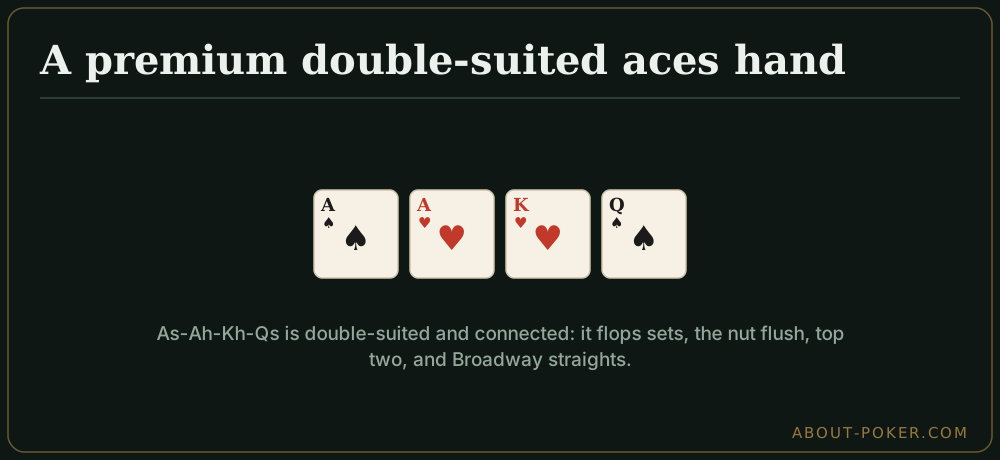
Not all aces are equal. A-A-K-Q double-suited is a premium holding because it flops sets, top two, the nut flush, and Broadway straights. A-A-7-2 rainbow is a weak hand that essentially plays for a set of aces or nothing. This gap in playability drives every decision. For a fuller picture of which combos are worth playing, see PLO preflop hand selection.
Three-betting to leverage your edge
Because aces hold an equity advantage preflop and lose value as the board runs out, you usually want to get chips in early. Three-betting narrows the field, isolates a single opponent, and builds a pot while you are ahead. Heads-up your 60 percent equity is worth a lot; five-way it can shrink below the amount you need to justify a big pot.
With double-suited or well-connected aces, three-bet freely, especially in position. With bare, rainbow aces out of position, mixing in flat calls or even folds to heavy action is fine. This ties directly into PLO 3-betting strategy, where the goal is to build pots when your hand plays well postflop and stay small when it does not.
A worked example
You hold As Ah Kh Qs in the cutoff, folded to you. You raise pot, the button three-bets, and blinds fold. You have a premium double-suited hand with excellent connectivity, so you four-bet pot. The button calls, and roughly 100 big blinds go in on a heads-up flop.
Flop comes Kd 7h 2c. You have top set with a backdoor heart flush draw. This is a clear pot-sized continuation bet: you are ahead of most of the button’s three-bet range, and you want to charge draws and worse kings. If instead you held As Ah 8d 3c on that same flop, you have only overpair-plus-no-real-draw. You still bet, but you are far more cautious about stacking off on later streets, because your hand cannot improve to much.
When to pot control instead
Bare aces that miss the flop are trap hands. On a coordinated board like Th 9h 8c, a lone pair of aces is often behind or drawing thin against the wraps and flush draws PLO players hold. Firing multiple barrels with just an overpair here bloats the pot in a spot where you are frequently beaten. The discipline to check and give up is what separates winning PLO players. Learn the specific dangers in PLO bare aces.
Common mistakes with aces
The biggest leak is overvaluing them postflop. A single pair of aces is not the nuts; it is one pair on a board full of draws. Players who stack off with a naked overpair against a check-raise on a wet board bleed money. The second leak is the opposite: playing scared with premium double-suited aces and failing to build a pot while holding a genuine edge. The third is treating rainbow aces like double-suited aces and getting stacks in with a hand that flops almost nothing.
Quick checklist for playing aces
Before you commit chips, run through this. Are my aces suited or double-suited? Do the side cards connect for straights? Am I in or out of position? How many players are in the pot? Did the board actually improve my hand or just leave me with an overpair? If you have double-suited, connected aces heads-up and you flopped a set or nut draw, press hard. If you have bare rainbow aces on a wet, multiway board with just an overpair, slow down. Aces are your best hand in PLO, but they reward players who know exactly how strong they are and are not.
Frequently asked
How strong are aces preflop in PLO?
A double-suited pair of aces with connected side cards is the best starting hand in PLO, but it is only about a 60 percent favorite when all-in against a good rundown, and closer to a coin flip against some hands. Aces are a strong favorite, not a lock, so they play very differently from Hold'em.
Should you always three-bet aces in PLO?
Not always. Three-betting narrows the field and builds a pot while you hold an equity edge, which is usually good with double-suited aces. But bare aces with weak side cards play better by keeping the pot smaller, especially out of position, because they flop poorly and rely almost entirely on hitting a set or the nut flush.
What makes aces good or bad in PLO?
Suitedness and connectivity. Aces double-suited with cards like KQ or JT flop far more nut draws and straights than bare aces such as A-A-7-2 rainbow. The side cards decide how often you flop something beyond just the pair.