Razz Strategy Basics
Razz strategy basics: play low, read door cards, steal antes, and know when to fold when you catch bad. A clear beginner guide to winning lowball stud.
On this page · 7 sections
Razz is lowball seven-card stud: the lowest hand wins, straights and flushes don’t count against you, and the ace is always low. That makes it one of the easier poker variants to learn but a surprisingly deep game to master. The winning formula is simple to state — play low, read the up cards, and fold when you fall behind — but discipline is where most players leak. If you haven’t yet, skim the razz poker rules before working through these basics.
The core idea: low is everything
Your razz hand is your five lowest unpaired cards. The best possible hand is the wheel: 5-4-3-2-A. Pairs hurt you because a paired card can’t be counted, and high cards are dead weight. So the entire game reduces to a race to make the lowest five-card hand across seven cards. Everything else — position, betting, bluffing — serves that single goal.
Start with three low cards
Razz strategy begins and ends with starting-hand selection. Enter pots with three unpaired cards eight-or-lower, and strongly prefer three babies (five-or-lower) or three-to-the-wheel. Fold hands that contain a pair or a card higher than eight in most spots. This tight approach means you’ll fold a large share of hands, and that’s correct — razz punishes loose play harshly because catching one bad card can wreck an otherwise strong hand. For the full ranking, see razz starting hands.
Read door cards and attack high boards
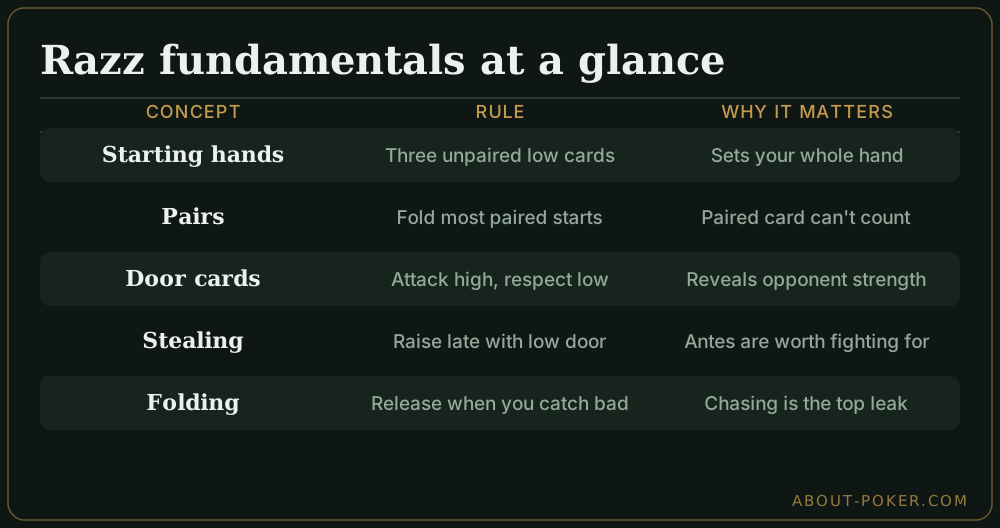
Every opponent shows one up card on third street and gains more up cards as the hand progresses. This information is the heart of razz. If opponents show high door cards — jacks, queens, kings — they are almost certainly behind, and you should raise to attack. If they show low door cards, respect that they may hold a strong low. Constantly compare your board to theirs: whoever is showing the lowest, smoothest cards is representing the best hand, and betting should follow that story.
Steal antes from late position
Because razz players fold so often, the antes and bring-in are worth fighting for. From late position, when the action has folded to you and you show a low door card, a raise frequently picks up the pot uncontested — even with a merely decent three-low. This “stealing” is a steady source of profit. Conversely, defend your bring-in selectively; don’t call raises with a rough, high-catching hand just because you already posted.
A worked razz hand
You start with (2♣ 5♦) A♠ — three to the wheel — and raise. An opponent showing an 8 calls. On fourth street you catch a 4 (now showing a beautiful 4-low board) while your opponent catches a king. You are far ahead: you show four cards to a strong low, and they’ve just paired their board with a dead-weight king.
You bet every street they continue, charging them to catch up. On fifth street you catch a 7 — still a smooth low — while they catch a 9. Now you’re drawing to a seven-or-better low with a huge lead. This is the razz dream: pick a good start, catch better than your opponent, and bet relentlessly. If instead you had bricked two high cards while they caught low, the disciplined play would be to check and fold — knowing when to release is just as important.
Common razz mistakes to avoid
The classic beginner errors are: playing hands with a high card or pair, chasing after you catch bad, and paying off obvious made lows. Another is ignoring door cards — betting a mediocre low into an opponent whose board screams a strong hand. Finally, many players under-steal; passing up profitable ante raises leaves money on the table. Fix these and your win rate climbs quickly.
Razz strategy checklist
- Start with three low unpaired cards. Fold pairs and high cards.
- Prefer babies and three-to-the-wheel. Smoother and lower is stronger.
- Read every door card. Attack high boards; respect low ones.
- Steal antes in late position with a low door card.
- Fold when you catch bad and an opponent keeps catching low.
Razz rewards patience and clear reads over creativity. Nail these fundamentals, then deepen your play with the full razz poker strategy guide covering every street.
Frequently asked
How do you win at razz?
You win at razz by consistently starting with three low unpaired cards, folding when you catch high or pair, and attacking opponents who show high door cards. The lowest five-card hand wins, so patience and door-card reading matter far more than fancy play. Steal antes when the situation is right and fold when you fall behind.
Is razz hard to learn?
Razz is one of the easier poker variants to learn because there are no flushes, straights, or high pairs to track — the lowest hand simply wins. The strategy is straightforward: play low cards, avoid pairs, and use the information from up cards. Mastering discipline and door-card reading is where the real skill lies.
What beats what in razz?
In razz the lowest hand wins, so the best possible hand is the wheel — five, four, three, two, ace. A hand is read from its five lowest unpaired cards, and lower top cards beat higher ones. Aces are always low and pairs count against you, so a 'six-low' beats a 'seven-low' and so on.
When should you fold in razz?
Fold when you catch a high card or pair that ruins your low, especially against opponents catching well. If you start with three babies but brick two straight high cards while an opponent keeps catching low, releasing the hand is correct. Chasing bad boards is the most expensive razz mistake.