MTT 20bb Opening Ranges Chart
MTT 20bb opening ranges by position. Learn raise-first-in vs shove decisions, correct sizes, and how short-stack play changes your tournament ranges.
On this page · 7 sections
At 20 big blinds you’re in the transition zone: still able to open-raise and see flops, but close enough to the shove threshold that push-fold logic starts driving decisions. Getting your 20bb ranges right is where a lot of tournament equity is won or lost, because these stacks show up constantly through the middle stages.
The 20bb mindset
Two things dominate short-stack play. First, fold equity is your main weapon — with 20bb you can put real pressure on opponents who don’t want to bust. Second, you can’t afford to bleed chips into spots you can’t realize. That means fewer speculative flats and more decisive raise-or-fold and raise-or-jam choices. If you want the fundamentals, start with short-stack preflop strategy.
Your opens shrink to a min-raise (2x) or 2.2x. A 20bb stack can’t survive a large raise-and-fold pattern, so keep sizes small. Antes still inflate the pot, so stealing remains profitable — especially from the cutoff, button, and small blind.
Opening ranges by position at 20bb
Nine-handed, antes in, effective 20bb. These are solver-aligned RFI ranges.
- UTG (~11%): 66+, ATs+, KQs, KJs, AJo+, KQo
- Middle position (~14%): 44+, A9s+, KTs+, QTs+, JTs, ATo+, KQo
- Cutoff (~22%): 22+, A2s+, K9s+, Q9s+, J9s+, T9s, 98s, ATo+, KJo+, QJo
- Button (~42%): 22+, A2s+, K5s+, Q8s+, J8s+, T8s+, 97s+, 87s, 76s, A5o+, K9o+, Q9o+, J9o+
- Small blind (~40%, raise or jam mix): 22+, A2s+, K6s+, Q8s+, J8s+, T8s+, A7o+, K9o+, QTo+
The blocker-heavy hands (small aces, small suited kings) are valuable here because they reduce the combos the blinds can use to fight back. For how these ranges shift across depths, see opening ranges by stack depth.
Worked example: A9o on the button at 20bb
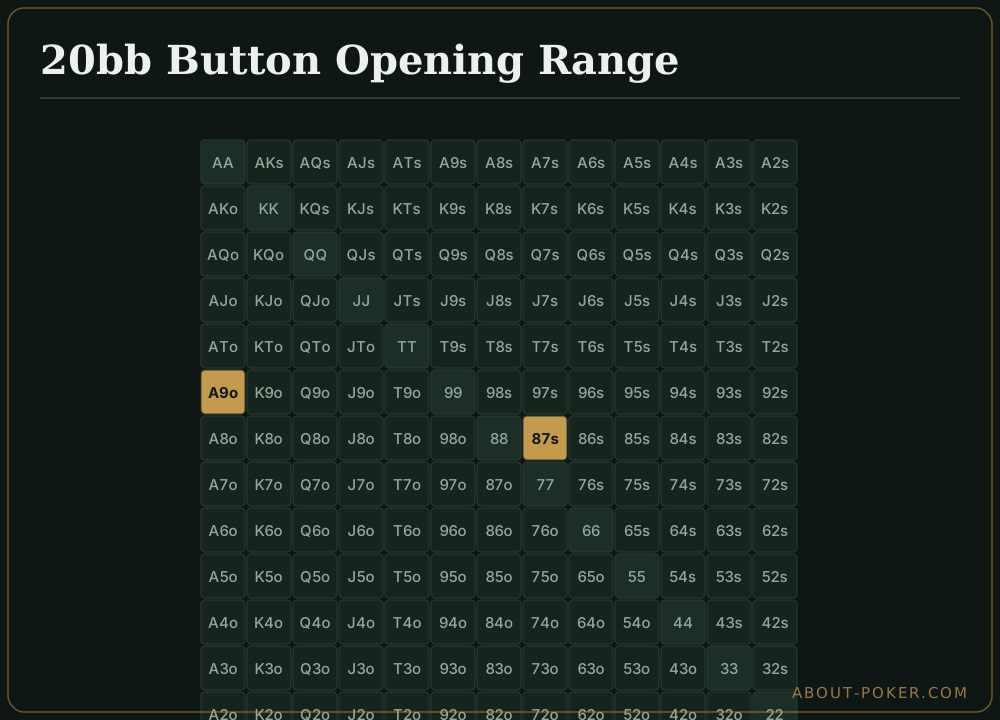
Folds to you on the button with A9o. Effective 20bb, antes posted.
A9o is a clean open — it’s inside your ~42% button range. Min-raise to 2x. Now the decisions branch:
- Blinds fold: you win the antes and blinds, a solid steal.
- Big blind flats: you see a flop in position with a hand that can make top pair and has an ace blocker.
- Big blind jams (~18bb over your 2bb): you’re getting roughly 1.8-to-1 and need about 36% equity to call. Against a typical big-blind jamming range at 20bb, A9o has enough equity to call — it beats a lot of the suited connectors, small pairs, and weaker aces that get shoved. So this is a call, not a fold.
That last branch is the essence of 20bb play: the min-raise keeps your risk low, and when you get jammed on you make a clean pot-odds decision rather than a guess.
When to switch to pure push-fold
As your stack drops toward 12-15bb, open-raising loses value because your remaining stack after a raise is too thin to fold profitably. That’s when you migrate to a jam-or-fold strategy from most positions. The 20bb chart is your last stop before that transition — see how it slots into the wider tournament opening ranges framework.
Facing a 3-bet jam over your open
The most common 20bb decision after you raise is a shove over the top, and it comes down to pure pot odds. The math is worth internalizing so you can act instantly at the table.
Suppose you open to 2bb and an opponent jams for 20bb total. You must call 18bb to win the pot, which now contains their 20bb shove plus your 2bb plus the blinds and antes — call it roughly 24bb. You’re getting about 24-to-18, so you need somewhere near 43% equity to break even. That threshold moves depending on how much dead money (antes) is in the pot: more antes means you need less equity to call.
A few practical calling guides at 20bb, once you’ve opened:
- Against a tight shover: call only with pairs, strong aces, and the top of your range. Their jams are weighted toward hands that have you dominated or flipping.
- Against a wide, aggressive shover: call much wider. A hand like ATo or 99 is comfortably ahead of a range full of small pairs, suited connectors, and weak aces.
- When the antes are large: the extra dead money lowers your required equity, so err toward calling with borderline hands rather than folding.
The core discipline is that a 2x open only risks 2bb. When you get jammed on, you make a cold pot-odds decision — never a guess, and never an ego call.
Raise-or-jam: which hands prefer the shove
At 20bb some hands play better as an open-raise and some prefer an outright jam, especially from the small blind and the button. The dividing line is postflop comfort:
- Prefer to raise (keep the pot small and see flops): suited hands with playability — suited aces, suited broadways, and suited connectors. These flop well and want to realize equity rather than end the hand immediately.
- Prefer to jam (avoid awkward postflop spots): hands that don’t want to play a flop out of position or that gain most of their value from fold equity — offsuit aces like A7o-A9o from the small blind, weak offsuit broadways, and some medium pairs when a raise would leave you pot-committed anyway.
From the small blind in particular, a raise-or-jam mix is standard because you’ll be out of position postflop against the big blind, and jamming sidesteps that disadvantage with the weaker part of your range.
Key takeaways for 20bb
Keep opens small, lean on fold equity, and add a jamming range from late position. Favor hands with blockers and immediate playability over deep-stack speculators. Above all, know your pot odds when someone shoves over your open — at 20bb those all-in calls are frequent, and getting them right is a large chunk of your tournament edge.
Frequently asked
Should I open-raise or shove at 20bb?
Both. At 20bb you still open-raise (usually 2x to 2.2x) with most of your range, but you add a jamming strategy from late position and the small blind with hands that prefer to avoid postflop play. Pure push-fold becomes dominant closer to 10-12bb.
What size should I open at 20bb?
A min-raise (2x) or 2.2x is standard. Bigger sizes commit too much of a 20bb stack and give you a bad price to fold if 3-bet, so keep opens small and let the ante-inflated pot do the work.
How wide can I open from the button at 20bb?
Around 40-45% of hands. The button steals frequently at 20bb because antes make the blinds worth attacking, and if you get jammed on you can fold the weakest opens cheaply since you only invested a min-raise.