Preflop Cold-Call Range Chart
A cold call is flatting a raise with no money invested. See correct cold-calling ranges by position, when flatting beats 3-betting, and a worked spot.
On this page · 5 sections
A cold call is one of the most misunderstood plays in preflop poker. It means flatting someone’s raise when you have no money already in the pot — you’re calling “cold” from a non-blind seat. It sits between two more decisive actions: folding and 3-betting. Used well, cold calling lets you realize equity with hands that are too good to fold but not strong enough to want a raised pot. Used badly, it bleeds chips and drags the players behind you into the pot. This page shows what to cold call by position, when to flat versus 3-bet, and a concrete example.
What “cold call” means and why position rules it
The word “cold” signals the key risk: you have zero chips invested, so unlike the big blind you get no discount. You’re also usually not closing the action — players behind you can still squeeze, forcing you to fold a hand you just committed chips to. That’s why the single most important variable in cold calling is your position relative to the open.
The gold-standard cold-call seat is the button. You’re in position on everyone for the rest of the hand, and only the blinds can squeeze behind you. That’s why button cold-calling ranges are the widest. From the cutoff or hijack facing an earlier open, your cold call is much tighter, because two or three players remain who can squeeze.
Cold-call ranges by position
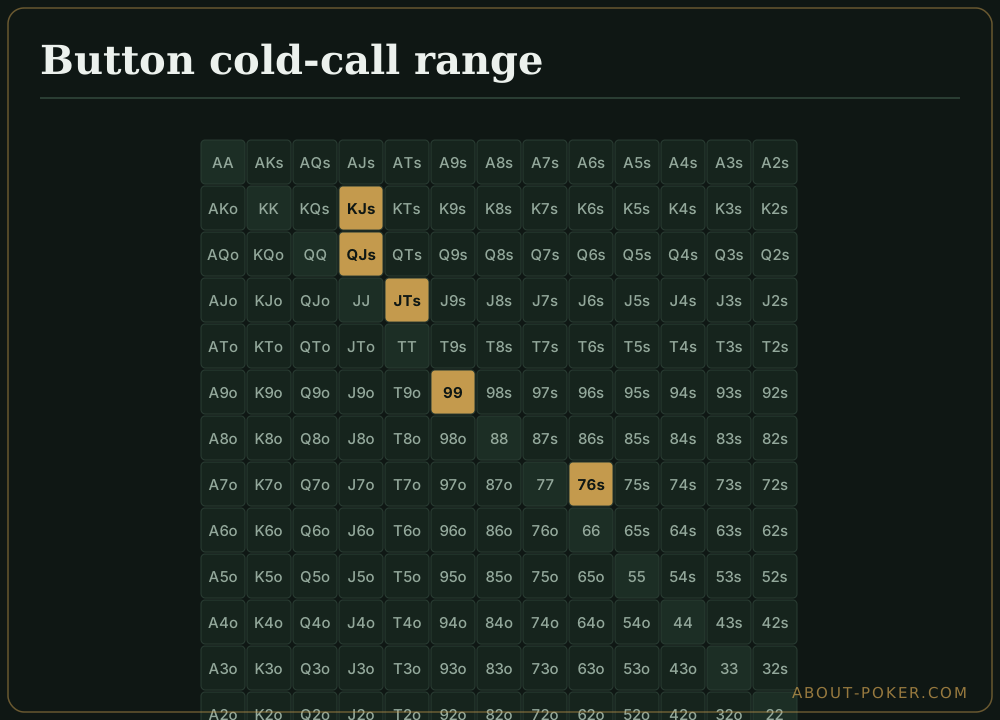
Facing a standard 2.5bb open, here’s a workable framework:
On the button vs a middle/cutoff open: flat medium and small pairs (22-JJ), suited broadways (KQs, KJs, QJs, JTs, KTs), suited connectors and gappers down to about 76s and 65s, and some suited aces (A9s-ATs) you choose not to 3-bet. Your premiums (QQ+, AK) and your bluffs go into the 3-bet range instead.
In the cutoff/hijack vs an earlier open: tighten sharply. Flat mostly medium pairs and the best suited broadways; drop the loose suited connectors, because a squeeze behind is likely and multiway domination hurts. Many players correctly play these middle seats closer to “3-bet or fold.”
In the small blind: avoid cold calling almost entirely. Out of position with no ability to close action, flatting is weak — prefer 3-bet or fold.
Flat versus 3-bet: the split
Think of your continuing range as three tiers:
- Top tier (3-bet for value): QQ+, AK, sometimes JJ/AQ — hands that want a big pot.
- Middle tier (flat): medium pairs, suited broadways, suited connectors in position — strong enough to continue, wrong to blow up the pot.
- Bluff tier (3-bet): hands like A5s, A4s, and some suited connectors used as 3-bet bluffs that block value and fold out worse.
Cold calling is that middle tier. The hands you flat are the ones that lose value or playability if you turn them into 3-bets, but still beat enough of the opener’s opening range to continue.
A worked example
You’re on the button with JTs. The cutoff opens to 2.5bb and it folds to you. The blinds are two competent, non-squeeze-happy regulars.
Flat. JTs is a poster child for cold calling: it flops well (straights, flushes, top pair with a good kicker), it plays beautifully in position, and it’s not strong enough that you want to bloat the pot with a 3-bet. If you 3-bet it, you fold out all the hands you dominate and only get called by better. By flatting, you keep the cutoff’s worse suited broadways and offsuit hands in the pot and take a cheap flop with position.
Now change the seat: same JTs in the hijack facing a UTG open, with the cutoff, button, and both blinds still to act. Here the flat is much worse — a squeeze behind is common, and if you get squeezed you fold a hand you just invested in. In that spot, most solid players fold or occasionally 3-bet JTs as a bluff rather than cold call.
The bottom line
Cold calling is a position-dependent skill. Flat wide and confidently on the button, tighten hard in the middle seats, and essentially never cold call from the small blind. The hands you flat are the middle tier — too good to fold, too weak to want a raised pot — and getting that tier right is one of the highest-leverage adjustments in preflop poker.
Frequently asked
What is a cold call in poker?
A cold call is calling a raise when you have no money already invested in the pot — you're calling 'cold' from a seat other than the blinds. It's distinct from a big-blind defense (where you have chips in) and from a 3-bet (where you re-raise instead of flat).
When should I cold call instead of 3-betting?
Flat when your hand plays well multiway and postflop but isn't strong enough to want a bloated pot out of position — think medium pairs and suited broadways in position. 3-bet with your strongest hands and your bluffs; flat with the hands in between that keep dominated ranges in.
Is cold calling ever a mistake?
It's a mistake when done out of position or when it invites the players behind to squeeze. Cold calling is strongest in position on the button. From the middle with players still to act, a tighter flatting range or a 3-bet-or-fold approach is usually better.