UTG+1 Opening Range (RFI) Chart
The UTG+1 opening range sits just wider than UTG — about 17-18% of hands in 6-max. See the exact RFI chart, the added hands, and a worked open.
On this page · 8 sections
UTG+1 is one seat better than under the gun, and that single fold behind you buys a little more room. The UTG+1 opening range runs about 17-18% of hands in 6-max — tighter than the cutoff or button, but a touch wider than the first seat. This chart shows exactly what to add over UTG and why.
What the UTG+1 opening range looks like
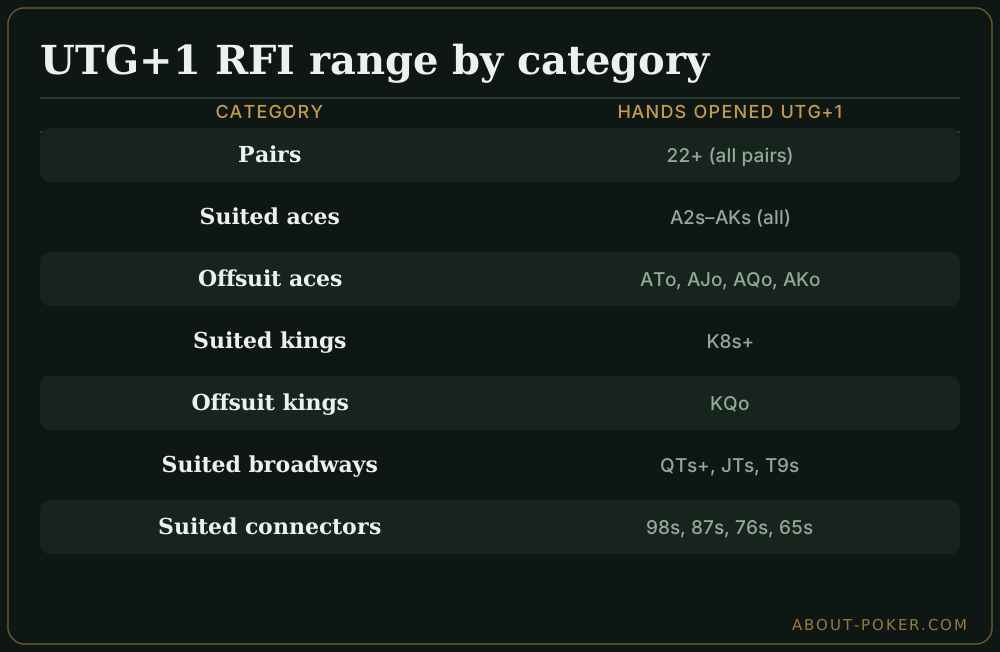
A solid 6-max baseline at 100bb. This is a pure RFI range — you are opening an unopened pot from the second seat.
| Category | Hands opened UTG+1 |
|---|---|
| Pairs | 22+ (all pairs) |
| Suited aces | A2s–AKs (all) |
| Offsuit aces | ATo, AJo, AQo, AKo |
| Suited kings | K8s+ |
| Offsuit kings | KQo |
| Suited broadways | QTs+, JTs, T9s |
| Suited connectors | 98s, 87s, 76s, 65s |
That is roughly 17-18% of the 169 starting-hand types — a small step up from the ~15% you open under the gun.
What UTG+1 adds over UTG
The additions are modest and specific. With one fewer opponent behind, a handful of hands that were just outside the UTG range cross the line:
- ATo — the offsuit ten-ace becomes a marginal open once one early seat is gone.
- KJs, QJs — suited broadways that firm up with fewer players to run into.
- One more suited king (K8s) and one more suited connector (65s).
Everything else is identical to UTG. The core of the range — pairs, suited aces, offsuit AQ/AK, suited broadways — does not change; you are just loosening the margins.
Why the range widens one notch
RFI width is driven by how many players still get to act. UTG has five opponents behind; UTG+1 has four. That one extra fold lowers the chance that someone wakes up with a dominating hand, so a few borderline holdings become profitable opens.
But do not overcorrect. UTG+1 is still an early seat — you will usually be out of position postflop against the players who continue. The range stays disciplined and suited-leaning for the same reason UTG does: hands that realize equity from out of position, not offsuit junk that gets played back at.
A worked UTG+1 open
You are UTG+1 with A♦ T♣. The action folds to you.
ATosits right at the edge of the UTG+1 range. With one early seat already gone, it becomes a thin but profitable open.- Raise to about 2.5bb.
Now rewind one seat. That same A♦ T♣ under the gun is a fold — with five players behind, offsuit ATo runs into dominating aces too often to open. The hand did not change; the seat did. One fold behind you flipped ATo from a muck to an open, which is exactly the kind of hand that separates the UTG and UTG+1 charts.
Common UTG+1 mistakes
- Treating it like the cutoff. UTG+1 is still early. It is not the place for offsuit connectors, weak offsuit kings, or wide suited gappers.
- Playing an identical UTG range. You are leaving a few profitable opens on the table if you never widen from the second seat.
- Ignoring stack depth. These are 100bb ranges. Short-stacked, tighten and lean toward raise-or-fold.
Adjusting the range for your table
The 17-18% baseline is a starting point, not a law. Two conditions should move it.
Loosen slightly when the players behind you are passive and rarely 3-bet. If the cutoff, button, and blinds are calling stations who let you see cheap flops and reopen the pot rarely, the risk of opening a borderline hand like ATo or KJs drops, and you can lean toward the top of the 17-18% band. You are being paid to play more pots in position against players who will not punish you.
Tighten when there is an aggressive 3-bettor behind you, especially on the button or in the blinds. Every hand you open from UTG+1 has to survive the gauntlet of four players who can reraise, and a hand like ATo or a weak suited king is exactly what gets exploited by a wide 3-bet — you are forced to fold, or to call and play a bloated pot out of position with a dominated hand. Against a known aggressor, cut the marginal offsuit hands first (ATo, KQo) and keep the suited holdings that flop well and can occasionally continue.
Table size matters too. In full-ring 9-handed games, UTG+1 is still very early — there are more players left to act than in 6-max — so shade the range back toward the tighter UTG baseline rather than the numbers above.
Facing action after you open
Opening the range is half the job; knowing how it holds up under pressure is the other half.
- Against a 3-bet from a tight player: fold the bottom of your range without regret. The marginal additions — ATo, KJs, QJs, the extra suited connector — are the first hands to muck. Continue with your strong pairs, suited aces you can 4-bet or flat, and premium broadways.
- Against a 3-bet from a wide, aggressive player: you can defend a little more, mixing in some flats and light 4-bets, but do it with hands that have blockers or playability, not the offsuit fringe.
- When called and you are out of position: remember why the range is suited-leaning. Your suited hands realize equity better from out of position, so your postflop plan should favor c-betting boards that connect with broadways and giving up cleanly when a low, coordinated flop misses your big-card-heavy range.
Wrapping up
The UTG+1 opening range is UTG plus a small, deliberate set of additions — ATo, KJs, QJs, and a couple of extra suited hands — landing around 17-18% of hands. Keep the core intact, widen only at the margins, and let the range keep expanding as you move to the lojack and beyond. Fold it all into the full preflop strategy framework.
Frequently asked
How wide is the UTG+1 opening range?
In 6-max at 100bb, UTG+1 opens around 17-18% of hands, slightly wider than UTG's 15%. One player has folded behind you, so you can add a few extra suited hands and offsuit broadways compared to the first seat.
What is the difference between UTG and UTG+1 ranges?
UTG+1 has one fewer player to act behind it, so it opens a touch wider. Typical additions over UTG are hands like ATo, KJs, QJs, and a couple more suited connectors and suited kings. The core of strong pairs, suited aces, and broadways is the same.
Is UTG+1 an early or middle position?
In 6-max, UTG+1 is often called early-middle position — it is the second seat to act. In full-ring 9-handed games it is squarely early position. Either way it opens tight, just marginally wider than the very first seat.
What hands does UTG+1 add over UTG?
Common additions are ATo, KJs, QJs, an extra suited king or two, and one more suited connector like 65s. These are hands that were just outside the UTG range and become profitable with one fewer opponent behind you.