UTG Opening Range (RFI) Chart
The UTG opening range is the tightest RFI range at the table — about 15% of hands in 6-max. See the exact chart, the logic, and a worked open.
On this page · 8 sections
Under the gun is the toughest seat to open from, and the fix is simple: open tight. With five players still to act behind you, the UTG opening range is the narrowest RFI range at a 6-max table — around 15% of hands. This chart gives you the exact range, the reasoning, and a worked example so you can open UTG on autopilot.
What the UTG opening range looks like
Here is a solid 6-max baseline at 100bb. UTG is the first player to act, so this is a pure RFI range — the pot is unopened.
| Category | Hands opened UTG |
|---|---|
| Pairs | 22+ (all pairs) |
| Suited aces | A2s–AKs (all) |
| Offsuit aces | AQo, AKo |
| Suited kings | K9s+ |
| Offsuit kings | KQo |
| Suited broadways | QTs+, JTs, T9s |
| Suited connectors | 98s, 87s, 76s |
That comes to roughly 15-16% of the 169 starting-hand types. Everything outside it — weak offsuit aces, offsuit broadways below KQ, small offsuit kings, and disconnected junk — folds.
Why UTG opens tightest
Position is the master dial for RFI width, and UTG sits at the far tight end for one reason: five players act behind you. Every seat that can still enter the pot is a seat that can wake up with a premium and 3-bet or flat you with position. The more opponents behind, the more likely one of them holds a hand that dominates a marginal opener.
So UTG leans on hands that are strong even when called by a tight range, and hands that stay comfortable out of position after the flop. That naturally pushes the range toward pairs, suited aces, and suited broadways — hands with clear postflop value.
Suited over offsuit
Notice how the chart keeps suited hands the offsuit versions drop. KTs opens; KTo folds. A5s opens; A5o folds. The reason is combinatorial and practical at once. A suited hand is only 4 combos, so adding it barely widens the range, and it comes with flush potential that helps it realize equity out of position. Offsuit junk is 12 combos each and plays poorly when you have no position — a bad trade from the first seat.
A worked UTG open
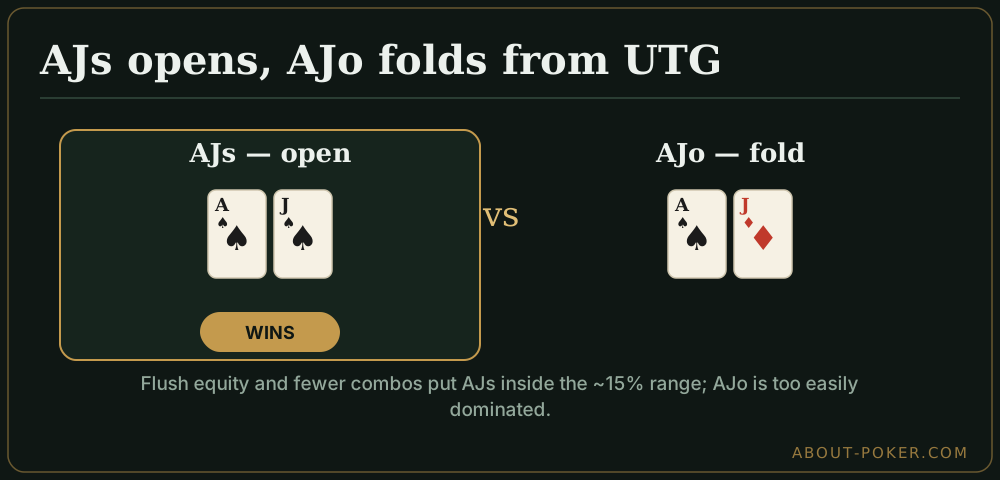
You are under the gun with A♠ J♠. The action is on you first.
AJsis a clear open — it is a suited ace with flush and straight potential, comfortably inside the ~15% range.- Raise to about 2.5bb. You are first in with a strong, well-playing hand.
Now swap it for A♠ J♦ — the offsuit version. AJo is a fold from UTG. It is dominated by the AQ, AK, and better aces that the tight ranges behind you will continue with, and it loses the flush equity that made the suited version playable. Same ranks, one suit different, opposite decision. That single swap is the UTG range doing its job.
Common UTG mistakes
- Opening offsuit broadways too wide.
KJo,QJo, andKToare folds UTG — they are dominated far too often from the first seat. - Limping to “see a flop cheap.” If a hand is worth playing UTG, raise it; open-limping surrenders initiative and invites the field.
- Playing the same range everywhere. UTG is tight by design. As you move to UTG+1 and beyond, the range widens seat by seat — see poker ranges by position.
Facing a 3-bet after you open UTG
Opening tight from UTG pays off when someone 3-bets you, because your range is already strong. When a player behind re-raises your UTG open, remember that they know you are opening tight — so their value 3-bets are heavily weighted toward premiums. Your response splits cleanly:
- Continue by 4-betting or calling with the top of your range: QQ+ and AK are clear continues, and JJ/AQs mix depending on the raiser and position.
- Fold the bottom of your opening range: hands like 22-66, KQo, and the weaker suited connectors were fine as opens but are dominated against a tight 3-betting range. Opening them does not obligate you to defend them.
This is the payoff of a disciplined open: because you started strong, you rarely face the miserable spot of defending a marginal hand out of position against a re-raise. A wider opener would be forced to fold too often or continue with dominated holdings.
Stack depth and game format
The ~15% baseline is a 100bb 6-max cash guideline. Two adjustments matter. At full-ring tables (nine players) with even more seats behind you, tighten further — many pros trim the smallest pairs and the weakest suited connectors from the UTG open. In tournaments, effective stacks shrink as blinds and antes climb; shorter than about 40bb you can actually open a touch wider from UTG because antes sweeten the pot and postflop play is simpler, and near 15bb the decision often becomes open-shove or fold rather than a small raise. The principle is constant — UTG stays the tightest seat at the table — but the exact frequency flexes with the format and the stacks.
Wrapping up
The UTG opening range is your tightest RFI range: about 15% of hands, built from pairs, suited aces, suited broadways, and the top offsuit broadways. Keep it disciplined, favor suited over offsuit, and remember the whole point is protecting yourself from five players acting behind you. Tie it into the full preflop strategy framework, compare it against the wider ranges by position, and see how position reshapes every open.
Frequently asked
How wide should my UTG opening range be?
In a 6-max cash game at 100bb, a solid UTG opening range is around 15-16% of hands. That is roughly pairs 22+, suited aces A2s+, suited broadways, AQo+ and KQo. UTG is the tightest seat because five players act behind you.
What hands do you open under the gun?
All pocket pairs, all suited aces, suited broadways down to KTs/QTs/JTs, the strongest suited connectors like 98s and 87s, and offsuit AQo and KQo. Weak offsuit aces, offsuit connectors, and small offsuit kings are folds from UTG.
Should I open small pairs like 22 from UTG?
Yes, small pairs are marginal opens from UTG. They are included in most solver-based ranges because they can flop sets and have decent equity, but some tighter live strategies fold the smallest pairs UTG at full-ring tables.
Why is the UTG range so tight?
Five players act after you, so there is a high chance someone behind wakes up with a strong hand and 3-bets or calls you in position. A tight, strong range protects you from being dominated and played back at from all those seats.