Can You Raise Your Own Bet
Can you raise your own bet in poker? No — action must pass to another player first. Learn the reopening-of-betting rule and when you can raise again.
On this page · 7 sections
“I bet, but now I want it to be bigger — can I just raise myself?” New players ask this constantly, and the answer is a clean no. In poker you cannot raise your own bet. Once your chips are out, your action is finished and the turn passes to the next player. This guide explains exactly why, what has to happen before you can bet more, and the one rule — reopening the betting — that governs when you actually get to raise again.
The short answer: no, you can’t raise yourself
A raise, by definition, is a response to a live bet in front of you. When you are the one who just bet, there is nothing to respond to — your own wager is not action against you. So the moment your bet is complete, the turn moves clockwise to the next player. You do not get to immediately increase your own bet, and you cannot “add on” to it. For the mechanics of how raising works in the first place, see how raising works in poker.
Why the rule exists
Poker betting runs in strict turn order for a reason: every player needs a single, clear amount to respond to. If a player could keep bumping up their own bet, opponents would never know what they were actually facing, and the action could spiral without anyone else getting a say. The rule keeps each betting round orderly — one player acts, the next responds, and the size in front of everyone is always unambiguous. It ties directly into the principle of acting in turn.
The one exception: reopening the betting
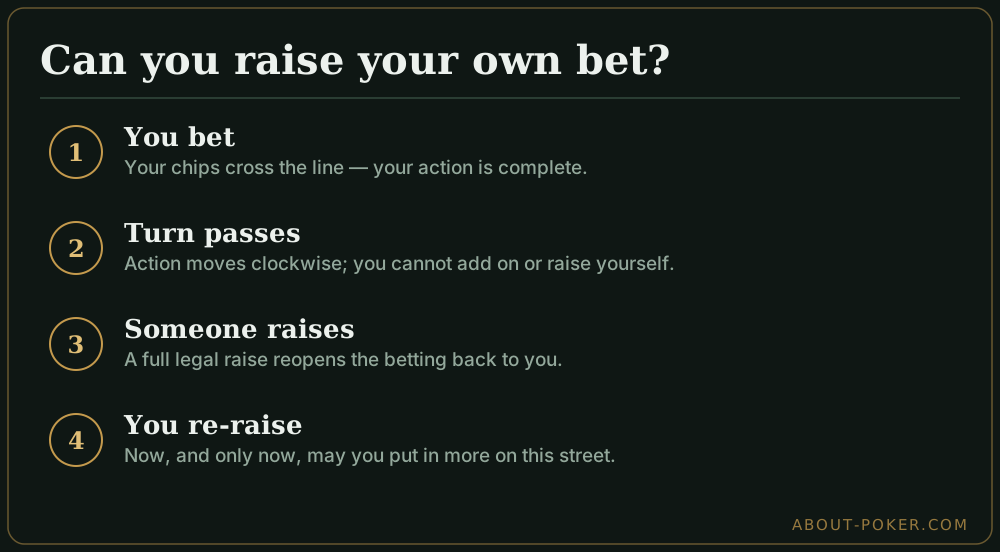
There is a legitimate way to bet more on the same street, but it is not “raising yourself” — it is raising after someone else reopens the action. The reopening-of-betting rule says the action comes back to you as a full option (call, fold, or re-raise) only when a player behind you makes a full legal raise. A mere call does not reopen it. So if you bet, an opponent raises, and it travels back to you, you can now re-raise. That is different from raising your own uncontested bet.
The incomplete all-in wrinkle
In no-limit and pot-limit games there is a subtle case worth knowing. Say you bet 50, an opponent goes all-in for 70. That 20 extra is less than a full raise (a full raise would be to at least 100). When an all-in is short of a full raise, it generally does not reopen the betting for players who have already acted. You would only be allowed to call the extra 20 or fold — you could not re-raise. If instead the all-in had been a full raise or more, your right to re-raise would be restored.
Worked example
You are in a $1/$2 cash game. On the flop you bet $10. As the chips leave your hand you realize the pot warranted more like $18, and you want to fix it. You cannot. Your $10 stands, and the action moves to the player on your left. He just calls $10 — that does not reopen anything. The next player also calls. Now the turn card comes and a fresh betting round begins, where you may bet whatever you like as the first to act. The only way you could have put in more on the flop is if someone had raised you; then, when action returned, you could have re-raised. This is why thinking about your sizing before you release chips matters — get the number right the first time. For the full framework, review poker betting rules explained.
Common mistakes to avoid
- Betting too small and hoping to fix it. You get one motion, one amount. Decide the size before your chips cross the line.
- Confusing a call with a reopen. If everyone just calls your bet, the action never comes back to you on that street — the next card ends it.
- Assuming every all-in lets you re-raise. A short all-in that is under a full raise does not reopen your option if you already acted.
- Trying to “string” more chips out. Adding a second handful after your first is a string bet and will be ruled down to your original amount.
Quick checklist
Before you release your chips, ask: is this the full amount I want in the pot on this street? Because once it is out, you are done acting until someone raises. Your bet is a single, complete statement — not a draft you can revise. Wait for the action to travel around, and only then, if it has been reopened, do you get the microphone back.
Frequently asked
Can you raise your own bet in poker?
No. Once you bet or raise, your action is complete and the turn passes clockwise. You cannot immediately raise your own wager because there is no live action for you to respond to. You only get to act again after another player makes a bet or raise that reopens the betting to you.
What is the reopening of betting rule?
The betting is only reopened to a player when someone makes a full legal raise after their last action. A call does not reopen it, and in no-limit and pot-limit an incomplete all-in that is less than a full raise usually does not reopen it for players who already acted.
Can you add more chips after your bet is out?
No. Under the string-bet rules you push your intended amount out in one motion and that stands as your action. You cannot top it up because you had second thoughts. You must wait for the action to come back around to raise again.
When does your turn come back around?
Your turn returns after every player between you and the next raiser has acted. If someone raises, the action travels clockwise back to you and you may then call, fold, or re-raise.