Is Bluffing Allowed in Poker
Is bluffing allowed in poker? Yes — bluffing is a legal, core part of the game. Here is why it is allowed, where the line is, and what actually counts as cheating.
On this page · 6 sections
Yes — bluffing is completely allowed in poker. Far from being against the rules, it is one of the pillars the entire game is built on. Betting or raising with a hand that is not the best, in order to make opponents fold, is exactly the kind of deception poker is designed to reward. What is not allowed is deception that happens outside the rules — marked cards, secret partnerships, or hidden information. The line is clear: bluff all you want with your chips and your demeanor, never with methods the game forbids.
Why bluffing is a legal part of the game
Poker is a game of incomplete information. You never see your opponents’ cards, so every bet is a message that may or may not be true. If bluffing were banned, the only winning strategy would be to fold everything but premium hands, and the game would collapse into a boring lottery of who got dealt aces. Bluffing is what makes skill matter — reading opponents, telling a believable story with your bets, and picking spots to represent a hand you do not have. The rules explicitly permit betting and raising regardless of what you hold, which is the permission to bluff.
Where the legal line actually is
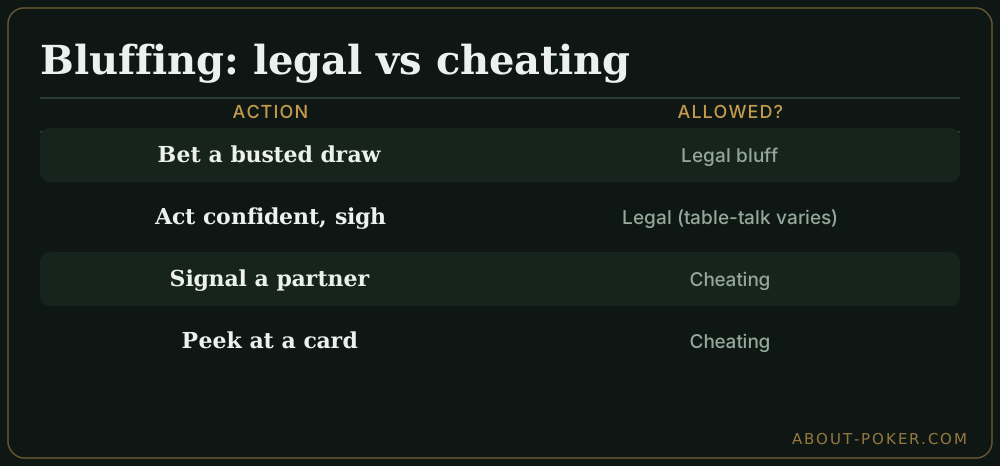
The distinction that matters is legal deception versus cheating. Legal deception is anything you do through the normal machinery of the game: sizing a bet to look strong, betting a busted draw, keeping a calm face, or acting confident. Cheating is everything that steps outside those tools — colluding with another player, using marked or manipulated cards, peeking at cards, or signaling. Bluffing lives entirely on the legal side because it uses only your own chips and behavior. For more on conduct at the table, see poker etiquette for beginners.
Can you talk and act deceptively?
In most cardrooms you are allowed to act strong or weak and to talk in ways that mislead — sighing, staring, chatting confidently. What you generally cannot do is make a binding misdeclaration, like stating an action you do not intend to take, in a way the room treats as official. Table-talk rules vary, so in an unfamiliar room ask the floor about “speech play.” But the core idea holds: fooling opponents about your hand through demeanor is part of the contest, not a violation.
A worked example
You are on the river with A♣ 5♣ on a board of K♦ Q♦ 8♠ 3♥ 2♣ — you missed your flush and have only ace-high, a hand that almost certainly cannot win at showdown. Your opponent checks. You bet three-quarters of the pot, representing a strong made hand like a king or a set. Facing that pressure, your opponent folds their middle pair. You just won with the worst hand — a textbook bluff — and it is entirely within the rules. You used only your chips and your read of a weak opponent. Now compare that to a player who wins by glimpsing an opponent’s card while they look away: that is cheating, no matter how the pot is won. Same result, opposite legality.
What is genuinely not allowed
- Collusion — teaming up with another player to soft-play, signal, or trap a third player.
- Marked or manipulated cards — anything that gives you hidden knowledge of the deck.
- Exposing cards to mislead — showing or hiding cards to send a false signal is against exposure rules.
- Chip mechanics that hide bet size — you must make your bets clear and countable.
- Angle-shooting — using ambiguous actions or fake statements to deceive in ways the rules do not sanction.
If your deception uses only bets, raises, timing, and your own face, it is bluffing. If it relies on anything hidden or shared with a partner, it is cheating.
Quick checklist: is my bluff legal?
- Am I using only my chips and behavior? Then it is a legal bluff.
- Am I acting alone, with no partner signaling? Required.
- Are the cards and deck untampered with? Must be yes.
- Are my bets clear and countable? No hidden sizing.
- Am I avoiding binding false declarations? Check house rules on table-talk.
The bottom line: bluffing is not just allowed, it is the heart of poker. You can win a hand without ever showing your cards — see rules for winning without showing — precisely because the rules let you tell a story with your bets. Keep your deception inside the game, and you are playing poker exactly as intended.
Frequently asked
Is bluffing legal in poker?
Yes. Bluffing is a fully legal and essential part of poker. Betting or raising with a weak hand to make opponents fold is exactly what the rules are designed to allow. Without bluffing, poker would just be a contest of who was dealt the best cards.
Is bluffing considered cheating?
No. Bluffing with your chips and betting actions is honest gameplay. Cheating involves things outside the rules — marked cards, colluding with another player, or acting on hidden information. Deceiving opponents through legal betting is not cheating.
Can you lie about your hand while playing?
In most games, verbal deception about your hand strength is allowed as long as you do not misdeclare a binding action. You can act strong or weak, but you cannot make a false statement that another player relies on as an official ruling in some cardrooms.
Are there any rules that limit bluffing?
You cannot bluff by exposing cards to mislead, soft-play with a partner, or use chip tricks to hide your bet size. Bluffing must happen through normal, legal betting and demeanor. The action itself, not deception, is what is regulated.