What Is a Burn Card
A burn card is the top card discarded face-down before dealing each community card. Here's what it is, when it happens, and the rules dealers follow.
On this page · 6 sections
A burn card is the top card of the deck that a dealer discards face-down before dealing each round of community cards. It’s never turned over, never part of anyone’s hand, and never returned to play — it simply goes into the discard pile. If you’ve watched poker and wondered why the dealer flicks a card to the side before turning over the flop, that’s the burn. It happens three times in a Texas Hold’em hand and is one of poker’s oldest procedural habits.
When burning happens
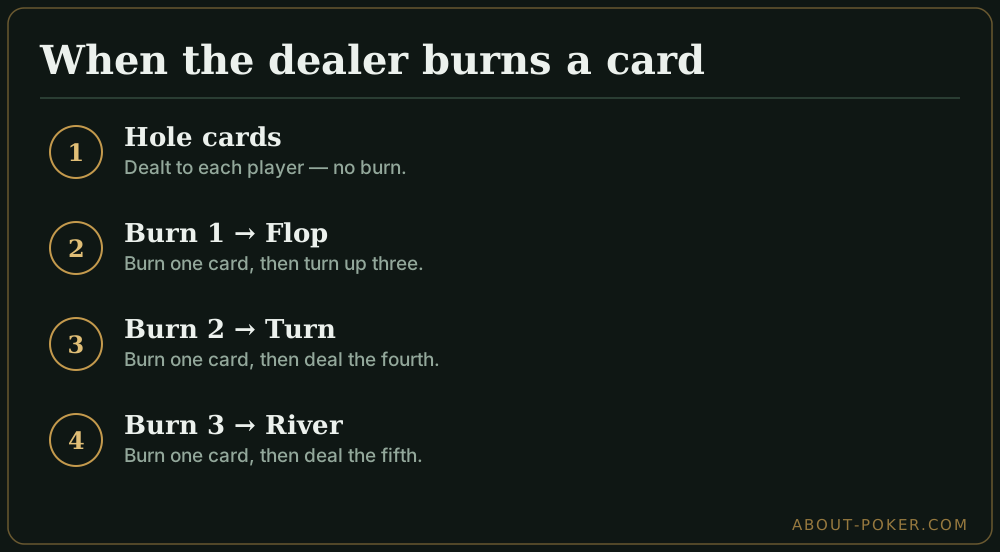
In Hold’em and Omaha, the dealer burns a card before each of the three community-card deals:
- One burn before the flop (then three cards turned up).
- One burn before the turn (then one card).
- One burn before the river (then one card).
That’s three burns per hand. Notice the hole cards are dealt without a burn — burning only applies to the shared board cards. So even though only five community cards ever appear, the deck loses eight cards to the board process: five dealt plus three burned. You can see how this fits into the flow in what is the flop in poker, and the full dealing routine is covered in how to deal poker.
What a burn card is not
A burn card is not the same as the muck. The muck is the pile of folded and discarded hands; burn cards usually go on top of that same pile, but their purpose is different. A burn card is discarded as a matter of procedure on every street, whether or not anyone folded. It’s also not a “boxed card” — that’s a card found face-up in the deck, which is a separate irregularity with its own ruling.
Crucially, a burn card carries no meaning. Players don’t get to see it, and it has no effect on the hand. If it were accidentally exposed, most rooms simply treat it as what it was — a discard — and continue.
The rules dealers follow
Good dealing procedure around burns is precise:
- Burn face-down, always. The card is placed face-down near the discards so no one gains information from it.
- One card, not several. Exactly one card is burned per community-card deal.
- Burn before dealing, not after. The sequence is always burn first, then deal the board card(s).
- Keep burns separate enough to reconstruct. In case of a dispute or misdeal, a careful dealer can account for the burns.
The reasoning behind the whole practice — why casinos bother at all — has its own detailed answer in why do dealers burn a card. The short version: it’s a cheating countermeasure from an era when marked or peeked top cards were a real threat.
A worked example
You’re at a nine-handed table. The dealer finishes preflop betting. Here’s exactly what you see: the dealer slides the top card face-down to the side (burn one), then flips three cards for the flop. After flop betting, another card goes face-down to the side (burn two), then one card comes up for the turn. After turn betting, one more face-down discard (burn three), then the river card.
Add it up. Two hole cards each to nine players is 18 cards. Then across the three streets, three burns plus five board cards is eight more. So 26 cards have left the deck by showdown even in a full ring hand — and three of those were burns nobody ever saw.
What happens when a burn is missed or misdealt
Dealers are human, and burns get botched. Common scenarios and typical rulings:
- Dealer forgets to burn and turns the flop. Many rooms retrieve the exposed cards, reshuffle if required by house rule, or simply perform the burn and continue treating the cards as valid if they were the next in sequence. Rulings vary — the floor decides.
- Dealer burns two cards by accident. Often the extra card is returned or the situation is corrected by the floor; the goal is to restore the correct sequence.
- A burn card is accidentally exposed. Because it has no value, this is usually a non-event; it’s simply placed in the discards.
The theme across all of these: a burn carries no information and no value, so corrections aim to keep the board cards correct, not to protect the burn itself.
Quick reference
- A burn card is discarded face-down before each community deal.
- Three burns happen in a Hold’em hand — before the flop, turn, and river.
- Hole cards are dealt with no burn.
- Burns are never used, never revealed, and never returned to the deck.
- If a burn is missed, the floor rules on how to restore the correct sequence.
Understanding the burn card demystifies one of the most visible dealer habits in the game. It’s a small ritual with a long history, and knowing that it’s just a meaningless discard — not some hidden card in play — is part of understanding how a hand is properly dealt.
Frequently asked
What is a burn card in poker?
A burn card is the top card of the deck that the dealer discards face-down before dealing each community card. It is never used in any hand and is set aside in a discard pile with the muck.
How many burn cards are there in Texas Hold'em?
There are three burn cards in a Hold'em hand: one before the flop, one before the turn, and one before the river. The initial hole cards are dealt without a burn.
What happens if the dealer forgets to burn?
House rules vary, but a common ruling is that if a community card is dealt without burning, the exposed card is retrieved, the correct burn is performed, and play continues. Many rooms count the misdealt card as the intended card if it was next in sequence.