How to Play a Set
A set is the sweetest hand to flop — huge, hidden, and hard to beat. Learn how to extract maximum value, when to slow down, and how to read dangerous boards.
On this page · 6 sections
There’s no better feeling in Hold’em than flopping a set. You take a modest pocket pair, catch a third of its rank on the flop, and suddenly you’re holding one of the most powerful and best-disguised hands in the game. Sets win enormous pots because opponents almost never see them coming — but flopping the hand is only half the job. Playing it correctly, so you extract maximum chips without getting outdrawn, is what turns a lucky flop into a stack. The good news: sets are so strong that the strategy is mostly about avoiding a few specific mistakes.
Set versus trips
First, get the vocabulary right, because it affects how you play. A set is three of a kind made with a pocket pair plus one matching board card — you hold 9♥ 9♠ and the flop brings a nine. Trips is three of a kind made with one hole card matching a pair on the board — you hold A♦ 9♣ and the board shows two nines.
The difference matters enormously. A set is hidden: nothing on the board screams three of a kind, so opponents pay you off. Trips is obvious: the pair is right there for everyone to see, so people play more cautiously. Sets are also almost always the stronger hand because your third card gives you a better kicker situation. For the full comparison, see the set explainer.
Why sets are so valuable
Two things make sets a goldmine. First, concealment — because you needed a specific pocket pair to make the hand, opponents rarely put you on it, so they keep betting into you with top pair, overpairs, and draws. Second, strength — a set beats every one-pair and two-pair hand, and it can improve to a full house or quads.
The tradeoff is frequency. You flop a set with a pocket pair only about 11.8% of the time — roughly once in 8.5 tries. That’s why “set mining” (calling a raise with a small pair hoping to flop a set) only works when the pot odds and implied odds are good enough to justify all the times you miss.
The default: build the pot
Because a set is usually the best hand and hard to read, your default plan is to get money in. Bet and raise to build the pot on the flop and turn so the river bet is large. Don’t get cute — the most common way to misplay a set is to slow-play it into a small pot when straightforward aggression would have stacked someone.
Sizing is your lever. On a wet board, bet larger to charge draws and grow the pot; on a dry board where you want to keep weaker hands in, a smaller bet can induce calls and bluffs. The bet-sizing guide covers how to pick a number that maximizes value for the specific board and opponent.
A worked example
You hold 6♠ 6♣ and call a raise pre-flop. The flop comes K♥ 6♦ 2♣ — you’ve flopped bottom set on a dry board, and the pre-flop raiser bets.
This is close to the perfect set spot. The board is dry (no flush draw, straights unlikely), and the raiser probably has a strong king they can’t fold. Rather than raise and scare them, just call and let them keep betting their top pair or overpair. On the turn and river you can raise or lead to get the rest in. This is the classic trap — read more about the conditions in how to trap with a big hand.
Now change the flop to 6♦ 7♦ 8♦. You have bottom set again, but three diamonds and a connected board mean flushes and straights are everywhere. Here you must bet and raise aggressively — you can’t give free cards. If you get all-in against a made flush you’re behind, but far more often you’re charging draws and stacking two pair or a worse made hand. Protection beats deception on this board.
When to slow down
A set is strong, but it’s not the nuts. Slow down and reassess when:
- The board pairs. A paired board means a full house is possible; if action gets heavy, your set may be beaten.
- Obvious draws complete. If the flush or straight comes and your opponent suddenly bets big, respect it.
- A short stack shoves a scary board. Bottom set on a coordinated board against a committed opponent can be behind.
You’ll rarely fold a set, but the discipline to slow down against clear strength is what separates a solid player from someone who stacks off with a beaten set every session.
A checklist for playing sets
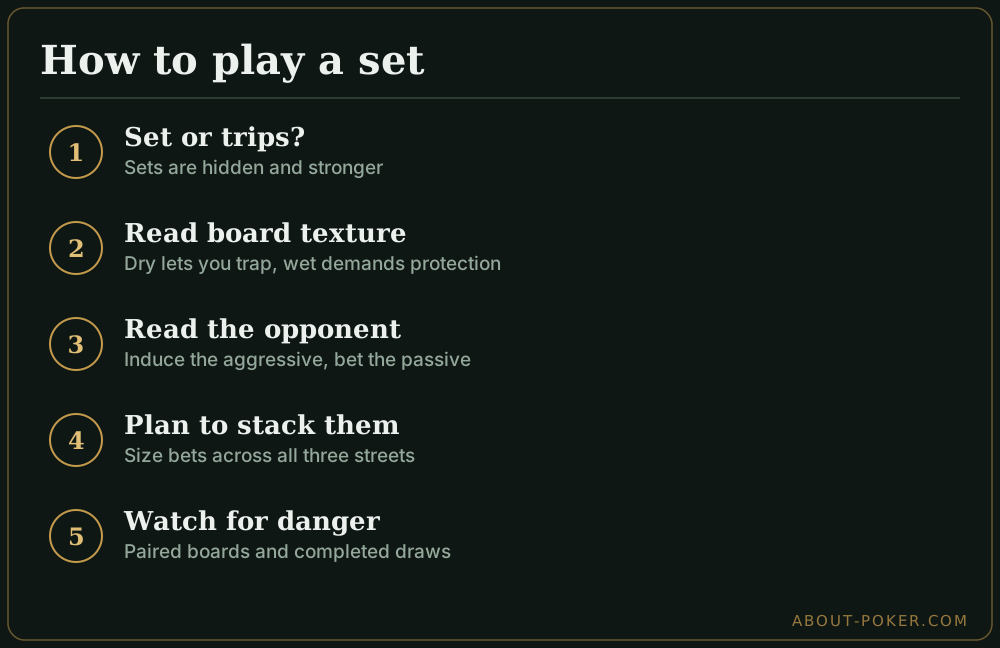
Whenever you flop a set, run through this:
- Set or trips? Sets are hidden and stronger; play them for more.
- Is the board dry or wet? Dry lets you trap; wet demands protection.
- Is my opponent aggressive? If yes, slow-play and induce; if passive, bet yourself.
- How do I get stacks in by the river? Plan the pot over all three streets.
- Has the board gotten scary? Watch for paired boards and completed draws before committing.
Flop a set, follow this framework, and you’ll consistently turn the best flop in poker into your biggest pots — while dodging the handful of spots where even a set needs the brakes.
Frequently asked
What is a set in poker?
A set is three of a kind made with a pocket pair plus one matching card on the board — for example, holding 9-9 and flopping a nine. It's distinct from trips, which use one hole card and a pair on the board, and it's much more hidden and valuable.
How often do you flop a set with a pocket pair?
About once every 8.5 times, roughly 11.8%. That's why players 'set mine' small pairs cheaply — the payoff when you hit is large, but you'll miss the flop the vast majority of the time.
Should you always slow-play a set?
No. Slow-play only on dry boards against aggressive opponents. On wet, drawy boards you should bet to build the pot and protect against flushes and straights that can beat your set.