How to Trap With a Big Hand
Trapping means checking or calling a monster to let opponents bet into you. Learn exactly when slow-playing wins more than betting — and when it costs you the pot.
On this page · 6 sections
Everyone loves the fantasy of flopping the nuts, checking meekly, and letting an opponent shovel their whole stack into a trap. It’s one of the most satisfying plays in poker — and one of the most overused. Trapping, or slow-playing, absolutely has its place, but it wins far less often than beginners think. The default with a strong hand is to bet and build the pot; trapping is the exception you deploy only when specific conditions line up. Get those conditions right and you win huge pots. Get them wrong and you either miss value or hand a free card to a hand that draws out on you.
What trapping actually is
Trapping means deliberately underplaying a very strong hand — checking or just calling instead of betting or raising — to keep an opponent in the pot and induce them to put in chips. Instead of you doing the betting, you let them do it, either by bluffing into your strength or by making a second-best hand they’ll pay off.
The whole payoff is deception. When you check the nuts, an aggressive opponent may fire a bet you’d never have gotten if you’d led out. But there’s a cost: every check gives a free card, and free cards can complete draws. Trapping trades protection for deception, and that trade only pays on the right board against the right player. It sits at the aggressive end of the spectrum covered in aggressive vs passive play — a passive line used as a weapon.
The three conditions for a good trap
Slow-play only when all three of these are true:
- Your hand is genuinely huge. A set, a straight, a flush, a full house — something that’s very hard to beat. Trapping with top pair is a recipe for disaster.
- The board is dry. Few draws are available, so a free card rarely helps your opponent. A monochrome or connected board is the wrong place to give free cards.
- Your opponent is aggressive. Trapping only works if someone bets into you. Against a passive player who checks behind, your check just costs you value — you should bet yourself.
If any condition fails, bet. The single biggest trapping mistake is checking on a wet board and letting a flush or straight draw come in for free.
A worked example
You hold 8♣ 8♦ on a flop of 8♠ 3♥ 2♣. You’ve flopped a set of eights on a bone-dry board, and an aggressive opponent leads out into you.
This is a textbook trap spot. The board offers almost no draws — no flush possible, straights are remote — so a free card is nearly harmless. Rather than raise and blow your opponent off their hand, just call. You keep their bluffs and weaker hands (like an overpair or a pair of threes) in the pot, and you let them keep betting on later streets. On the turn and river you can call again or raise, extracting far more than a flop raise would. This is exactly the kind of hand set play is built for — see how to play a set for the full treatment.
Now change the flop to 8♠ 7♠ 6♠. You still have a set, but three spades and a connected board mean flushes and straights are live everywhere. Here you must bet — protect your hand and charge the draws. Trapping this board is how you lose a big pot to a flush.
Why betting is usually better
Most winning players bet their big hands most of the time, for three reasons. First, betting builds the pot while you’re ahead, and pot size on early streets compounds into bigger river bets. Second, betting protects your hand from free cards. Third, betting keeps your range balanced — if you only ever check your monsters, observant opponents learn that your bets are never the nuts and stop paying you off.
Sizing matters too, and it interacts with trapping. When you do bet a big hand, size it to match the board and the opponent’s likely calling range — the bet-sizing guide covers how to extract maximum value without scaring folds. A well-sized value bet usually beats a fancy trap.
Common trapping mistakes
- Trapping on wet boards. The most expensive error. Free cards complete draws that beat you.
- Trapping against passive players. If they won’t bet, you’ve given up value for nothing. Bet yourself.
- Trapping too often. If every big hand goes into slow-play mode, you become predictable and stop getting paid.
- Checking too many streets. Even a good trap needs to get money in eventually. Don’t check the turn and river and win a tiny pot with the nuts.
A trapping checklist
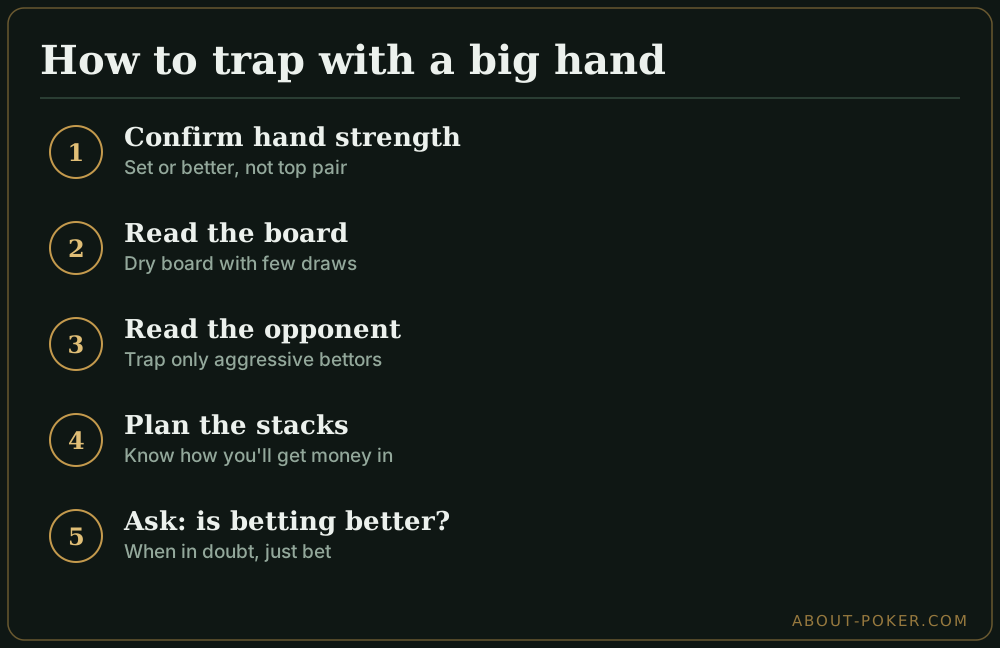
Before you slow-play, confirm:
- Is my hand truly huge? Set or better, not top pair.
- Is the board dry? Few or no draws for the opponent.
- Will my opponent bet if I show weakness? Trap only the aggressive.
- Do I have a plan to get stacks in? Know how you’ll build the pot over the streets.
- Would a bet simply be better here? If in doubt, bet.
Used sparingly and correctly, the trap is a devastating weapon. Used as a default, it’s a leak. Bet your big hands most of the time — and save the slow-play for the dry board and the opponent who can’t stop betting into you.
Frequently asked
What does trapping mean in poker?
Trapping, or slow-playing, means underplaying a very strong hand — checking or just calling instead of betting — so your opponent stays in and bets into you or catches a second-best hand. The goal is to win more chips than fast, aggressive play would.
When should I slow-play a monster?
Slow-play when your hand is very strong, the board is dry so free cards rarely hurt you, and your opponent is aggressive enough to bet if you show weakness. On dangerous, drawy boards, bet instead to protect your hand and build the pot.
Why is trapping risky?
Because giving a free card can let a drawing hand complete and beat you, and passive lines often win smaller pots than straightforward betting. Most players trap too often; betting your big hands is usually more profitable.