Learning From Losing Sessions
How to extract real lessons from a losing poker session without tilting: separate variance from mistakes, review the right hands, and turn losses into improvement.
On this page · 7 sections
Losing sessions are unavoidable and, handled right, some of your best learning material. Handled wrong, they breed tilt and results-oriented thinking that actively makes you worse. The difference is method. This is how to mine a losing session for genuine lessons while keeping your emotions and your logic separate.
First, separate variance from mistakes
The core skill is distinguishing bad luck from bad play — and they feel identical when you’re staring at a red graph. Poker has enormous short-term variance: you can play a flawless session and still drop several buy-ins because your favorites lost. Getting money in as an 82% favorite (say, pocket aces against pocket kings) and losing the ~18% of the time it happens is a good outcome long-term, even though it stings now.
So don’t ask “why did I lose?” Ask, hand by hand, “was this decision the highest expected value given what I knew?” If the answers are yes, the loss was variance and there’s little to fix. If you find recurring poor decisions, those are leaks — and now you know exactly what to study.
Review when you’re calm, not while stinging
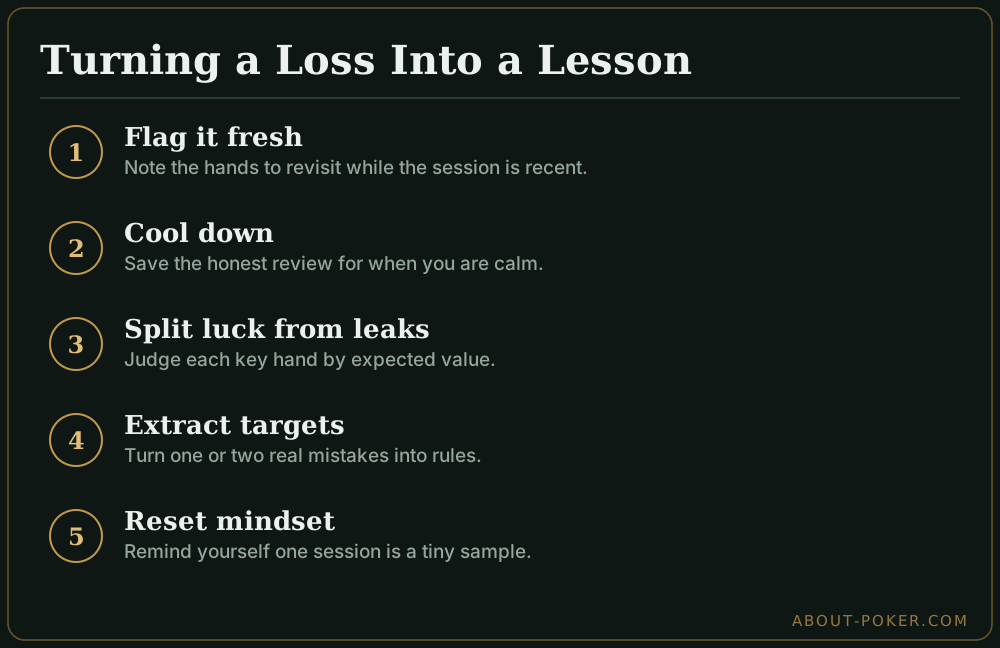
Do a fast note-taking pass while the session is fresh — flag the hands you want to revisit. But save the deep, honest review for when you’re calm, often the next day. Reviewing mid-frustration pulls you straight into results-oriented thinking: you’ll condemn good plays that lost and rationalize bad plays. Emotion is the enemy of the decision-versus-outcome distinction, so give it time to fade first.
Review the right hands honestly
Pull the big pots you lost and the spots where you felt unsure, and run each through a proper hand review: define the opponent’s range street by street, then judge your action against it. Be honest — the temptation after a loss is to blame the cards, but the temptation the other way, to over-blame yourself, is just as distorting. Both are results-oriented. The only fair judge is expected value.
If you use tracking software, a losing stretch is a good prompt to run a broader audit; finding leaks in your poker database shows whether the session’s losses came from a pattern that spans many sessions rather than one unlucky night.
A worked example
You lose four buy-ins in a session and feel awful. Reviewing the three biggest pots the next day:
- Pot 1: You got it in preflop with aces against kings and lost. Aces are about an 82% favorite here — you did everything right; this is pure variance.
- Pot 2: You flopped a flush draw with two overcards, got the money in on the flop against top pair, and missed. With around 15 outs twice you had roughly 54% equity — you were a favorite, so this is also a fine result that just didn’t hit.
- Pot 3: You called a river shove with second pair against a tight player who’d shown up with value all night. Reviewing the range, you were beaten far more than the price justified. This is a real mistake — a bluff-catch against a range with almost no bluffs.
Verdict: two-thirds of your worst pots were variance, and there’s exactly one actionable leak — over-calling river shoves from tight, value-heavy players. That single lesson is worth more than the frustration, and you’d never have found it by staring at the graph.
Turn the lesson into a target
One or two clear leaks per losing session is plenty. Write them down as portable rules (“don’t hero-call tight players’ river shoves with bluff-catchers”), add them to your study plan, and drill or review the relevant spot type. This is the same play-review-extract loop that drives all improvement in how to study poker — a losing session just gives it especially rich material.
Protect your mindset
Finally, manage the emotional side deliberately. Step away and reset before reviewing or playing on. Remind yourself that one session is a statistically meaningless sample, and that judging your play by a single graph is a mental leak in itself. Players who process losses calmly and analytically improve faster and last longer than those who let each downswing rattle them.
A losing-session checklist
- Do a quick flag-the-hands pass now; deep review when calm.
- Judge every decision by expected value, not by the result.
- Honestly separate variance from real mistakes — resist both blame extremes.
- Extract one or two portable lessons and add them to your plan.
- Reset your mindset before you review or play again.
Frequently asked
How do I tell if I lost from bad play or bad variance?
Review each key hand by decision quality, not result. If your actions had the best expected value given what you knew, the loss was variance. If you find recurring mistakes, that's a leak. A single session is too small to judge your play by money won or lost — look at the decisions.
Should I review a losing session immediately?
Do a quick note-taking pass while it's fresh, but save the deep, honest review for when you're calm — often the next day. Reviewing while still frustrated leads to results-oriented thinking and harsh, unhelpful conclusions. Emotion clouds the decision-versus-outcome distinction.
Can a losing session actually mean I played well?
Yes. Because of variance, you can play a flawless session and still lose several buy-ins, especially in the short run. Getting your money in as a favorite and losing is a good outcome long-term. Judge sessions by decision quality, not the graph.
How do I stop tilting after a big loss?
Step away and reset before reviewing or playing on. Remind yourself the sample is tiny and the result doesn't define your play. A calm, structured review afterward converts the sting into a lesson, which is the healthiest way to process a loss.