What Is WWSF in Poker?
WWSF (Won When Saw Flop) is the percentage of hands a player wins after seeing the flop. Learn how it works, what a good WWSF is, and how to exploit it.
On this page · 6 sections
WWSF stands for “Won When Saw Flop.” It is a HUD stat that tells you how often a player ends up winning the pot after they have seen a flop — whether by making the best hand at showdown or by betting everyone else out along the way. It is one of the single best indicators of postflop aggression and skill, because winning pots without a showdown is exactly what aggressive, competent players do.
What WWSF measures
WWSF captures total postflop winning, not just showdown wins. If a player c-bets the flop and takes the pot down, that counts. If they check-raise the turn and their opponent folds, that counts too. Because it rewards taking pots away, WWSF rises with aggression and initiative. A passive player who only wins when they make the best hand will have a low WWSF; an aggressive player who steals plenty of pots will have a high one. It is the natural complement to WTSD, which only counts hands that reach showdown.
How to calculate WWSF
The formula is:
WWSF = (hands won after seeing the flop ÷ hands that saw the flop) × 100
If a player saw 300 flops and won 141 of those pots, their WWSF is 141 ÷ 300 = 0.47, or 47 percent. Crucially, “won” includes every pot taken down without a showdown, so bluffs and c-bets that get through all count as wins here.
What is a good WWSF
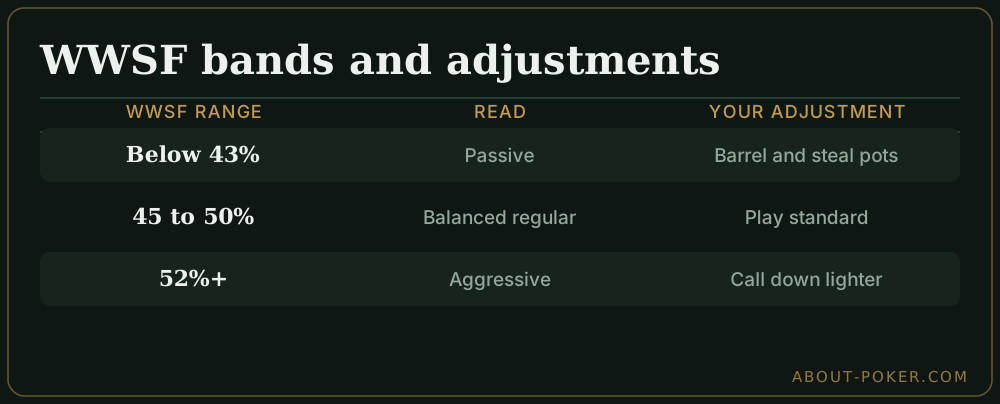
For six-max no-limit cash, the practical bands are:
- Below 43 percent — passive. This player gives up too many pots and only wins when they hit. You can barrel them off hands and steal pots liberally.
- 45 to 50 percent — standard, balanced, the range where solid winning regulars sit.
- 52 percent and above — highly aggressive. This player wins a lot of pots by betting. Against them you should call down lighter and let them bluff into you, because a chunk of their “wins” are steals.
The key is what drives a high number. A WWSF of 52 built on relentless aggression is exploitable by calling; a WWSF of 52 built on genuinely making hands is not.
A worked example
You are in a single-raised pot against a player whose HUD shows WWSF 54 and WTSD 24 over 700 hands. That pairing — high WWSF, low-ish WTSD — is the classic aggressive profile: they win lots of pots but rarely by showdown, meaning they take pots down by betting.
The board runs out Jh 7c 2d 8s Ks and they fire flop, turn, and river. You hold Kc Td — you just made top pair on the river. Against this profile, folding top pair to the river bet is a mistake. Their high WWSF and low WTSD tell you a large share of their triple barrels are bluffs designed to win without showdown. Calling with top pair, good kicker is correct; you are catching their bluffs far more often than you are running into value. Against a passive 43 WWSF player firing three streets, the same top pair is a much easier fold.
Common mistakes reading WWSF
The first mistake is reading WWSF without WTSD beside it. The two together tell the story: high WWSF plus low WTSD equals aggressive bluffer (call more); high WWSF plus high WTSD equals a strong player making hands (respect more). The full family is covered in poker HUD stats explained.
The second mistake is impatience. Like all showdown-adjacent stats, WWSF needs a healthy sample — 300 hands minimum, ideally 500-plus — before it means anything. The third is forgetting that WWSF is a postflop stat conditional on seeing a flop, so a player’s preflop tightness does not affect it directly.
Quick checklist for using WWSF
- Wait for 300+ hands before trusting the number.
- Below 43: barrel and steal, they give up pots.
- 45 to 50: standard balanced opponent.
- 52+: call down lighter, they bluff to win pots.
- Always pair WWSF with WTSD to read the true style.
- High WWSF plus low WTSD is the aggressive-bluffer signature.
Read alongside WTSD and aggression factor, WWSF quickly tells you whether the player across the table earns their pots by making hands or by taking them — and that single distinction changes how you should call, fold, and bluff against them.
Frequently asked
What is a good WWSF in poker?
A WWSF around 45 to 50 percent is standard for a solid six-max regular. Below 43 percent suggests a passive player who gives up too many pots; above 52 percent signals an aggressive player winning many pots without showdown by betting and bluffing.
How is WWSF calculated?
WWSF = (hands won after seeing the flop ÷ hands that saw the flop) × 100. It includes pots won without a showdown, so betting and bluffing to take pots down both count.
What is the difference between WWSF and WTSD?
WWSF measures how often a player wins a pot after seeing the flop, including uncontested pots. WTSD measures how often they reach showdown. A high WWSF with a low WTSD is the signature of an aggressive player winning pots by betting.