Playing the Money Bubble
How to play the money bubble in tournaments: apply ICM pressure with a big stack, survive as a short stack, and read the field hand-for-hand.
On this page · 6 sections
The money bubble is the tension-filled stretch just before a tournament pays out, when a single elimination sends everyone remaining into the cash. It is the phase where skilled players make the most money relative to everyone else, because the fear of busting empty-handed warps how correctly people can play. Master it and you both survive more bubbles and print chips off the players who are terrified.
The driver is the Independent Chip Model. Near the payout line, chips you can lose are worth more than chips you can win, so risking your stack costs more equity than the pot offers. That asymmetry is the whole reason bubble strategy exists.
Why the bubble is so profitable
A tournament typically pays the top 10–15% of the field. On the bubble, the money is close but not locked for short and medium stacks. Their survival is temporarily worth more than chips, so they fold hands they would happily play at any other stage.
That means anyone willing to put chips in first collects blinds and antes at a discount. The pot you win uncontested is real; the risk everyone else fears is theirs, not yours if you have a stack. This is the classic ICM pressure dynamic.
Playing a big stack on the bubble
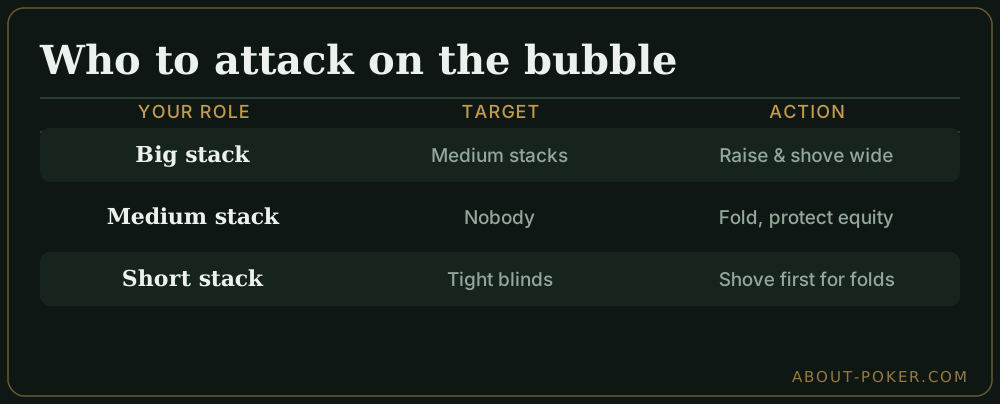
With a big stack you are the bully. Open wide, three-bet light, and shove over the raises of medium stacks who cannot flat or jam back without risking elimination. You are not trying to win showdowns — you are trying to win the pot before the flop, every orbit.
Target the medium stacks specifically. Short stacks are often committed and will call, but medium stacks have the most to lose: they have real equity that busting destroys. Leave the true short stacks alone unless you have a genuine hand, because they are the ones who will call off.
Playing a short stack on the bubble
Short-stacked, your job is survival with aggression, not passivity. You want to be the player who shoves first and picks up fold equity, never the one who calls off a stack. Tighten your calling range dramatically — you might fold hands like pocket eights to a shove because busting costs you a guaranteed cash.
Look for weak spots: blinds occupied by tight players, or an unopened pot where a shove takes it down. Steal enough to stay alive until the bubble bursts, then open up again once everyone is in the money and ICM pressure eases.
A worked bubble example
You have 25 big blinds on the button. The player who busts next is the bubble boy. It folds to you, and the small blind (12 BB) and big blind (15 BB) are both careful regulars protecting their cash. You hold Q7 offsuit — a hand you would normally fold or open marginally.
Here, an open or even a shove is strong because both blinds must fold almost everything to survive. Their calling ranges shrink to premiums; they cannot risk their stacks for a marginal edge on the bubble. You are stealing 1.5 big blinds plus antes with near-zero risk, and you can repeat it next orbit.
Now reverse it: you are the 12 BB small blind and the 25 BB button shoves. Even with pocket nines, calling is often a mistake — you are risking your entire tournament and a guaranteed cash for a coinflip. Fold and wait for a clearer spot.
Common money bubble mistakes
- Calling off a short stack as the bubble caller instead of being the shover.
- Attacking the wrong targets — jamming into committed short stacks rather than medium stacks.
- Tightening up as a big stack when you should be at your most aggressive.
- Forgetting the bubble bursts: once in the money, revert to chip-EV, not survival mode.
- Ignoring blind level; with antes in play, each steal is worth more, so pressure harder.
Bubble checklist
Identify your role first: big, medium, or short. Big stacks attack medium stacks; short stacks shove first and call almost never; medium stacks play the tightest of all. Watch for hand-for-hand play, count the stacks around you, and remember that every fold you force is equity transferred straight to you. For the full definition of the phase, see what is the bubble in poker.
Frequently asked
What is the money bubble in poker?
The money bubble is the point in a tournament just before the paid places, when one more elimination puts everyone left into the money. The player who busts here, the bubble boy, leaves with nothing.
How do you play the money bubble with a big stack?
Attack relentlessly. Raise and shove into medium and short stacks who cannot call without risking their tournament life. ICM makes folding correct for them even with hands they would normally play, so you steal blinds and antes almost for free.
How do you survive the money bubble when short?
Be the shover, not the caller. Look for spots to jam first and pick up fold equity rather than calling off and putting your stack at risk. Tighten your calling range hard and target players who are also afraid to bust.