Re-Shoving Ranges
Re-shoving means jamming all-in over an opponent's open-raise. Here's how to build re-shove ranges by stack, position, and opener to maximize fold equity.
On this page · 7 sections
Re-shoving is the short stack’s counterpunch. When an opponent open-raises and the action reaches you with a stack too short to 3-bet small, you jam all-in over the top. Done well, re-shoving lets you attack loose openers, pick up dead money, and rebuild a stack without ever seeing a flop. It is one of the highest-EV plays in tournament poker — and one of the most misunderstood.
What a re-shove is and when to use it
A re-shove — sometimes called a 3-bet jam or re-steal — is moving all-in over an opponent’s open. It lives mainly in the 12–25bb range. Above that, you have room to 3-bet non-all-in and play postflop; below it, you are often just open-shoving yourself. In between, the re-shove is king because a small 3-bet at these depths commits you anyway while letting the opener realize equity cheaply. The re-steal zone strategy guide maps this window in full.
Why re-shoving prints chips
Two forces make re-shoving profitable. First, dead money: the opener has already put a raise into the pot, plus there are blinds and antes. When they fold, you scoop all of it. Second, the range gap: players open far wider than they call an all-in. Someone raising 30% of hands from the button will call a jam with maybe 12–15% of hands. That gap is your fold equity, and it is enormous.
Building the range
A strong re-shove range blends value and pressure:
- Value: medium and large pairs (66+), AQ+, and hands you are happy to get called by.
- Pressure: suited aces (A2s–A9s), suited broadways like KJs and QJs, and sometimes small pairs. These fold out better hands and flip or flop equity when called.
Suited aces are the backbone. They block the opponent’s calling range — every ace you hold is an ace they cannot have in AA or AK — so they fold more often. And when called, A5s still has around 30% against a big pair and can make the nut flush. For the broader theory of pressure raising, see the 3-bet and 4-bet strategy guide.
Adjusting to the opener and position
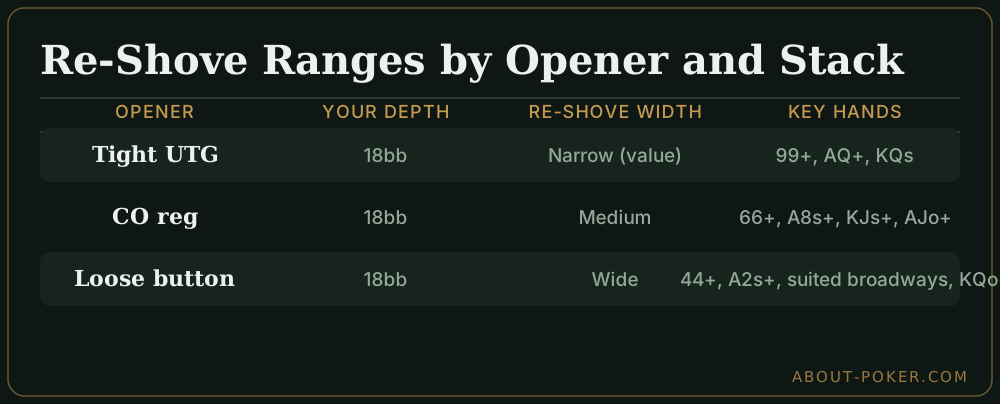
The opener’s tendencies dictate everything. Against a tight under-the-gun raiser, re-shove narrowly — mostly value — because their range is strong and they call more. Against a loose button open, widen aggressively, because they are stealing and will fold most of the time.
Your own position matters too. Re-shoving from the blinds is common because the opener has position on you postflop, so you would rather end the hand now. Re-shoving from the button lets you attack a late-position or cutoff open with position-based fold equity.
A worked example
You are in the big blind with 18bb holding As 4s. The cutoff, a loose regular covering you, opens to 2.2bb. You re-shove all-in for 18bb.
Why A4s? The cutoff is opening around 28% of hands but will only call your jam with roughly the top 13% — big pairs, AQ+, maybe AJs. Your ace blocks their AA and AK combos, shaving their calling range further, so they fold the large majority of the time and you win the 2.2bb raise plus the blinds and antes. On the rare call, say against TT, A4s still holds about 30% equity, and it can spike a flush. Frequent uncontested wins plus a live backup when caught is the exact profile that makes a suited-ace re-shove a printing machine.
Common mistakes
- Re-shoving too wide into strength. Jamming junk over a tight early open runs straight into their value; save wide re-shoves for loose late openers.
- Ignoring blockers. Offsuit trash and small suited hands lack the blocker equity that makes suited aces work; they get called more and flop worse.
- Making it a small 3-bet instead. At 15–20bb a non-all-in 3-bet often pot-commits you while giving the opener a cheap look. Jam.
- Forgetting ICM. Near a pay jump, tighten because the opener also calls tighter, shrinking your fold equity.
Checklist for re-shoving
- Confirm you are in the 12–25bb window facing an open.
- Blend value hands with suited-ace and suited-broadway pressure jams.
- Widen against loose late openers; tighten against early-position raises.
- Use blockers — prioritize hands that remove your opponent’s calling combos.
- Adjust tighter under ICM.
Add re-shoving to your arsenal and short stacks stop being a death sentence and start being a weapon. Pair this with the push-fold strategy guide to cover both open-jams and re-jams.
Frequently asked
What is a re-shove in poker?
A re-shove is moving all-in over an opponent who has already open-raised — a 3-bet jam. It is the short-stack version of a 3-bet, used mainly between about 12 and 25 big blinds, where a small 3-bet would commit you anyway and jamming maximizes fold equity.
How wide should my re-shove range be?
It depends on the opener's range, your stack, and position, but a typical re-shove range at 18–22bb blends value hands (pairs, strong aces, AK) with pressure hands like suited aces and suited broadways. Against a wide late-position opener you can re-shove much wider than against a tight early raise.
Why are suited aces good re-shove hands?
Suited aces block the top of your opponent's calling range — the aces and ace-king they would snap-call with — so they fold more often. When you do get called, a suited ace still has decent equity and can make the nut flush, making it an ideal blend of fold equity and backup value.