Playing the Turn in Cash Games
How to play the turn in cash games: read the card, decide to barrel, check back, or check-raise, and set up profitable rivers with correct sizing.
On this page · 6 sections
The turn is where cash game pots are won and lost. The flop is often near-automatic — the preflop raiser c-bets a range on many boards — but the turn forces a real decision with a bigger pot and only one street left to act on. Every turn card either helps your range or your opponent’s, and the winning player reads that shift correctly and chooses among four options: barrel for value, barrel as a bluff, check back to control the pot, or check-raise. Getting the turn right is largely about card-reading and setting up the river before you bet.
Read the card first
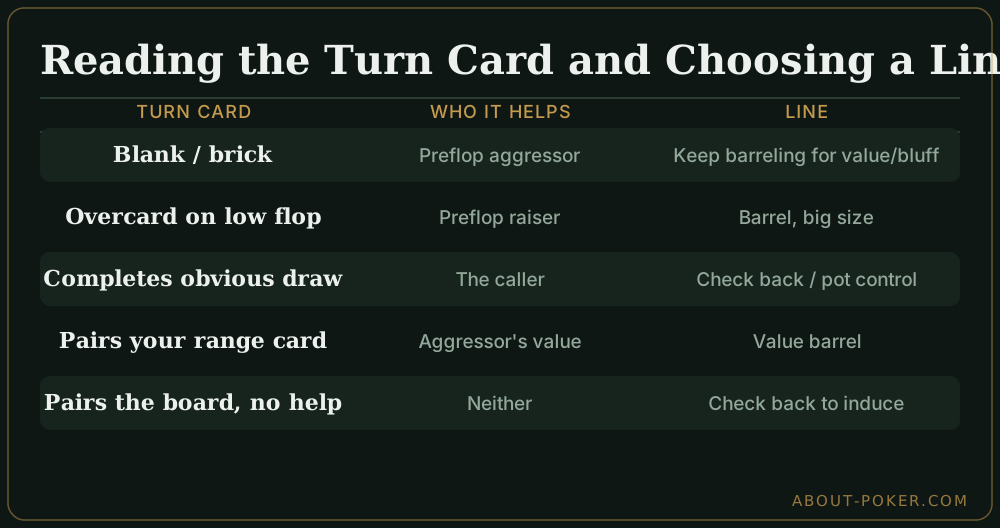
Before you decide anything, ask who the turn card helped. A blank that pairs the board or bricks the draws usually preserves the flop range advantage — the flop aggressor keeps betting. A card that completes an obvious draw (the flush arriving, a straight filling) shifts equity toward the caller and toward check-backs and pot control. A high overcard on a low flop often favors the preflop raiser’s range because it connects with the broadways they raised. The single best barrel cards are those that improve your perceived range while doing little for your opponent’s — that is the essence of the double barrel: you keep applying pressure on cards your opponent’s calling range hates.
The four turn options
Value barreling is for strong made hands and strong draws that want to build a big pot and charge worse hands. Bluff barreling is for hands with equity — draws and overcards — on cards that let you credibly represent value; barreling with pure air on a card that helps your opponent is a spew. Checking back is for marginal made hands with showdown value that do not want to face a raise, and for giving up cheaply with air on bad cards. Check-raising the turn is a powerful, underused line with strong made hands and nutted draws that punishes an opponent’s thin value bets. Choosing correctly among these four is the whole skill of turn play.
A worked example
You open Ah-Kh in the cutoff, the big blind calls, and the flop is Kd-8s-3c. You c-bet 33%, he calls. The turn is the Qh — a near-perfect barreling card. It gives you top pair top kicker plus the nut flush draw, and it adds broadway equity that your range hits far more than the caller’s. You bet 70% of the pot. This card improves your value hands, adds a huge draw to your bluffing region, and pressures the caller’s second pairs and weak Kx. Now compare a turn of the 5c on that same board: it changes nothing, you still hold top pair top kicker, and you bet a controlled 60% for value without the extra pressure. And compare a turn of the 8h pairing the board: your equity is fine, but a check-back to control the pot and induce river bluffs can be better than firing into a board that has not improved you.
Size up on the turn
Turn sizing is generally larger relative to the pot than flop sizing — commonly 60-75% and up. The pot is bigger, there is one street left to get maximum value or maximum fold equity, and larger bets charge draws correctly. Bigger sizing also builds the pot so that a river bet can be a natural stack-defining bet or shove. Our guide to bet sizing in cash games covers how to pick a size, but on the turn the default lever is up: when you bet the turn for value or as a serious bluff, do it big and set up the river. Small turn bets usually leave value and fold equity on the table.
Common turn mistakes
The most common leak is auto-barreling every turn after c-betting the flop, without asking whether the card helped or hurt your range. A second is barreling pure air on cards that favor the opponent — you are just donating. A third is betting the turn too small, giving draws a cheap card and failing to build the pot for the river. A fourth is checking back too passively with strong made hands out of a fear of raises, surrendering a street of value. A fifth is not planning the river before the turn bet, then getting stuck with an awkward stack on the last street. Fix the auto-barrel first — disciplined give-ups on bad turn cards save the most money. For the flop foundation that sets up good turns, see our c-bet strategy.
Turn checklist
Read the card: did it help your range or your opponent’s? Pick one of the four options deliberately — value barrel, bluff barrel with equity, check back for pot control, or check-raise. Size up on the turn, usually 60-75%, to charge draws and build toward the river. Always plan the river before you fire, so your turn bet leaves you a clean stack-defining spot. And when the card is bad for you, be willing to check back or give up — the discipline to stop barreling is worth as much as the aggression to keep going.
Frequently asked
When should you double barrel the turn in a cash game?
Barrel the turn when the card improves your range or perceived range more than your opponent's, when you pick up additional equity, or when a scare card lets you credibly represent a strong hand. Blank turns that keep your range advantage and cards that complete draws you rep are the best barreling cards.
Should you bet bigger on the turn than the flop?
Often yes. Turn bets are usually larger relative to the pot than flop bets — around 60-75% — because the pot is bigger, there is one street left to get value or apply pressure, and you want to charge draws the maximum before the river.
When should you check back the turn?
Check back marginal made hands that want to control the pot, hands with showdown value that do not want to get raised, and your air on cards that favor your opponent. Checking back also protects your checking range and sets up a cheaper showdown or a river bluff.