How Often Is a Continuation Bet Successful
A well-timed continuation bet takes the pot uncontested a large share of the time — and it only needs to work about 43% of the time to profit at half pot. The math.
On this page · 8 sections
The continuation bet — betting the flop after you raised preflop — is the most-used play in No-Limit Hold’em, and for good reason: it wins pots that neither player has connected with. But “how often is a continuation bet successful” has two answers you need to hold together: how often it needs to work (the break-even math) and how often it actually works (the practical frequency). Let’s cover both.
Why c-bets work at all: everyone misses
The engine behind the c-bet is simple. With two unpaired hole cards you pair the flop only about 32.4% of the time — see how often you flop a pair. That means your opponent, most of the time, flopped nothing. When you fire a bet representing the strength you showed preflop, you’re often betting into air. The player who acts like they have it usually takes it down.
The break-even math
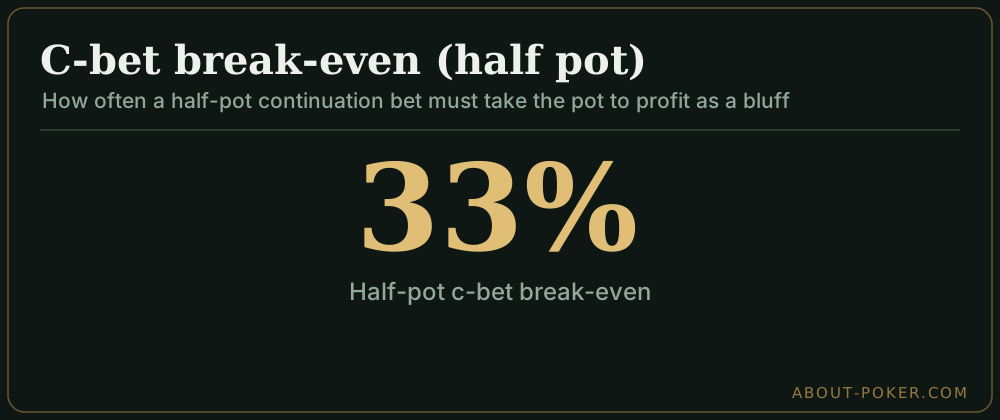
A c-bet as a pure bluff needs to succeed a certain fraction of the time to profit, and that fraction depends only on your bet size relative to the pot. The formula is: break-even fold frequency = bet ÷ (bet + pot).
- Half-pot bet: 0.5 ÷ (0.5 + 1) = 33%. Opponents must fold a third of the time.
- Two-thirds pot: 0.67 ÷ 1.67 = 40%.
- Full pot: 1 ÷ 2 = 50%.
So a half-pot continuation bet only needs to take the pot one time in three to break even as a stone bluff — and any time you also have equity or a real hand, the threshold is even more forgiving. This is the same fold-equity logic covered in fold equity in poker.
How often it actually succeeds
In practice, a c-bet against one opponent in position on a dry board frequently wins uncontested well over 50% of the time — comfortably above every break-even threshold above. But that number is not fixed; it collapses in predictable situations:
- Multiway pots. Every extra opponent is another player who might have connected. A c-bet that works 55% heads-up might work only 30% against two callers.
- Wet, coordinated boards. On a board like 9-8-7 with two of a suit, opponents connect and defend far more, so folds drop.
- Sticky opponents. Calling stations don’t fold enough to make your bluffs profitable — against them, c-bet for value, not as a bluff.
Worked example
You raise Ac Kd from the button and the big blind calls. The flop is 7h 2c 2d — a dry, disconnected board. The pot is 6 and you bet 3 (half pot). To profit as a pure bluff you need folds 33% of the time. Against a single big-blind defender, that dry flop misses their range constantly; realistically they fold well over half the time. Your c-bet is clearly profitable — and you even have two overcards as backup equity when called.
Now change the board to 9h 8h 7c against two callers. That flop smashes calling ranges, opponents defend hard, and your fold equity craters below the break-even line. Here a bluff c-bet is a losing play; you’d check and give up or continue only with real equity.
The defender’s side: minimum defense frequency
Your opponent’s correct response to your c-bet is governed by minimum defense frequency. Against a half-pot bet, they should defend enough combos so you can’t profit by betting any two cards — roughly 67% of their range in theory. Good players approximate this, which is exactly why your c-bet success rate falls when you fire into a thinking opponent rather than a nit who over-folds.
Common mistakes
- C-betting every flop on autopilot. High-frequency c-betting only works on favorable textures against few opponents; wet, multiway boards punish it.
- Betting too big as a bluff. A full-pot bluff needs 50% folds; a smaller bet needs far fewer, so size down when the goal is fold equity.
- Bluffing calling stations. If they don’t fold, your fold equity is near zero — value bet instead.
- Ignoring your own equity. A c-bet with backdoor draws and overcards is far better than one with total air, because you win even when called.
Quick reference
| Bet size | Break-even fold % needed |
|---|---|
| One-third pot | 25% |
| Half pot | 33% |
| Two-thirds pot | 40% |
| Full pot | 50% |
Checklist before you c-bet
- Remember your opponent missed the flop most of the time — that’s why c-bets work.
- Know your break-even: half pot needs only 33% folds.
- Fewer opponents and drier boards mean higher success — bet more freely there.
- On wet, multiway boards, tighten up; fold equity drops fast.
- Against calling stations, switch from bluffing to value betting your real hands.
A continuation bet is one of the most profitable habits in poker precisely because the required success rate is low and the actual success rate is often high. Match your bet size and frequency to the board and the opponents, and the math does the rest.
Frequently asked
How often does a continuation bet need to work to be profitable?
It depends on your bet size. A half-pot c-bet needs to take the pot immediately about 33% of the time to break even as a pure bluff; a two-thirds-pot bet needs about 40%. If it works more often than that break-even frequency, it profits even when you have nothing.
How often is a continuation bet successful in practice?
Against a single opponent in position, a c-bet on a dry board often wins uncontested well over 50% of the time. Success rates fall sharply multiway and on wet, coordinated boards where opponents connect more and defend more. Board texture and number of opponents matter more than any fixed number.
Why do continuation bets work so often?
Because both players usually miss the flop. With two unpaired cards you pair the flop only about 32% of the time, so most flops leave your opponent with air. The player who bets first represents the strength that neither player actually has most of the time.