Giving Up on the Turn
When to give up on the turn instead of barreling: which cards kill your bluff, how to pick give-up hands, and why checking back beats forcing a second bet.
On this page · 6 sections
Not every flop bluff should become a turn barrel. Some turns kill your equity, help your opponent, or simply fail to advance your story — and when that happens, the disciplined play is to give up. Giving up on the turn is not admitting you made a mistake on the flop; it’s the natural other half of a good c-betting strategy. A range that barrels every turn is exploitable and expensive. Knowing which cards and which hands to abandon is what makes your flop aggression profitable to begin with.
Why giving up is part of the plan
When you c-bet the flop with a mix of value and bluffs, you’re not promising to fire again. The turn will come, and it will help your range on some cards and hurt it on others. On the bad cards, the correct response with your weakest bluffs is to check and give up. This isn’t weakness — it’s how the whole line stays balanced and profitable. If you barreled every turn, thinking opponents would simply stop folding and start raising you light. The flip side, when the turn does favor you, is covered in barreling the turn.
Cards that tell you to shut down
Several turns should make you check. Bricks that don’t fit your range — a low, offsuit card that doesn’t threaten your opponent and doesn’t give you a new value story — leave you with no credible reason to bet again. Board-pairing cards that help the caller’s range, giving them trips or filling their two pair, reduce your fold equity sharply. Cards that complete draws your opponent was chasing take away the equity you were hoping to deny. And when you’re out of position with a marginal hand, betting again just bloats a pot you can’t easily control. On all of these, pot control in poker and a check are usually better than a forced second bet.
Which hands to give up with
When you decide to check the turn, choose your give-up hands carefully. Abandon the bluffs with the least equity and the worst blockers — pure air, no draw, no meaningful card removal. Keep barreling with the bluffs that improved: a gutshot that turned into an open-ender, a hand that picked up a flush draw, or a holding that blocks your opponent’s continuing range. This lets you fold out your worst combos while keeping the ones that still have a path to winning. Meanwhile, hands with genuine showdown value should often check back to realize equity rather than bet and get raised off the pot.
A worked example
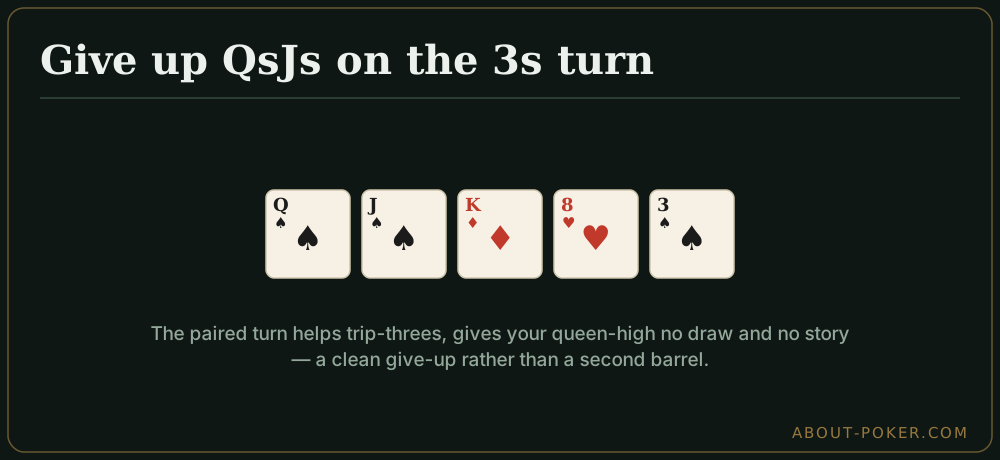
You open Qs Js from the cutoff, the big blind calls, and the flop is Kd 8h 3c. You c-bet 6 into 12 with a queen-high gutshot to a straight — a reasonable flop bluff with two overcards to the eight and three, plus backdoor equity. Villain calls. The turn is the 3s, pairing the bottom card. This card is bad for you: it doesn’t improve your hand at all, it can’t scare the big blind off a king or a middle pair, and it slightly helps their trip-threes and any three-x. You have no draw that connects and no story to tell. This is a clean give-up — check and fold to a bet, or check back and hope your queen-high somehow gets there, which it won’t. Firing again here bluffs into a range that isn’t folding.
The alternative to a hard give-up
Giving up doesn’t always mean checking and folding forever. Sometimes checking the turn sets up a delayed line — you take a free card, and if a good card comes on the river, you can bet then. This delayed-aggression idea, where you check one street to fire a later one, connects to the delayed c-bet concept, just shifted a street later. Checking also lets you catch a bluff if your opponent tries to attack your perceived weakness. So a turn check keeps more options open than a second barrel that folds you off any equity you had.
A quick checklist
Before you fire a second barrel, ask: Did the turn improve my equity or my story? Did it help my opponent’s range more than mine? Do I have bluffs with more equity or better blockers that deserve the barrel instead of this hand? Am I out of position with a marginal hand I can’t profitably grow the pot with? If the turn bricked for you, helped them, or completed their draws, and this particular hand is your weakest bluff, check and give up. Treat giving up on the turn as a skill, not a surrender, and your overall c-betting will make far more money.
Frequently asked
When should I give up on the turn after c-betting the flop?
Give up when the turn doesn't improve your equity or your story, your opponent's range didn't get weaker, and you have hands better suited to bluff. Bricks that don't help your range, board-pairing cards that help your opponent, and being out of position all point toward checking.
Which hands should I choose to give up with?
Give up with the bluffs that have the least equity and the worst blockers — pure air with no draw and no meaningful blocker. Keep barreling with the bluffs that picked up a draw or block your opponent's continuing range.
Is checking back the turn ever better than a free river?
Yes. Checking back with showdown value or a give-up hand controls the pot, realizes equity, and can induce bluffs on the river. Firing a second barrel with no equity and no fold equity just donates chips.
Does giving up mean I bluffed wrong on the flop?
No. A healthy c-betting range includes hands that will barrel some turns and give up on others. Giving up on bad cards is what makes your flop c-bets profitable in the first place — you're not obligated to fire twice.