3-Betting Light
3-betting light means re-raising preflop with bluffs, not just premiums. Learn which blocker-heavy hands to pick, when to do it, and a worked example.
On this page · 6 sections
3-betting light means re-raising preflop with hands that aren’t premium value — bluffs and semi-bluffs rather than aces and kings. It’s the other half of a complete 3-bet range: a re-raising strategy built only from monsters is easy to play against, because observant opponents just fold everything but their own big hands. Light 3-bets add pressure, win pots outright, and disguise your value bets.
Why 3-bet light at all
A 3-bet does two jobs: it gets money in with your best hands, and it pressures opponents off marginal ones. If you only ever 3-bet Q-Q+ and A-K, you accomplish the first job but forfeit the second — and good players simply stop paying you off. Light 3-bets restore the threat. Now when you re-raise, your opponent can’t assume you have it, so they can’t fold their whole range or profitably call down.
There are two ways a light 3-bet wins:
- Fold equity now. The opener folds to the re-raise and you scoop the pot preflop with no showdown.
- Realized equity later. When called, a well-chosen light 3-bet has blockers and postflop playability, so you can continuation-bet many flops and sometimes make the best hand.
The best hands to 3-bet light
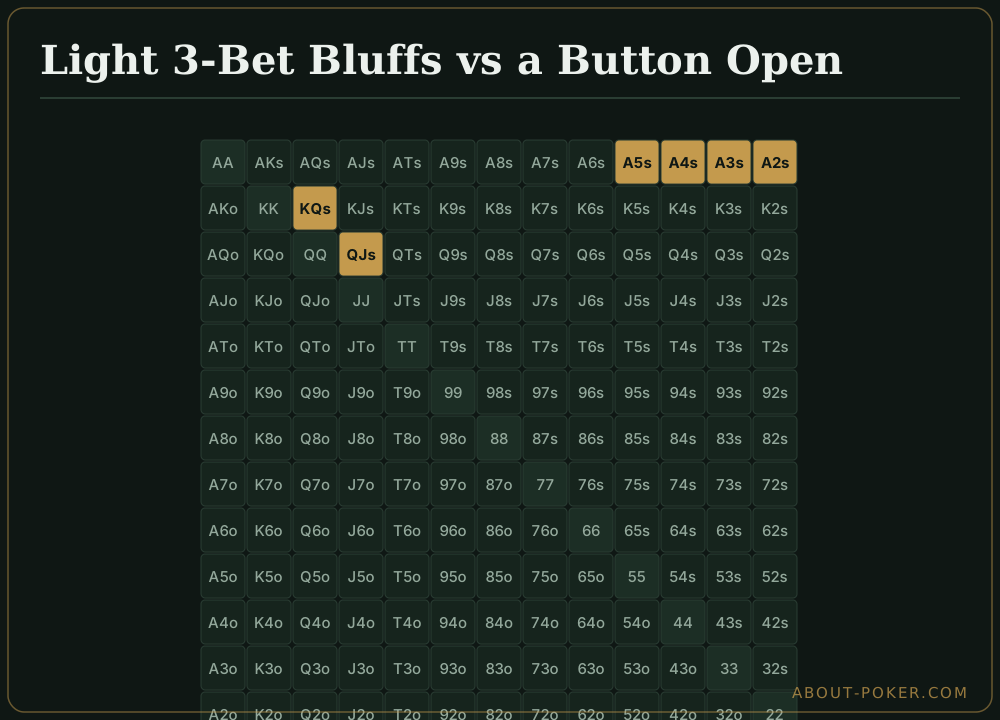
Not all bluffs are equal. The ideal light 3-bet combines blockers and suitedness:
- Suited aces (A-5s to A-2s): The ace blocks A-A and A-K, the two hands most likely to continue against you, so opponents hold them less often. When called, the wheel aces make straights and the nut flush.
- Suited broadways (K-Qs, Q-Js, K-Js): Block A-K, K-K, and Q-Q combinations while flopping strong top pairs and draws.
- Suited connectors (T-9s, 9-8s): Great when called because they make disguised straights and flushes, though they carry fewer blockers.
The blocker logic is the whole point. If you hold the A♠, your opponent can hold four fewer combinations of A-A and several fewer of A-K — so they fold more, and your bluff succeeds more often.
When to 3-bet light — and when not to
Light 3-betting is fundamentally an exploitative and positional decision. It works best when:
- Your opponent opens wide — late-position steals from the cutoff and button are prime targets.
- Your opponent folds enough to re-raises. The 3-bet range by position shifts wider against loose openers and tighter against nits.
- You are in position or 3-betting from the blinds against a stealer.
Stop light 3-betting when the opener is a calling station who never folds preflop — against them, drop the bluffs and 3-bet a pure value range instead. Whether you lean balanced or exploitative here is exactly the trade-off covered in GTO vs exploitative preflop.
A worked example
You’re in the big blind at 100bb. A loose, aggressive player opens to 2.5bb from the button — a spot where their range is very wide (maybe 45%+ of hands). You look down at A♣4♣.
A-4 offsuit would be a fold or a marginal call, but A-4 suited is a textbook light 3-bet. Re-raise to about 11–12bb. The ace blocks their A-A and A-K continuing combos; the suitedness means that when they call, you flop flush draws, wheel straight draws, and top pair often enough to barrel.
- They fold (the common outcome vs a wide steal): you win the pot immediately — pure profit from fold equity.
- They call: flop comes 9♦5♣2♣. You have the nut flush draw plus a gutshot to the wheel. You continuation-bet as a semi-bluff with huge equity and can barrel many turns.
Either branch is good, which is exactly what makes A-4s a superior bluff to a random offsuit hand.
Common mistakes
- 3-betting offsuit trash. J-7 offsuit has no blockers and plays terribly when called. Pick suited, blocker-rich hands.
- Bluffing stations. If they never fold preflop, your fold equity is zero — value-3bet instead.
- Only bluffing, never value. Your light 3-bets exist to balance your value 3-bets. Keep both in the range or you become face-up again.
- 3-betting light out of position into strong players who will call and outplay you postflop. Prefer in-position spots and blind-vs-steal battles.
Quick checklist
Before you 3-bet light, confirm: the opener is loose and folds enough; your hand is suited with blockers; you have position or a good blind-defense spot; and your value 3-bets exist too, so the bluffs aren’t standing alone. Get those right and 3-betting light becomes one of your most reliable sources of preflop profit.
Frequently asked
What does 3-betting light mean?
3-betting light means re-raising an opponent's open with a hand that isn't strong enough to be a pure value 3-bet — a bluff or semi-bluff rather than a premium. The goal is to win the pot immediately when they fold, or to play a hand with good blockers and postflop equity when called.
What are the best hands to 3-bet light with?
The best light 3-bets are suited hands with blockers to the top of your opponent's continuing range: suited aces like A-5s through A-2s, suited broadways like K-Qs and Q-Js, and some suited connectors. Blockers reduce the chance they hold a strong hand, and being suited gives you playability when called.
Is 3-betting light profitable?
Yes, when your opponent opens too wide and folds enough to re-raises. Light 3-bets balance your value 3-bets so you're not face-up, and they let you attack players who open loose from late position. They lose value against calling stations who never fold to a re-raise.