9-Max Full Ring Opening Ranges Chart
Full ring means more players behind you, so 9-max opening ranges are tighter than 6-max. See a seat-by-seat full ring RFI chart from UTG to the button.
On this page · 5 sections
Full ring is 9-max poker, and its opening ranges are tighter than 6-max for one reason: more players sit behind you. Every additional opponent left to act is another chance that someone wakes up with a premium and punishes a loose open. A 9-handed table adds three early seats that don’t exist in 6-max, and all of them play narrowly. Get to the button, though, and the ranges look nearly identical to short-handed play.
Why more players means tighter opens
Your opening range is a function of how many players can still act behind you. Each opponent yet to act adds risk: they might 3-bet, or call and outplay you postflop, or simply hold a better hand.
In 6-max, an under-the-gun opener has five players behind. In 9-max, that same first-in seat has eight players behind — three more chances to run into strength. So the early seats must tighten up. The logic reverses on the button: it has only the two blinds behind it in both formats, which is why button ranges barely change between 6-max and full ring. The full comparison is laid out in 6-max vs 9-max opening ranges.
The 9-max full ring RFI chart (100bb)
Approximate opening frequencies by seat, tightest to widest:
- UTG — about 10 to 12%: 77+, AJs+, KQs, AQo+, plus a few strong suited broadways.
- UTG+1 — about 12 to 14%: add 66, ATs, KJs, KQo, AJo.
- UTG+2 — about 14 to 16%: add 55, A9s, QJs, JTs, KTs.
- Lojack (MP) — about 16 to 19%: add small pairs, more suited broadways, A8s.
- Hijack — about 20 to 24%: add suited connectors 76s+, weaker suited aces, KJo.
- Cutoff — about 26 to 30%: broad suited and offsuit broadways, most suited hands.
- Button — about 45 to 50%: nearly identical to 6-max — all pairs, all suited aces/kings, most broadways, suited connectors, small suited aces.
- Small blind — about 40 to 45% with a raise-only strategy at a 3bb size.
Note how the first three seats — the ones full ring adds — all open under 16 percent. That tightness is the defining feature of full ring.
A worked example
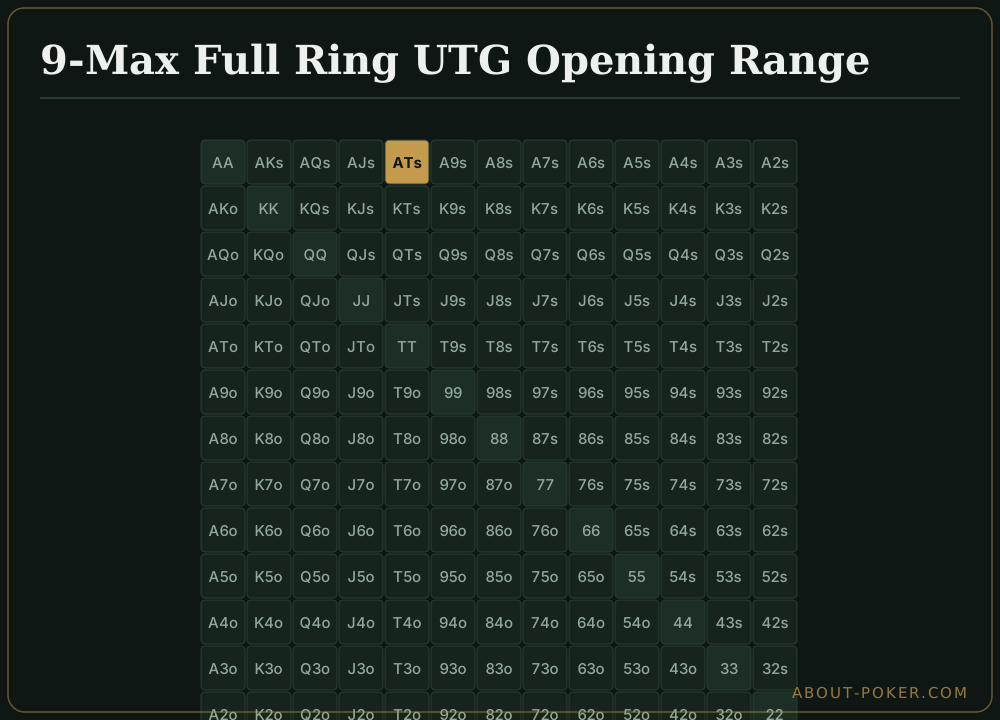
You’re dealt ATs and want to know if you can open it.
- From UTG in full ring — this is a fold or a marginal open at best. With eight players behind, ATs is dominated too often by better aces and runs into 3-bets from strong ranges. Most solid full ring charts fold it UTG.
- From the cutoff — a clear, comfortable open. Only three players remain behind, ATs makes strong top pairs and the nut-flush draw, and you’ll often have position postflop.
Same hand, same stack depth — the only thing that changed is how many players sit behind you. That single variable moved ATs from a fold to a standard open, which is the entire lesson of positional range construction. For the seat-by-seat framework, see poker ranges by position.
Practical notes for full ring
- Discipline in early seats pays — the biggest leak in full ring is opening too wide from UTG through the lojack. Fold the marginal stuff.
- Late position is where you profit — the cutoff and button ranges are wide and drive most of your win rate.
- Live full ring runs looser — opponents call more, so tighten bluffy opens and lean toward hands that make strong made hands.
For the general opening framework across formats, review preflop opening ranges.
How to actually learn the full ring chart
Eight seats’ worth of ranges looks intimidating, but the structure makes it manageable. The trick is to memorize the ranges as a progression rather than eight independent charts. Start with the UTG range — the tightest — and treat every later seat as “UTG plus a few hands.” Each step toward the button unlocks the next tier: small pairs, then weaker suited aces, then suited connectors, then offsuit broadways, and finally the wide button steals.
Because the button and small blind ranges are nearly identical to their 6-max counterparts, players moving between formats only really need to relearn the early and middle seats. If you already know 6-max, focus your study on UTG, UTG+1, and UTG+2 — the three seats full ring adds — since those are where full ring diverges most and where the discipline to fold pays off the most. Learn the progression once and the whole 9-max chart collapses into a single, memorable pattern.
Frequently asked
How are 9-max opening ranges different from 6-max?
They're tighter in the early seats because more players sit behind you. A 9-max table adds three early positions (UTG, UTG+1, UTG+2) that don't exist in 6-max, and all of them open narrowly. The late-position ranges — cutoff, button, blinds — end up very similar to 6-max.
How wide should you open under the gun in full ring?
Very tight, around 10 to 12 percent of hands. With eight players left to act behind you, the chance that someone holds a premium is high, so you open only strong hands: big pairs, strong aces, and the best suited broadways.
What positions are there in a 9-max game?
From first to last: UTG, UTG+1, UTG+2 (the early seats), then lojack and hijack (middle), cutoff and button (late), and the small blind and big blind. Ranges widen steadily as you move from UTG toward the button.
Is full ring tighter than 6-max overall?
In the early and middle seats, yes, because of the extra players behind. But the button and blinds play almost identically to 6-max since the number of players behind those seats is the same. The difference is concentrated in the added early positions.