Limping Behind
Limping behind means calling along after a limper instead of raising. Learn when over-limping is fine, which hands it suits, and why raising is usually stronger.
On this page · 7 sections
Limping behind — also called over-limping — means calling the big blind after one or more players have already limped in. Instead of raising to isolate or folding, you join a cheap, growing multi-way pot. It is a legitimate but narrow play: correct with a specific set of speculative hands in the right conditions, and a mistake with the many hands that would rather raise to punish the limpers.
What over-limping is trying to do
The whole appeal of limping behind is a cheap, multi-way flop with a hand that thrives in multi-way pots. Some hands make their money not by being best preflop but by occasionally flopping a monster and getting paid by several opponents. For those hands, keeping the pot small and the field wide is exactly right.
But there’s a cost: you surrender the initiative and let the blinds see a flop cheaply. That trade-off — cheap equity realization versus lost initiative — is the same tension explored in limping vs raising, applied here to the specific case where a limper is already in.
When limping behind is correct
Over-limp with hands that want cheap multi-way flops and have big implied odds:
- Small pocket pairs (22–66). You’re set-mining: call cheap, hope to flop a set, and stack someone. Multi-way pots increase your payoff when you hit.
- Suited connectors and one-gappers (like 8♥7♥, 9♦7♦). They make disguised straights and flushes that pay off big in family pots.
- Small suited aces in position, which flop nut flush draws and can win cheap.
The ideal conditions: you’re in position, the pot is likely to stay multi-way (loose-passive table), and there are limpers whose dead money you want to play against rather than fold out.
When to raise instead
Here’s the key discipline: if your hand dominates the limpers, raise — don’t limp behind. Hands like AJ, KQ, big pairs, and AQ want to isolate a weak player, win the dead money, and take initiative into the flop. Over-limping them wastes a range edge and invites a multi-way pot with a hand that prefers to be heads-up. That’s the entire logic of isolating limpers, and when several limpers are in, a bigger raise becomes a full squeeze of the limped pot.
A worked example
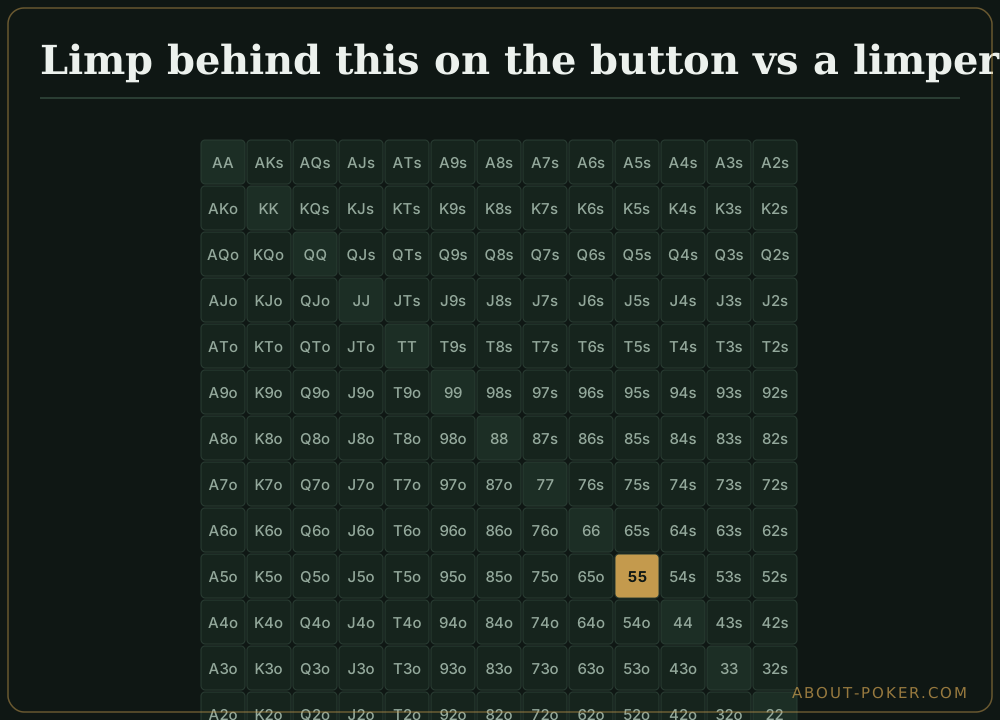
A loose-passive player limps in the cutoff. You’re on the button with 5♠5♦ (55). Blinds are standard.
Limp behind. 55 wants to set-mine, and over-limping keeps the pot small and multi-way — perfect for a hand that flops a set only about 12% of the time but stacks people when it does. Raising here bloats the pot with a hand that hates facing a 3-bet and doesn’t dominate the limper’s range enough to justify isolation. Calling along for 1bb with big implied odds is clean value.
Now swap the hand for A♣Q♦. Don’t limp behind — raise to about 4bb. AQo dominates the limper’s weak range, plays great heads-up in position, and wants the dead money and the initiative. Over-limping a hand this strong is a clear leak.
How position changes it
- In position (button, cutoff): over-limping is at its best. You control the pot and realize your speculative equity well.
- Out of position: avoid it. You realize less equity, can be raised off your hand by players behind, and can’t control the pot. Prefer raising with your strong hands and folding the rest.
- Facing aggressive players behind: be wary. If someone likely to squeeze is still to act, your cheap limp can turn into a raise you have to fold to — often better to just raise or fold yourself.
Common mistakes
- Over-limping hands that should isolate. The biggest leak — flatting AJ/KQ/big pairs behind a limper throws away a range edge.
- Limping behind out of position. You lose the very positional edge that makes speculative hands profitable.
- Ignoring squeeze risk. A cheap over-limp is not cheap if a player behind blasts it up and forces a fold.
- Over-limping too wide. Weak offsuit hands don’t have the implied odds to justify joining a multi-way pot.
Checklist for limping behind
- Does the hand want a cheap multi-way flop? Small pairs and suited connectors, yes; dominating broadways, no.
- Am I in position? Over-limp mostly in position; out of position, prefer raise/fold.
- Will the pot stay multi-way? Loose-passive tables reward over-limping; aggressive tables punish it.
- Do I dominate the limper? If yes, raise to isolate instead.
- Is anyone behind likely to squeeze? If so, lean toward raising or folding rather than a cheap limp you’ll abandon.
Limping behind is a scalpel for set-mining and connector play in position — nothing more. Use it for the speculative hands that love cheap family pots, and raise the hands that dominate the limpers. Keep those two buckets separate and you’ll extract the most from every limped pot.
Frequently asked
What does limping behind mean?
Limping behind, or over-limping, means calling the big blind after one or more players have already limped in, rather than raising or folding. You are joining a growing multi-way pot cheaply instead of taking the initiative with a raise.
When is limping behind correct?
It is defensible with speculative hands that want cheap, multi-way flops and have big implied odds — small pairs for set-mining and suited connectors that make disguised straights and flushes. It is best in position, when the pot is likely to stay multi-way, and when raising would fold out the dead money you want to play against.
Why is raising usually better than limping behind?
Raising over limpers isolates a weak player, wins dead money, and takes initiative into the flop, combining a range edge with position. Limping behind surrenders all of that and lets the blinds in cheaply, so with hands that dominate the limpers you should raise instead of over-limp.
Should you ever limp behind out of position?
Rarely. Out of position you realize less equity and can be raised off the pot, so over-limping loses much of its appeal. Reserve it for strong multi-way speculative hands in position, and lean toward raising or folding when out of position.