Squeezing a Limped Pot
Multiple limpers create dead money and weak ranges. Learn how to size a squeeze over a limped pot, which hands to attack with, and how to avoid getting called.
On this page · 8 sections
Squeezing a limped pot means raising large over two or more limpers to fold out the field, collect the dead money, or get heads-up against a single weak caller in a bloated pot. It combines the logic of an isolation raise with the extra reward of multiple chips already sitting dead in the middle. In loose-passive games — where multi-way limped pots are everywhere — this is one of the most dependable edges you can have.
Why limped pots are prime targets
When several players limp, two things happen. First, there’s dead money: every limper has contributed a big blind you can now attack. Second, all those ranges are weak and capped — real hands raise, so a room full of limpers is a room full of medium and speculative junk that flops badly.
Raising big over that field does one of two great things: everyone folds and you scoop the dead money uncontested, or one sticky limper calls and you play a big pot with a range and position edge. This is the multi-way cousin of the standard isolating limpers play, and it shares its DNA with the classic squeeze play against a raise-and-call.
Sizing the squeeze
Sizing is where most players go wrong. A limped pot is multi-way and sticky, so a normal open size gets called in four spots and defeats the purpose. Use the guideline: your standard open plus one big blind per limper.
- One limper: raise to about 4bb.
- Two limpers: raise to about 5–6bb.
- Three limpers: raise to about 6–8bb or more.
You are charging each limper individually and pricing out the field so you don’t play a giant multi-way pot with a marginal hand. If anything, err larger against very sticky low-stakes players. The sizing principles here extend the logic in open-raise sizing.
Which hands to squeeze
Weight your range toward value because limpers call too much:
- Big pairs (TT+) that dominate and want a big pot.
- Strong aces and broadways (AQ, AJs, KQs) that flop well and dominate weak aces/kings.
- Suited hands with equity (AXs, suited broadways) as semi-bluff squeezes that still flop flushes and straights.
Trim your pure bluffs. Against calling stations, a stone-cold bluff squeeze gets looked up too often to profit. The looser and stickier the table, the more you lean toward pure value.
A worked example
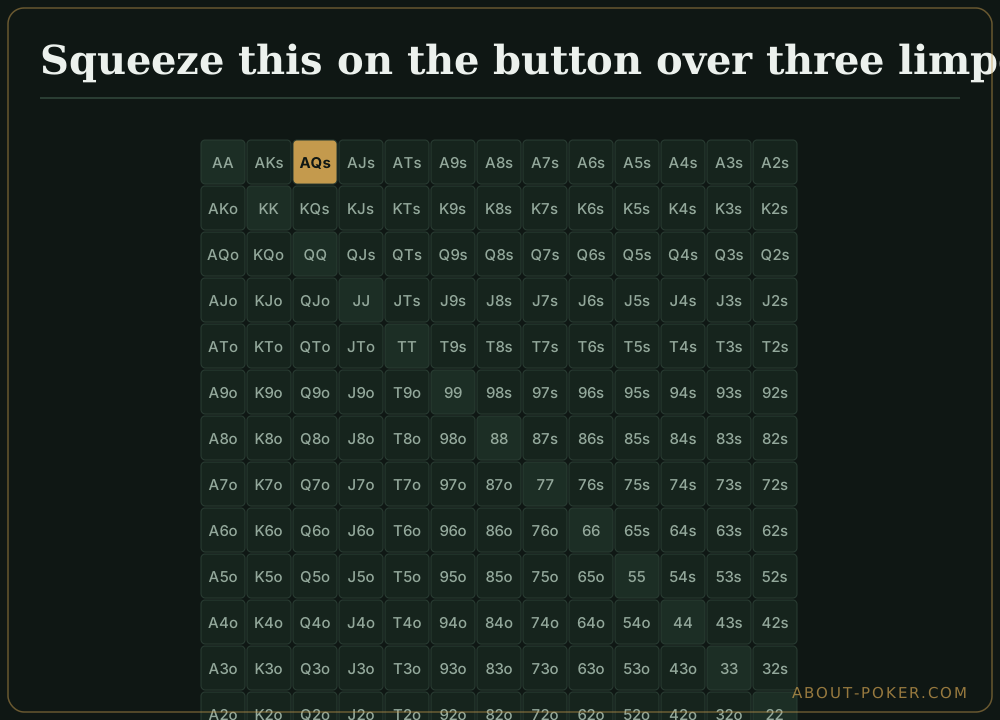
You’re on the button with A♠Q♠ (AQs). Three loose-passive players limp: the lojack, hijack, and cutoff. The pot has 3 limps plus the blinds — a juicy 4.5bb sitting dead.
Raise to about 7bb (2.5bb base + ~1bb per limper, rounded up for stickiness). Best case, everyone folds and you take down 4.5bb of dead money with a hand you were happy to play. Likely case, one limper calls and you’re heads-up in position with AQs — a hand that dominates their weak-ace, weak-king range and flops strong. Either outcome is a clear win. Calling along here instead would be a mistake: it invites a five-way flop with a hand that wants to be heads-up and hands the blinds a cheap look.
Getting called: have a postflop plan
Because limpers are sticky, plan for a call. In position with AQs you’ll continuation-bet most flops, value-betting your pairs and semi-bluffing your draws while a passive opponent plays face-up. Against multiple callers (when your big size still got two calls), tighten your continuation-betting and lean on your strong hands — multi-way pots reward showdown value over bluffs.
How it changes with reads
- Loose-passive limpers who never fold: size even larger, cut all bluffs, squeeze pure value. You won’t fold them out, so make them pay when you have it.
- Weak-tight limpers who fold to aggression: widen your squeeze; you’ll take the dead money often enough that even mediocre hands profit.
- A tricky limp-trapper in the mix: slow down. If one of the limpers is capable of limp-reraising monsters, respect that and don’t squeeze light into them.
Common mistakes
- Under-sizing. A 3bb raise over three limpers just builds a big pot you’ll play multi-way and out of control.
- Squeezing too light into stations. Bluffs don’t work against players who never fold; get value instead.
- Squeezing out of position with a weak plan. Position magnifies this edge; without it, tighten up.
- Overlimping instead of raising with hands that dominate the field, surrendering the dead money and the initiative.
Checklist for squeezing a limped pot
- Count the dead money — more limpers means more reward.
- Size up — standard open plus one big blind per limper, rounded up for sticky tables.
- Weight toward value — big pairs, strong aces and broadways, suited equity.
- Read the field — bigger and value-heavier vs stations; wider vs weak-tight folders.
- Plan the flop — c-bet with initiative heads-up, tighten up multi-way.
A limped pot is a pile of dead money guarded by weak hands. Raise big, target the value, and either scoop it outright or isolate a passive opponent in a pot where your range and position do the rest.
Frequently asked
What is squeezing a limped pot?
Squeezing a limped pot means raising large over two or more players who have limped in, aiming to fold most of them out and win the dead money or get heads-up against one caller. It exploits the weak, capped ranges that limping represents and the extra chips already sitting in the pot.
How big should you raise over multiple limpers?
Size larger than a normal isolation raise: a common guideline is your standard open plus one big blind for every limper. Over three limpers that can mean raising to 6 to 8 big blinds or more, because you must charge each limper and discourage them from calling along cheaply.
Which hands are best for squeezing a limped pot?
Value hands that dominate limping ranges and play well in a bigger pot — strong aces, big pairs, and good suited broadways — plus some suited hands with equity as semi-bluffs. Because limpers are sticky, weight your range toward value and cut the pure bluffs against calling stations.
Is squeezing limpers profitable at low stakes?
Yes, it is one of the most reliable low-stakes edges. Loose-passive games are full of multi-way limped pots, and a well-sized squeeze either wins the dead money outright or isolates a weak player in a bloated pot where your range and position give you a strong postflop edge.