What Is 4-Bet in Poker?
A 4-bet is the fourth bet in a sequence — the re-raise over a 3-bet. Learn what a 4-bet is, how big to make one, and which hands to 4-bet for value or bluff.
On this page · 7 sections
A 4-bet is the fourth bet in a betting sequence — the re-raise made over a 3-bet. Following the same counting that gives the 3-bet its name, the big blind is bet one, the open is bet two, the re-raise over the open is the 3-bet (bet three), and re-raising that is the 4-bet (bet four).
By the time a 4-bet appears, the pot is already large and both players have shown strength. A 4-bet is therefore one of the strongest statements in preflop poker. It either represents a premium hand that wants to get all the money in, or a carefully chosen bluff designed to fold out an opponent’s medium-strong 3-betting range.
Where the 4-Bet Sits in the Sequence
The full preflop ladder makes the logic clear:
- 2-bet: the open-raise.
- 3-bet: the re-raise over the open.
- 4-bet: the re-raise over the 3-bet.
- 5-bet: the re-raise over the 4-bet, which at typical stacks is usually all-in.
Because each level narrows the range of hands that can continue, a 4-bet compresses the action into a tiny band of very strong holdings — which is exactly why it is so powerful and so dangerous.
Value 4-Bets Versus Bluff 4-Bets
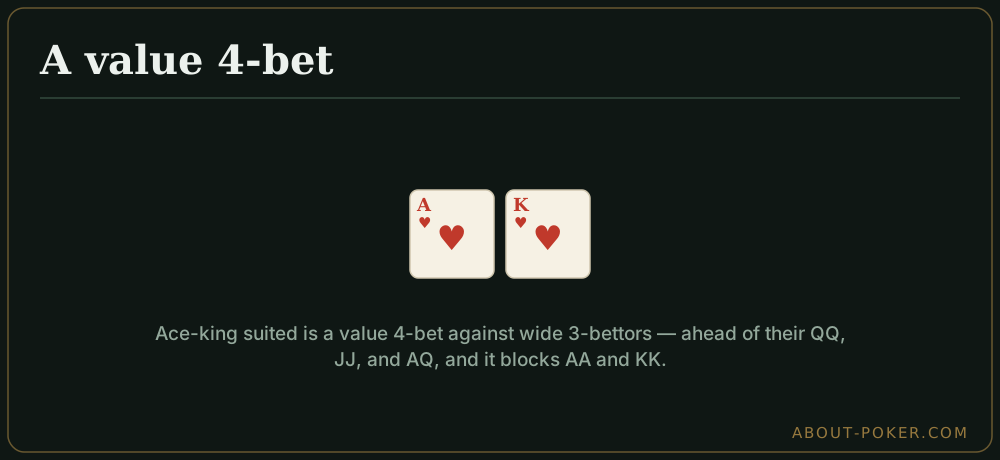
A balanced 4-betting range has two components.
Value 4-bets are the premiums: aces and kings almost always, and ace-king and queens depending on the opponent and stack depth. These hands are thrilled to get money in against a 3-bettor’s range.
Bluff 4-bets use hands chosen for their blockers rather than their raw strength. Ace-five suited is the archetype: the ace in your hand makes it less likely your opponent holds aces or ace-king, the two hands that would happily continue. When your bluff does get called, the suited card still lets you flop flushes and straights, so you retain a sliver of equity.
Sizing a 4-Bet
A 4-bet is proportionally smaller than a 3-bet. The pot is already inflated, so you do not need to blow it up. Standard sizing:
- In position: about 2.2 to 2.5 times the 3-bet.
- Out of position: about 2.5 to 3 times the 3-bet.
Small, tight sizing also leaves room to fold to a shove without having committed too much, which matters when you are 4-bet bluffing.
A Worked Example
You open ace-king offsuit to 3 big blinds from the cutoff. A regular in the big blind 3-bets to 12. You hold a hand that is strong but not premium, and you know this opponent 3-bets aggressively from the blinds. You 4-bet to about 27 big blinds.
Against a wide 3-betting range, ace-king is a value 4-bet: you are ahead of the queens, jacks, and ace-queen types they re-raise with. If they fold, you scoop a healthy pot. If they 5-bet all-in, you can call and expect to be flipping or slightly behind their tightest range — a manageable spot given how much dead money is already in the middle. Note that against a nit who only 3-bets aces and kings, this same 4-bet would be a mistake.
Common Mistakes
The classic error is 4-bet bluffing without evidence. If you have not established that an opponent 3-bets light and folds to 4-bets, a bluff 4-bet just donates chips to their kings. Value-only 4-betting is perfectly profitable at low stakes because opponents simply do not 3-bet wide enough to punish it.
The opposite mistake is folding aces or kings to a 3-bet out of fear. These hands crave a 4-bet; flat-calling them wastes their value and lets the opponent realize equity cheaply.
How Stack Depth Changes the 4-Bet
The deeper the stacks, the more caution a 4-bet demands. At 100 big blinds a 4-bet still leaves room to fold to a shove, so a value-4-bet-then-fold line is playable. But as stacks grow past 150 or 200 big blinds, a 4-bet increasingly commits you, and the hands you can profitably 4-bet for value shrink toward aces and kings only. Deep stacks also make flat-calling a 3-bet more attractive, because you can realize equity with implied odds rather than blowing up the pot preflop.
Short stacks push in the opposite direction. When effective stacks fall toward 40 big blinds or less, a 4-bet is often a 4-bet shove, because the geometry no longer leaves a sensible non-committing size. In those spots your 4-betting range becomes a simple all-in decision built almost entirely around value.
Quick Checklist
- The 4-bet is the re-raise over a 3-bet.
- Value with aces and kings; add ace-king and queens versus aggressive opponents.
- Bluff only with blockers like ace-five suited, and only against light 3-bettors.
- Size about 2.2 to 3 times the 3-bet, smaller than a normal 3-bet ratio.
- Tighten your 4-bet value range as stacks get deeper.
- If you are new, 4-bet for value only until your reads are solid.
Frequently asked
What is a 4-bet in poker?
A 4-bet is the fourth bet in a betting sequence, meaning the re-raise made over a 3-bet. Preflop the big blind is bet one, the open is bet two, the re-raise is the 3-bet, and re-raising that is the 4-bet. It signals a very strong hand or a well-chosen bluff.
How big should a 4-bet be?
A 4-bet is usually smaller relative to the 3-bet than a 3-bet is to an open. In position, about 2.2 to 2.5 times the 3-bet is standard. Out of position, roughly 2.5 to 3 times. The pot is already large, so you do not need to over-size to apply pressure.
What hands make good 4-bet bluffs?
The best 4-bet bluffs hold blockers to the hands that continue against you, most notably ace-x suited such as ace-five suited. Holding an ace reduces the chance your opponent has aces or ace-king, and the suited card gives you playable equity on the rare occasions you get called.
Should beginners 4-bet?
Beginners should 4-bet almost exclusively for value with aces, kings, and sometimes ace-king. 4-bet bluffing is an advanced move that requires reading how often opponents 3-bet light and fold to 4-bets, so it is best added only after those reads are reliable.