What Is 5-Bet in Poker?
A 5-bet is the fifth bet in a sequence — the re-raise over a 4-bet, usually all-in at standard stacks. Learn what a 5-bet is and which hands to shove.
On this page · 7 sections
A 5-bet is the fifth bet in a betting sequence — the re-raise made over a 4-bet. It sits at the very top of the preflop raising ladder, and at the stack depths common in most games it is effectively synonymous with going all-in.
By the time action reaches a 5-bet, both players have raised and re-raised, the pot is enormous, and only the strongest hands or the boldest bluffs remain. A 5-bet is the last word in a preflop war.
Why a 5-Bet Is Usually All-In
Follow the money at a standard 100 big blind stack. A player opens to 3, gets 3-bet to 10, 4-bets to 24. If the original 3-bettor now wants to 5-bet, a “small” raise to, say, 45 would leave only about 55 big blinds behind — an awkward amount that commits you anyway. Rather than leave a stub that you will be forced to put in postflop, players just shove.
This is why the preflop ladder tends to end here: after the 5-bet all-in, there is no sixth bet to make. The stacks are simply gone.
The 5-Bet Range Is Tiny
Because a 5-bet risks your whole stack, the range is razor-thin.
Value 5-bets are the true premiums: aces and kings almost always, and ace-king or queens against opponents you know 4-bet aggressively. These hands are ahead of, or flipping with, any range that continues.
Bluff 5-bets are rare and advanced. When used, they lean on blockers — most often ace-five suited, whose ace reduces the chance the opponent holds aces or ace-king. But a bluff 5-bet only makes sense against someone who 4-bets light often enough to fold to the shove. Against a tight player, there is nothing to bluff.
A Worked Example
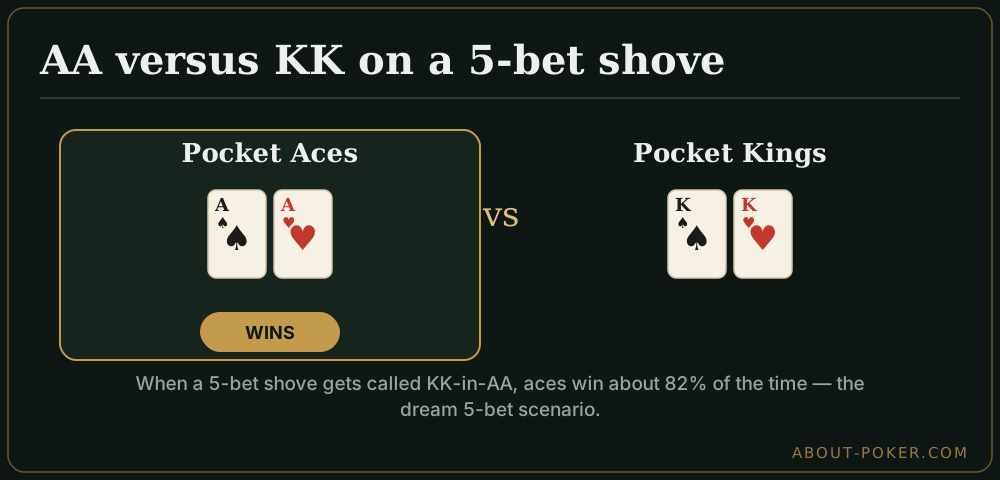
You hold pocket aces in the big blind, 100 big blinds deep. The button opens to 3, you 3-bet to 12, the button 4-bets to 28. This is the dream. You 5-bet all-in for 100.
Against most 4-betting ranges you are a massive favorite. Even if the button holds kings, aces is roughly an 82 percent favorite. Against ace-king you are about 87 percent. The only hand that has you in real trouble is another pair of aces, which is nearly impossible when you hold two of them yourself. Shoving here maximizes value while your opponent is already invested and psychologically committed to a big pot.
Common Mistakes
The first mistake is 5-betting too wide. The 5-bet is not a place for hero bluffs at low stakes, because opponents there rarely 4-bet with anything but premiums. If someone 4-bets you and you do not hold aces or kings, folding is usually correct.
The second mistake is over-thinking a value 5-bet with aces. Some players slow down, flat-call the 4-bet, and hope to trap. But flat-calling out of position with the best possible hand surrenders value and lets the opponent see a flop that could crack you. When you hold the nuts preflop and the money is going in anyway, get it in.
How the 5-Bet Depends on the Opponent
The 5-bet is one of the most opponent-dependent decisions in poker, because it risks everything and appears so rarely. Against a tight, honest player who only 4-bets aces and kings, your calling and 5-betting range should collapse to almost nothing but aces — everything else is behind or flipping at best. Against a hyper-aggressive opponent who 4-bet bluffs with a stack of suited blockers, the math flips: now ace-king and queens become clear 5-bet-for-value hands, and even a light 5-bet shove with ace-five suited can show a profit.
This is why reads matter more here than in any other preflop spot. The same holding can be a snap value shove against one player and a fold against another. When you lack a read, default to the tight side: assume opponents are not 4-bet bluffing enough to justify getting 100 big blinds in without a premium.
A Note on Stack Depth
Everything above assumes roughly 100 big blind stacks. In deep-stacked games a rare non-all-in 5-bet becomes theoretically possible, but it narrows your range even further, because leaving chips behind after five rounds of raising only makes sense with the very top of your holdings. In short-stacked or tournament settings the money is often already committed by the 4-bet, so the 5-bet is a routine all-in decision governed by pot odds rather than post-flop playability.
Quick Checklist
- A 5-bet is the re-raise over a 4-bet, almost always all-in at 100 big blinds.
- Value with aces and kings; add ace-king or queens versus aggressive 4-bettors.
- Bluff 5-bet only with blockers and only against frequent 4-bet bluffers.
- At low stakes, a value-only 5-bet range loses almost nothing.
- Lean tight when you have no read; the 5-bet risks your whole stack.
- With aces facing a 4-bet, get the stack in rather than slow-playing.
Frequently asked
What is a 5-bet in poker?
A 5-bet is the fifth bet in a betting sequence, meaning the re-raise made over a 4-bet. At the 100 big blind stacks common in cash games, a 5-bet is almost always all-in because there is little money left behind after four rounds of raising.
Is a 5-bet always all-in?
Not always, but usually. With standard 100 big blind stacks a 5-bet commits nearly all your chips, so most players simply shove. In very deep-stacked games a non-all-in 5-bet is possible, but it is rare and signals an extremely strong or carefully balanced range.
What hands do you 5-bet with?
5-bet ranges are extremely tight. For value you shove aces and kings, and sometimes ace-king or queens depending on the opponent. As a bluff you occasionally 5-bet shove a blocker hand like ace-five suited, but only against opponents who 4-bet bluff frequently.
How often should I 5-bet?
Rarely. The 5-bet is the top of the preflop ladder and appears in only a small fraction of hands. At low stakes you can play a value-only 5-betting range with aces and kings and lose almost nothing, because opponents rarely 4-bet light enough to exploit.