How to Play a Draw
A draw is a hand that isn't made yet but could win big. Learn when to bet your flush and straight draws, when to fold, and the pot-odds math behind it.
On this page · 6 sections
A draw is the most misunderstood hand in poker. You don’t have anything yet — no pair, no made hand — but you’re holding four cards to a flush or an open-ended straight, and one card could turn nothing into a monster. Beginners either fold these hands too fast or chase them at any price. The winning approach sits in between: you play draws aggressively when the math and the situation reward it, and you let them go when the price is wrong.
What a draw actually is
A draw is an unmade hand with the potential to become a strong one. The two you’ll see most often are the flush draw (four cards of one suit, needing a fifth) and the open-ended straight draw (four cards in sequence, like 6-7-8-9, needing a card at either end). Weaker draws include the gutshot (one specific rank in the middle, four outs) and the backdoor draw (needing running cards).
The key concept is outs — the number of unseen cards that complete your hand. A flush draw has nine outs, because there are 13 cards in a suit and you can see four of them. An open-ender has eight outs (four cards on each end). Counting outs correctly is the foundation of every decision that follows, and it ties directly into equity.
The pot-odds math
Before you call, compare the price you’re paying to the chance you’ll hit. A shortcut called the Rule of 4 and 2 does the heavy lifting: multiply your outs by 4 with two cards to come, or by 2 with one card to come, to estimate your percentage chance of improving.
A flush draw with nine outs is 9 × 4 ≈ 36% by the river, or 9 × 2 ≈ 18% on the next card alone. Now compare that to pot odds. If the pot is 100 and your opponent bets 50, you’re risking 50 to win 150, so you need to win 50 ÷ 200 = 25% of the time. Your 18% on one street is short of that — so a pure call loses money unless you’ll get paid off big when you hit (implied odds). For the deeper breakdown of these numbers, see odds and probabilities.
A worked example
You hold A♥ 8♥ on a flop of K♥ 6♥ 2♠. That’s the nut flush draw — nine outs, and your ace-high may even be good sometimes. The pot is 60 and you’re heads-up in position against one opponent who checks.
You should bet here, not check. Betting around 40 (two-thirds pot) does three jobs at once: it can win the pot immediately when your opponent folds a weak hand, it builds the pot for when you hit the nut flush, and it disguises your hand. This is a classic semi-bluff — you’re betting with a hand that’s probably behind now but has huge equity. If you get raised all-in, count your outs and the price; with nine clean outs and a possible overcard, you’re often getting the odds to call.
When to bet versus when to call
Bet or raise your draws when you have fold equity (your opponent can fold a better hand), position (you act last and control the pot), or extra outs (overcards, a pair, backdoor draws). These factors let aggression profit even when the draw bricks. Semi-bluffing is often the whole point of continuation betting — read more in the c-bet guide.
Prefer calling when the price is cheap, your opponent is unlikely to fold, and stacks are deep enough that hitting pays you off. Passively calling a small bet with a flush draw against a station is perfectly fine — you’re paying a fair price for a big payoff.
Fold when the price is too high, you have no fold equity, and your implied odds are poor — for instance, a gutshot facing a pot-sized bet against a short stack.
How the draw changes by street
The math shifts as cards come out. On the flop you have two cards to come, so your effective equity is highest and semi-bluffing is strongest. On the turn, you only have one card left — your draw is now roughly half as likely, so the price to continue must be about half as good. A flush draw you happily raised on the flop is often just a check-call or a fold on the turn once the discount disappears.
Also watch the board. A flush draw on a paired board is worth less, because even if you hit, an opponent could have a full house. A straight draw on a two-flush board loses value because your straight can be beaten by a flush.
A quick checklist
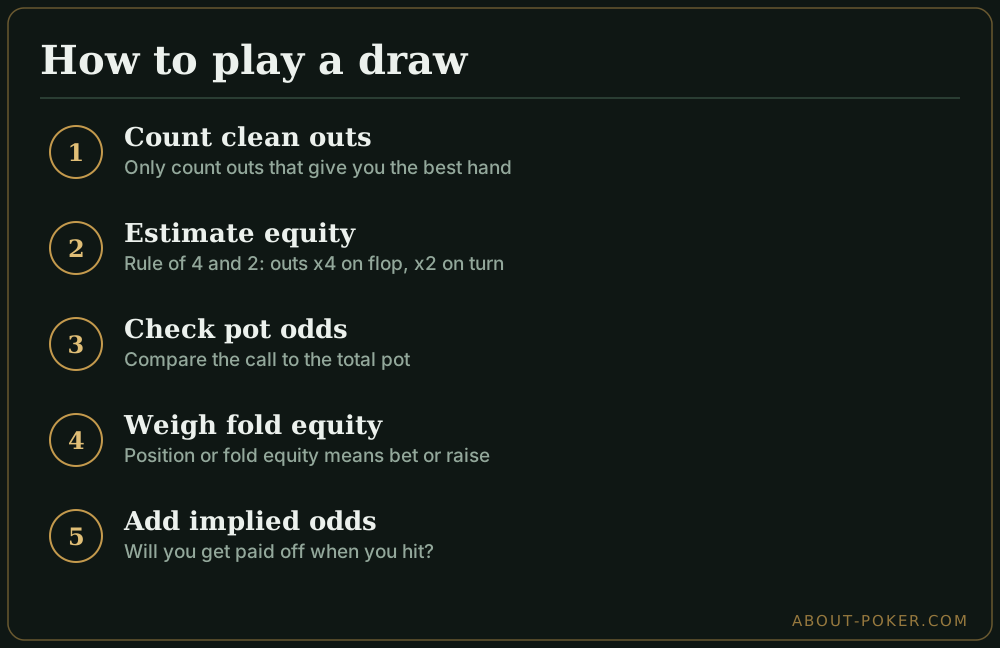
Before you play any draw, run through five questions:
- How many clean outs do I have? Count only outs that give you the best hand.
- What’s my percentage? Use the Rule of 4 and 2.
- What are my pot odds? Compare the call to the total pot.
- Do I have fold equity or position? If yes, lean toward betting or raising.
- What are my implied odds? Will I get paid when I hit?
If the answers point to a bet, be the aggressor. If they only support a cheap call, take the discount. If none of it adds up, folding a draw is a completely normal, disciplined play — chasing every draw at every price is how bankrolls disappear.
Frequently asked
What counts as a draw in poker?
A draw is an unmade hand that can improve to a strong one on a later card. The two most common are the flush draw (four cards to a flush) and the open-ended straight draw (four consecutive cards needing one at either end).
Should I always bet my draws?
No. Bet or raise draws when you have fold equity, position, or extra outs so the aggression pays even when you miss. Just calling is fine when the price is cheap and your opponent will pay you off if you hit.
What are the odds of hitting a flush draw?
With nine outs and two cards to come, a flush draw completes about 35% of the time. On a single street it's roughly 19%, so you need the right pot odds or fold equity to continue profitably.