Playing a Backdoor Draw
A backdoor draw needs two perfect cards but adds real equity and great turn barreling potential. Learn the odds, when to use it, and a worked hand.
On this page · 6 sections
Backdoor draws are the quiet workhorses of postflop poker. A backdoor, or runner-runner, draw needs both the turn and the river to complete, so on the flop it looks like almost nothing. But these draws matter more than beginners think: they add equity to your continuation bets, give you natural cards to keep barreling, and turn into real draws often enough to make aggressive lines profitable. Learning to value them correctly separates thinking players from the field.
What a backdoor draw is
A backdoor draw is any draw that requires two perfect cards. The two common types:
- Backdoor flush draw: you hold two cards of one suit and the flop brings one more of that suit. You now need both the turn and river to be that suit to make a flush.
- Backdoor straight draw: the flop gives you three cards to a straight that need two more specific running ranks to complete.
For example, you hold the ace and jack of spades and the flop is spade-seven-two with one spade. You have a backdoor flush draw (need two more spades) plus two overcards. That combination is far stronger than “ace high” alone. For the full draw framework, see playing draws postflop.
The odds are small — that’s the point
Completing a backdoor flush from the flop is about 4.2%, roughly 23-to-1 against. A specific backdoor straight is even rarer. You are almost never playing a backdoor draw to hit it directly. Instead, the value comes from two things:
- Added flop equity. A backdoor flush draw adds roughly 4% to your hand’s equity, and a backdoor straight adds a little more. Stack a backdoor flush, a backdoor straight, and two overcards and a hand that seemed weak can hold 30%-plus equity.
- Turn improvement. A backdoor flush draw becomes a real, nine-out flush draw about a third of the time on the turn. That gives you a legitimate reason to keep betting.
Use backdoors as barreling fuel
The practical power of backdoor equity is that it gives your bluffs a backup plan. When you c-bet the flop with a backdoor flush draw and get called, roughly one turn card in three improves you to an open draw, letting you barrel again with real equity behind it. This is why solvers love c-betting hands with backdoor equity far more than hands with none — they have more turns they can profitably continue on.
That connects directly to barreling the turn: the best double-barrel bluffs are the ones that just picked up outs. A hand that flopped a backdoor flush draw and turned the flush draw is an ideal candidate to fire a second bullet, because now you have both fold equity and drawing equity. It also strengthens your flop continuation bet strategy by giving you a natural reason to keep applying pressure.
When to lean on backdoors and when to fold
Prefer backdoor-rich hands as your bluffs and c-bets, especially in position where you can see a free turn and reassess. Discount pure air with no backdoor equity — those hands have nothing to fall back on when called. Out of position, be more cautious: you can’t control the pot as easily, so give up more often with thin backdoor equity unless the board strongly favors your range.
Also weigh your opponent. Against a station who never folds, the fold-equity portion of a backdoor bluff evaporates, so bet only when the draw itself justifies it. Against a thinking player who respects turn barrels, backdoor equity makes your bluffs both more frequent and more profitable.
A worked hand
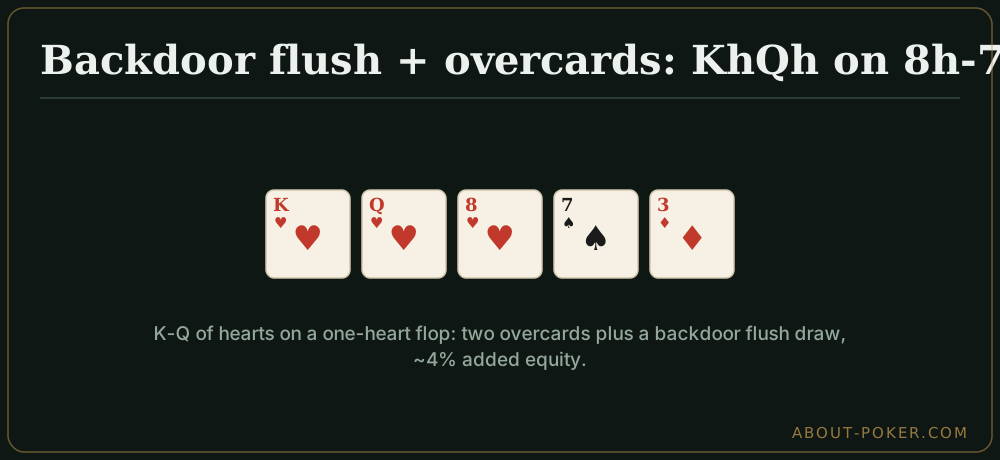
You raise on the cutoff with the king and queen of hearts. The big blind calls. The flop is heart-eight-three with one heart, giving you two overcards plus a backdoor flush draw and a backdoor straight draw. Your total equity here is meaningful — roughly a third against a typical calling range.
You c-bet one-third pot. The big blind calls. The turn is the four of hearts. Now you have a genuine flush draw — nine outs, about 20% to hit the river — plus your two overcards and a gutshot to boot. This is exactly the turn to barrel: you have real equity and your line represents strong hands. You bet two-thirds pot.
If the river brings a heart, a king, or a queen, you often have the best hand and can bet for value. If you miss, you still made money by picking the turns where your backdoor equity turned into something real. That is the whole point of playing backdoor draws well — they pay off indirectly, through better barrels, far more than they ever pay off by hitting.
Quick checklist
- Count backdoor equity as roughly 4% per backdoor draw — small but real.
- Favor c-betting and barreling hands with backdoor equity over pure air.
- Treat turns that complete your draw as prime double-barrel spots.
- In position, take free cards when backdoors don’t improve; out of position, give up more.
- Against calling stations, value the outs, not the fold equity.
Frequently asked
What is a backdoor draw in poker?
A backdoor draw, also called a runner-runner draw, is a draw that needs both the turn and the river to complete. A backdoor flush draw has two cards of a suit on the flop and needs both remaining cards to be that suit; a backdoor straight draw needs two perfect running cards to fill the straight.
What are the odds of hitting a backdoor flush?
About 4.2% — roughly 23-to-1 against — to complete a backdoor flush from the flop when you hold two cards of the suit and one appears on board. That small chance is why the value is mostly in the extra equity it adds to a hand, not in hitting it directly.
Is a backdoor draw worth playing?
On its own it is thin, but backdoor draws add meaningful equity to c-bets and give you natural turn cards to keep barreling. A hand with a backdoor flush and backdoor straight draw plus two overcards can have surprisingly strong overall equity and excellent bluffing credentials.
How much equity does a backdoor flush draw add?
A backdoor flush draw adds roughly 4% equity to a hand. It is small in isolation but valuable because it turns into a real flush draw about a third of the time on the turn, letting you continue barreling with a hand that picked up outs.