Calling an All-In on the Bubble
On the bubble, busting costs real money, so your all-in calling range tightens hard. Here's how ICM shrinks calls and how to know when a call is correct.
On this page · 6 sections
Calling an all-in on the bubble is one of the most money-losing spots amateurs walk into. Everything you learned about pot odds in a cash game gets warped by the money jump waiting a few eliminations away. On the bubble, busting is not just a chip loss — it can be a real cash loss — and that changes which hands you can profitably call with. Learn this and you stop paying off the aggressive shovers who feast on the bubble.
Why the bubble breaks your normal calling math
In a cash game or the early stages of a tournament, chips have linear value: a chip won is worth exactly a chip lost, so you call when your pot odds beat your equity. Near the money bubble, that stops being true. The Independent Chip Model (ICM) tells us that chips you already have are worth more than chips you might win, because survival to the money carries value on its own. The full mechanics live in the ICM on the bubble guide.
The upshot: a call that is exactly break-even in chips is often a significant loss in real money. You need extra equity — frequently 10–20% more than the raw pot odds demand — to justify a call.
The bubble factor: caller vs. shover
The asymmetry between shoving and calling is the whole story. The player shoving risks chips they can rebuild if the play folds out. The player calling risks elimination and the money penalty that comes with it. This “bubble factor” means the caller must be tighter than the shover — which is precisely why relentless shoving prints on the bubble and why you must resist the urge to look people up. The broader playbook for both sides is in the bubble strategy guide.
How stack sizes change the call
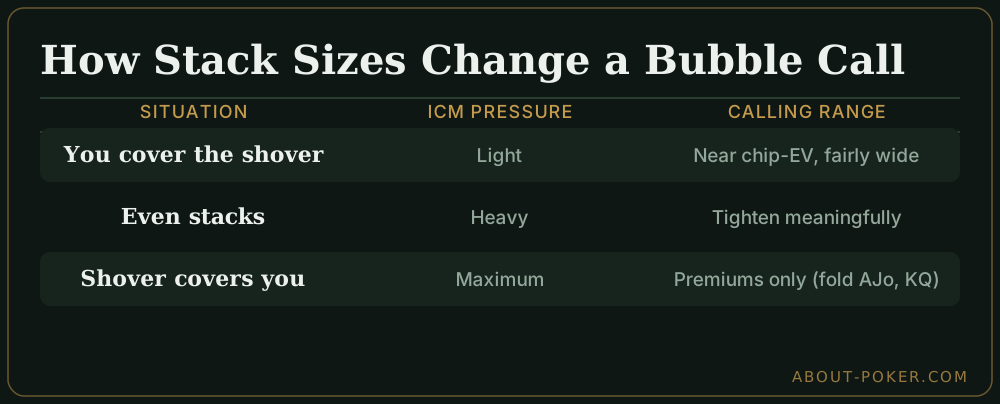
Not every bubble call is equally punishing:
- You cover the shover (they are shorter). Losing does not bust you, so ICM pressure on you is light. You can call fairly wide — close to a chip-EV range.
- You and the shover are even. Losing cripples or busts you. Tighten meaningfully.
- The shover covers you. Calling risks your tournament life for the money penalty. This is maximum ICM pressure — call only with premiums.
Always ask “who gets hurt if I lose?” before “am I ahead?”
A worked example
The bubble is one elimination away. You are in the big blind with 20bb holding Ad Jc. A 14bb player in the cutoff — who does not cover you, but who would leave you crippled at 6bb — shoves. In a chip-EV vacuum, AJ offsuit is an easy call against a shove that wide; you have the odds.
But apply ICM. If you call and lose, you drop to 6bb on the bubble and are in dire shape to cash. That downside is worth far more than the chips you would gain by winning. Solvers routinely show hands like AJo, KQ, and even smaller pairs moving from “call” to “fold” in this exact spot once ICM is applied. The correct play is often to fold AJo here and wait for a clearer edge or a spot where you cover the shover. Folding a hand you are ahead of feels wrong — but on the bubble, protecting your equity beats winning a flip.
Common mistakes
- Calling on pot odds alone. The number-one bubble leak. Chip-EV odds systematically overvalue calls near a pay jump.
- Ignoring who covers whom. Calling wide when the shover can bust you is the most expensive error in tournament poker.
- Snapping off aggression with medium hands. AJ, KQ, and small pairs look strong but are exactly the hands ICM demotes to folds against covering shovers.
- Over-tightening when you cover. If busting is off the table, do not fold too much — that hands free chips to short stacks.
Checklist for bubble calls
- Start from pot odds, then add an ICM tax of roughly 10–20% more equity.
- Identify who busts if you lose before anything else.
- Call wider when you cover the shover; call premium-only when they cover you.
- Fold hands you are technically ahead of when ICM demands it.
- Remember the shover risks chips; you risk the money.
Get bubble calling right and you turn the most stressful stretch of a tournament into a spot where discipline pays real cash. Pair this with playing the money bubble for the complete approach.
Frequently asked
How much tighter should I call all-ins on the bubble?
Much tighter than chip-EV suggests. ICM penalizes busting near a pay jump, so a call that breaks even in chips can be a large money loss. As a rule of thumb you often need 10–20% more equity than the raw pot odds require, and against a big stack that covers you the penalty is even larger.
Does the caller need better odds than the shover on the bubble?
Yes. The player calling risks elimination and the money penalty that comes with it, while the shover risks only chips they can rebuild. This asymmetry — sometimes called the bubble factor — means the caller must be tighter, which is exactly why aggressive shoving works so well on the bubble.
Should stack sizes change my bubble calling decision?
Absolutely. If you cover the shover and can survive a loss, you can call a bit wider because busting is not on the table. If the shover covers you and calling risks your tournament life, tighten dramatically — this is the most ICM-punishing situation there is.