Chasing Draws Without Odds
Chasing draws without the odds is a slow, steady leak. Learn to count outs, compare pot odds, and use implied odds so you only chase when it pays.
On this page · 6 sections
Chasing draws without the odds is a leak that hides behind a good story. “I just needed one more heart.” “The flush was right there.” Those hands feel like bad luck, but many of them were losing calls before the last card was ever dealt. A flush draw is not automatically a call, and a gutshot rarely is. The difference between a winning player and a losing one on draws comes down to a quick piece of math done at the table, comparing the price you are paying to your real chance of getting there.
Count Your Outs First
Everything starts with outs, the cards that complete your hand. Memorize the common ones:
- Flush draw: 9 outs, roughly 19% to hit on the next card, about 35% by the river with two to come.
- Open-ended straight draw: 8 outs, about 17% next card, about 32% by the river.
- Gutshot: 4 outs, about 9% next card, about 17% by the river.
- Overcards: treat these carefully, they are not always clean outs if your opponent has a bigger pair.
A handy shortcut is the rule of two and four: multiply your outs by two for one card to come, or by four when you will see both the turn and river (as when you are all in on the flop). Nine flush outs times two is about 18%, close enough for the table.
Compare Outs to the Price
Now weigh those outs against pot odds, the price you are being asked to pay. Pot odds are the bet you must call divided by the total pot after you call. If the pot is 80 and your opponent bets 40, you are calling 40 to win 160, so you are paying 40 into a 200 pot, or 25%. Your flush draw hits about 19% on the next card. Paying 25% for a 19% chance is a losing call on immediate odds. That is chasing without the odds.
Flip the numbers: if the bet were only 20 into that 80 pot, you would be paying 20 to win 120, or about 17%, and now your 19% flush draw is a clear call. The math is not hard, and it turns a coin-flip feeling into a firm decision. Learning to run this quickly is the backbone of solid draw play.
A Worked Example
You have the Ah Th on a flop of Kh 7h 2c. The pot is 60. Your opponent bets 50. You have the nut flush draw, nine outs.
Pot odds: you call 50 to win 110, paying 50 into a 160 pot, about 31%. Your flush hits about 19% on the turn. On immediate odds, this is a losing call, you are paying 31% for a 19% shot. But you are not done: you have an overcard ace, and if you complete the flush you can often win a large bet from a strong king. Those implied odds can bridge the gap. If stacks are deep and your opponent is likely to pay off when the flush comes in, calling becomes fine. If stacks are shallow or your opponent is tight and will shut down when the third heart lands, fold, the extra money you need simply is not there.
Implied Odds Fill the Gap
Implied odds are the extra chips you expect to win on later streets when your draw completes. They are the reason many draws that fail the immediate math are still profitable calls. This is exactly the logic behind set mining, where a small pair calls a raise not for immediate odds but for the huge payoff when it flops a set.
Implied odds go up when stacks are deep, your opponent is loose and pays off, and your draw is well hidden. They go down when stacks are short, your opponent is tight, or your draw is obvious, like a third flush card that shuts everyone down. Never assume implied odds; estimate them honestly.
Common Draw-Chasing Mistakes
- Calling gutshots to big bets, four outs almost never justify a large price without huge implied odds.
- Ignoring stack depth, implied odds vanish against short stacks.
- Chasing on paired boards, where your flush or straight can lose to a full house.
- Forgetting you only see one card, when you are not all in, use the single-card percentage, not the two-card one.
A Quick Checklist Before You Call
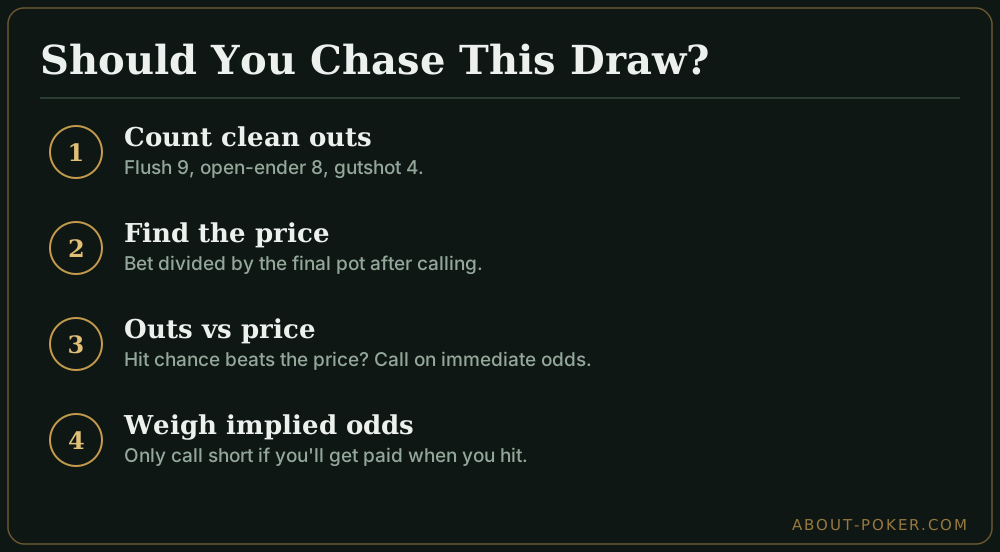
- How many clean outs do I have? Count them honestly.
- What is the immediate price? Bet divided by the final pot.
- Do outs beat the price? If yes, call on immediate odds alone.
- If not, are implied odds enough? Only call if you will realistically win enough later.
Run that four-step check and “chasing draws without odds” stops being a leak. You will fold the hopeless gutshots, call the profitable flush draws, and only chase when the money is genuinely there. Good bet sizing on your own draws, sizing so opponents pay when you hit, is the other half of turning draws into profit.
Frequently asked
How do I know if I have the odds to chase a draw?
Compare your pot odds to your chance of hitting. Pot odds are the price you pay: bet divided by the total pot after your call. Your hit chance comes from your outs. A flush draw hits about 19% on the next card; if the price you are paying is less than that percentage of the final pot, calling is profitable on immediate odds alone.
What are the odds of hitting a flush draw?
With nine outs, a flush draw completes about 19% of the time on the next single card, and about 35% by the river with two cards to come. On the flop facing a single bet you usually only get to see one card at a time, so the relevant number is often the roughly 19% figure unless you are all in.
What are implied odds and why do they matter for draws?
Implied odds are the extra money you expect to win on later streets when your draw completes. Many draws are not getting the immediate price to call, but if you can win a big bet after you hit, the total payoff makes the call profitable. Deeper stacks and looser opponents raise your implied odds; short stacks and tight opponents lower them.
When should you fold a draw?
Fold when the immediate price is bad and your implied odds are poor, meaning you are unlikely to get paid when you hit. Gutshots facing large bets, draws against short stacks, and draws on paired boards where a full house can beat your flush are common fold spots. Chasing these anyway is the classic no-odds leak.