Common Beginner Poker Mistakes
The handful of leaks that cost beginners the most money — playing too many hands, calling too much, and paying off big bets — plus exactly how to fix each one.
On this page · 7 sections
Almost everyone loses money the same way when they start playing poker. The leaks are predictable, they are expensive, and the good news is that fixing just a few of them turns most beginners from long-term losers into break-even or winning players. This guide walks through the mistakes that cost the most, why they happen, and the concrete habit that fixes each one.
Playing too many hands
The number one leak, by a wide margin, is entering too many pots. A new player sees two picture cards, or any ace, or suited connectors, and thinks “that could hit something.” The problem is that weak starting hands make weak, second-best hands after the flop, and those are the hands that lose stacks.
A solid full-ring starting range is roughly the top 15% of hands from early position, opening wider as you get closer to the button. If you are voluntarily putting money in the pot (VPIP) more than about 25% of the time in a full game, you are almost certainly too loose. Tightening up does two things at once: it means you show up with better hands, and it means the pots you play are easier because you understand your own range. Build the discipline with a chart — the cash game preflop strategy guide covers exactly which hands to open from each seat.
Calling too much after the flop
The second great money-burner is the reflexive call. Beginners hate folding. They call a flop bet to “see the turn,” call the turn to “see the river,” and call the river because “the pot is big and maybe he’s bluffing.” Each of these calls is made without a reason, and together they bleed chips.
Every call needs a purpose: you are either ahead of the hands your opponent is betting, or you have the odds to draw to a better hand. If neither is true, folding is correct. This is the most important discipline in poker, and it has its own guide — see calling too much for the full framework on when a call is actually justified.
Overvaluing top pair
Closely related: beginners fall in love with one pair. You flop top pair with a decent kicker and suddenly the hand feels unbeatable. But when a tight, passive opponent raises you on a coordinated board, top pair is very often behind a set, two pair, or a made straight.
Consider a concrete spot. You hold A♣J♦ on a board of J♠ 9♥ 6♠. You bet the flop and the turn 4♠, and a player who has been passive all session suddenly check-raises you big. Your top pair top-kicker feels strong, but think about what a passive player raises here: flushes, two pair, sets, maybe a straight. Almost nothing worse than your hand plays this way. Calling down “because I have top pair” is how stacks disappear. The full treatment is in overvaluing top pair.
Ignoring position
Position — acting last after the flop — is one of the biggest edges in poker, and beginners routinely throw it away. They call raises from the small blind, they open the same hands from every seat, and they never notice that the button prints money.
When you act last, you see what everyone else does before you decide. You can bluff more effectively, value bet more thinly, and control the size of the pot. A hand like K♦T♦ is a comfortable open on the button and a clear muck under the gun. If your starting requirements don’t loosen as you move toward the button, you’re leaving a large, free edge on the table.
Chasing draws without the odds
Flush and straight draws are exciting, but they only make money when the price is right. A flush draw hits by the river roughly 35% of the time when you see both cards, and about 19% on the very next card. If you’re facing a bet, you compare the pot odds to those numbers.
Say the pot is $80 and your opponent bets $80 on the flop. You must call $80 to win $160, so you need to win about 33% of the time to break even. A bare flush draw with one card to come (19%) is not a profitable call for stacks unless you have strong implied odds — the extra money you’ll win when you hit. Learn to run this simple ratio in your head; it’s the difference between a disciplined drawer and a station.
Tilting and playing too long
Finally, the mental leaks. After a bad beat, beginners often start playing looser, calling more, and trying to “win it back.” This is tilt, and it is where good sessions turn into disasters. The fix is a rule you set before you sit down: a stop-loss (leave after losing two or three buy-ins) and honest self-checks on whether you’re still playing your A-game.
Related to this is playing under-rolled. If a single buy-in is a meaningful chunk of your money, fear will distort every decision. Keep at least 20–30 buy-ins for the stakes you play — the bankroll management guide explains why.
The beginner fix-it checklist
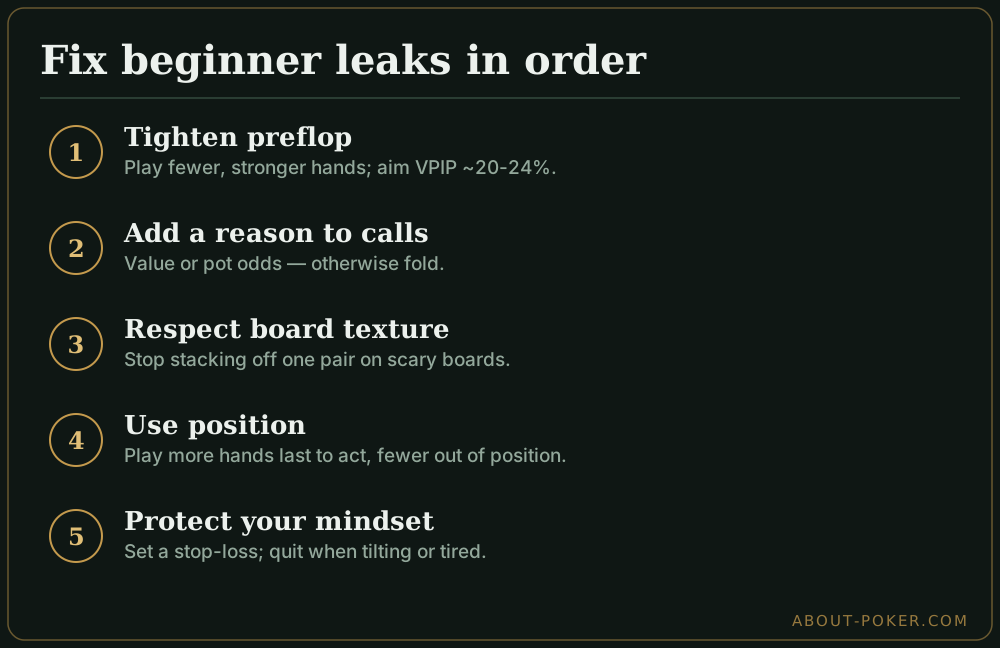
- Tighten your opening range; aim for a VPIP around 20–24% in full-ring games.
- Give every call a reason — value or odds — or fold.
- Treat top pair as a strong-but-foldable hand, not a monster.
- Play more hands in position, far fewer out of position.
- Compare pot odds to your real chance of hitting before chasing.
- Set a stop-loss and quit when you’re tilting or tired.
Fix these six things and you’ll leapfrog the majority of players at low stakes. None of them require advanced theory — just discipline and the willingness to fold.
Frequently asked
What is the single most common beginner poker mistake?
Playing too many starting hands. Most beginners voluntarily enter far more pots than winning players, which forces them into weak, hard-to-play situations after the flop. Tightening up preflop fixes more leaks at once than any other single change.
Why do beginners lose money even when they play good hands?
Usually because they call too much after the flop and pay off big bets with one pair. Winning poker is about folding when you're likely beaten, not just picking strong starting cards. Position, board texture, and bet sizing all matter more than the two cards you started with.
How long does it take to stop making beginner mistakes?
The obvious leaks — playing junk hands, chasing without odds, tilting — can be cut within a few weeks of deliberate effort. The subtler ones, like thin value betting and correct bluff frequency, take months of study and hand review to master.