Ignoring Position
Ignoring position is a hidden leak that costs even winning players. Learn why acting last is worth so much and how to adjust your ranges by seat.
On this page · 6 sections
Position is the most valuable and least respected edge in poker. Ask a losing player what a hand is “worth” and they will tell you the cards. Ask a winning player and they will ask where you are sitting. Ignoring position, treating every seat the same and playing the same hands whether you act first or last, is a leak that quietly erodes even otherwise-solid games. Acting last on every street is a permanent informational advantage, and hands played from good seats simply make more money.
What Position Actually Buys You
When you are in position, you see what your opponent does before you have to act. That single fact changes everything downstream. You can check behind to keep the pot small with a medium hand, or fire when they show weakness. You can value bet thinner because you are not afraid of a check-raise. You can bluff more accurately because you have watched them give up. Out of position, every one of those tools is dulled, you are guessing, and guessing costs money.
The technical way to say this is that position lets you realize more of your equity. A hand with 55% equity does not automatically win 55% of the pot, you have to actually navigate the streets to collect it, and being out of position leaks equity on every decision.
Playing the Same Range Everywhere Is the Leak
The clearest symptom of ignoring position is a flat opening range. If you are opening A9 offsuit and KJ offsuit from under the gun as happily as you would from the button, you are playing too loose in bad seats and probably too tight in good ones. Strong cash game preflop strategy is built around a sliding scale: roughly 10-12% of hands under the gun, widening steadily until you reach 45% or more on the button.
The reason is simple. Under the gun, seven or eight players can still wake up with a big hand, and you will be out of position against most of them if called. On the button, only the blinds remain, and you will have position for the entire hand. Same cards, wildly different value.
A Worked Example
You hold KTo. First, imagine it folds to you on the button. This is a clear, comfortable open. You have a decent hand, position on both blinds, and a wide edge postflop, this is exactly why playing the button is so profitable.
Now imagine the exact same KTo under the gun in a full-ring game. Fold it. If you open and get called or three-bet, you are out of position with a hand that is frequently dominated, KT is behind AK, AT, KQ, KJ, and every pair that continues. You will spend the hand guessing while a stronger range acts after you. The cards did not change; the seat did, and the seat is what matters.
How Position Interacts With the Blinds
The blinds are where ignoring position costs the most, because they are the only seats that are out of position for the whole hand postflop. Players who defend their big blind too wide, or who cold-call raises from the small blind with speculative hands, are volunteering to play the worst seats at the table. Defend the blinds selectively, lean toward three-betting or folding rather than flat-calling out of position, and never treat blind defense like a button open.
Common Position Mistakes
- Flat opening ranges from every seat, ignoring how many players are left to act.
- Cold-calling out of position with hands that would be fine in position but bleed money when you act first.
- Bloating pots out of position by betting and raising marginal hands instead of controlling the pot with checks.
- Over-defending the blinds, the only permanently out-of-position seats.
A Checklist to Stop Ignoring Position
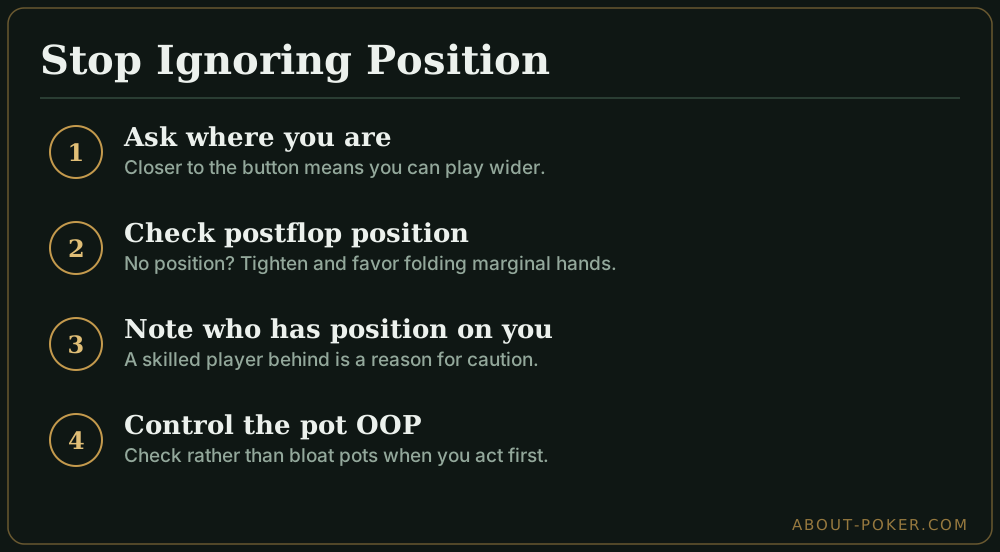
Before you play a hand, run through this quick mental list:
- Where am I? The closer to the button, the wider I can play.
- Will I have position postflop? If not, tighten up and favor folding marginal hands.
- Who has position on me? A skilled player in position is a reason to play more cautiously.
- Can I keep the pot small out of position? Checking is often better than a thin, bloated bet when you act first.
Internalize these questions and position stops being an afterthought. It becomes the first thing you consider, which is exactly how the best players think.
Frequently asked
Why is position so important in poker?
Position lets you act after your opponent on every postflop street, so you always have more information than they do when you make a decision. That extra information lets you value bet thinner, bluff more accurately, control the pot size, and realize more of your hand's equity. Over time it is worth several big blinds per hundred hands.
What does playing in position mean?
You are in position when you act after your opponent on the flop, turn, and river. The button is the best seat because it always acts last postflop. Being in position means you see what your opponent does before you decide, which is a large and permanent informational edge.
How much is position worth in poker?
It is hard to put an exact number on it, but studies and solver work suggest position is worth a meaningful chunk of your win rate, often several big blinds per hundred hands. The same hand played in position realizes far more of its equity than played out of position, which is why button and cutoff are your most profitable seats.
How do I adjust my range for position?
Play tight from early positions and progressively wider as you get closer to the button. Under the gun you might open 10-12% of hands; on the button, 45% or more. Out of position you should defend tighter, avoid bloating pots with marginal hands, and lean toward check-calling rather than bloated bluffs.