Not Betting for Value
Not betting for value is a quiet leak that costs winners real money. Learn when to value bet, how thin to go, and how to size bets so worse hands call.
On this page · 7 sections
Most players understand bluffing and folding, but the leak that quietly caps their win rate is failing to bet when they are ahead. Every river you check with the best hand, every turn you slow down with a strong holding out of fear, is money left on the table. Not betting for value does not show up as a big loss on any single hand, which is exactly why it is so easy to ignore. But over a large sample, missed value bets are one of the biggest gaps between a break-even player and a real winner.
What Value Betting Really Means
A value bet is a bet you make with a hand that you expect to be called by worse hands more often than better ones. That is the whole test. You are not trying to protect your hand, scare your opponent, or “find out where you are.” You are trying to get chips into the pot when you hold the best hand. If a worse hand will call at least half the time, the bet makes money, full stop.
The mental shift is to stop asking “could I be beat?” and start asking “what worse hands will pay me?” There is almost always a worse hand your opponent can hold, and against players who call too much, that range is large.
The Question That Unlocks Value
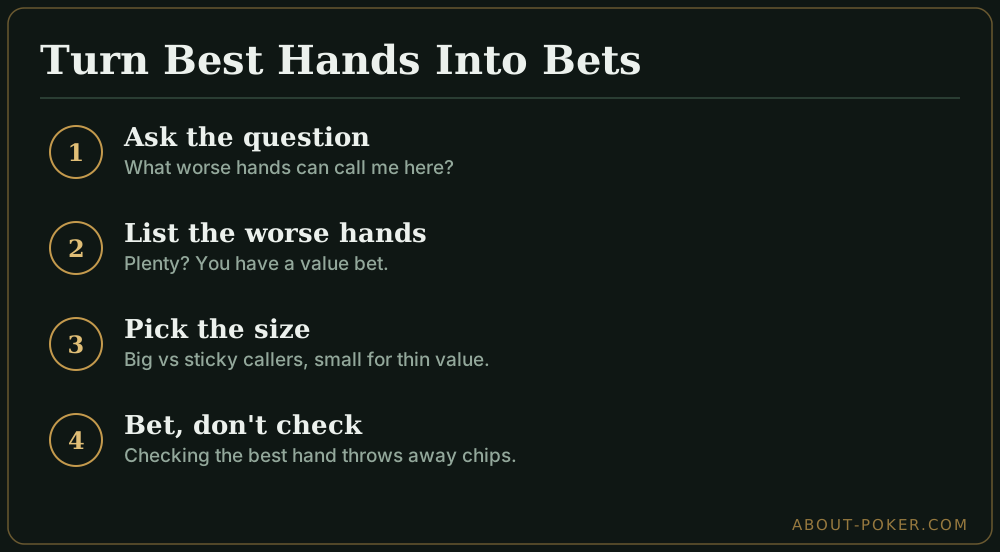
Every time you consider betting, ask one thing: what worse hands can call me? If the answer is “plenty,” you have a value bet. On a board of K-9-4-2-7 with top pair good kicker, worse kings, second pairs, and stubborn draws that missed can all pay you off. That is a bet, not a check.
If instead the honest answer is “nothing worse calls, only better hands continue,” then it is not a value bet, and you should check or turn your hand into a bluff. Learning to answer this question quickly is the core of good river play, where value decisions are most costly.
A Worked Example
You have AJ on a final board of A-8-5-3-6 with no flush possible. Your opponent has called flop and turn and now checks the river to you. You have top pair, decent kicker. Many players check here, worried about a better ace.
Do not check. Ask the question: what worse hands can call? A whole class of them, worse aces (A2 through AT), two pair that got there like 85, and stubborn eights and pocket pairs that decided to look you up. Against a typical opponent, far more of those worse hands call than the small number of better aces that beat you. This is a clear value bet, and checking it back throws away chips every single time this spot repeats. Bet around two-thirds pot and let the worse hands pay you.
Betting Thin Is a Skill, Not a Gamble
The most profitable value bets often feel uncomfortable because they are thin, second pair, a weak top pair, an underpair on a scary-looking board. Betting thin for value is not reckless; it is a recognition that against wide, sticky ranges, your modest hand still beats a lot of what calls. The trick is to size down. A thin value bet does not need to be large; it needs to be a price that a worse hand can talk itself into calling.
Sizing So Worse Hands Call
Value betting fails when your sizing is wrong for the situation. Get value with the right price:
- Go big when the caller is strong and sticky. Against a calling station with a made hand, a larger bet simply collects more, they are not folding anyway.
- Go small for thin value. When you hold a marginal winner, a modest bet keeps worse hands in the pot rather than blowing them off their weak holdings.
- Match the board. On wet boards where your opponent has draws and second-best made hands, larger bets get called; on dry boards, smaller bets keep light hands in.
Good bet sizing is what turns “I have the best hand” into “I got paid for having the best hand.”
Common Value-Betting Leaks
- Checking strong hands on the river out of fear of a raise or a better hand.
- Playing scared against stations, the very opponents who pay off the most.
- Over-sizing thin value, which folds out the worse hands you were trying to charge.
- Slowplaying big hands so long that no money goes in, a value leak in disguise.
A Simple Habit to Plug the Leak
At the end of every hand you win at showdown after checking, ask yourself: could a worse hand have called a bet there? If the answer is yes, you missed value. Keep a mental tally. Most players are shocked how often the answer is yes, and simply committing to bet those spots, especially the thin ones and the ones against stations, is one of the fastest ways to raise a win rate.
Frequently asked
What does betting for value mean?
Betting for value means wagering with a hand that you expect to be called by worse hands more often than better ones. If a worse hand will call your bet at least half the time, the bet earns money. The goal is to get chips into the pot when you are ahead, rather than checking and letting your opponent see a free showdown.
How do I know if I have a value bet?
Ask a simple question: what worse hands can call me? If your opponent has plenty of second-best hands that will pay off, you have a value bet. If only better hands will call and everything worse folds, you do not have a value bet, and you should check or, occasionally, bluff instead.
What is thin value betting?
Thin value betting is wagering with a modest hand, like second pair or a weak top pair, because you still expect worse hands to call more often than better ones. It feels risky, but on many rivers a bet from a station or a wide range gets called by enough worse holdings to be clearly profitable. Missing these is a common leak.
Why do players miss value bets?
Fear. Players check strong-but-not-nutted hands on the river because they are afraid of being raised or called by a better hand. Against most opponents, especially calling stations, that fear costs far more in missed bets than it saves in avoided raises. The default with a hand that beats a chunk of the calling range should be to bet.