Blind Defense in Cash Games
You already have chips in the pot, so you defend the blinds wide. Learn correct defending ranges, the pot-odds math, and how position and rake change everything.
On this page · 7 sections
Blind defense is where a lot of cash game money quietly leaks away. Players either fold too much and let every button steal succeed, or they defend so wide that they spend the whole session playing junk out of position. The correct approach sits in between and is driven by one fact: when you’re in the blinds, you already have chips in the pot, so you get a discount to continue. That discount lets you defend far wider than you’d play from other positions — but only from the big blind, and only with a plan for the streets that follow.
Why the blinds are different
Every other seat is a voluntary investment. The blinds are forced. Because your money is already committed, the price to defend is better than it looks, and folding a hand you’d never play elsewhere can still be a mistake. That said, you’re defending out of position, which caps how far you can stretch. The interplay of price and position is the whole game here, and it connects directly to the aggressor’s incentive covered in stealing blinds in cash.
The takeaway: defend wide enough that steals aren’t automatically profitable for your opponents, but not so wide that you’re bleeding chips postflop with unplayable hands.
The pot-odds math
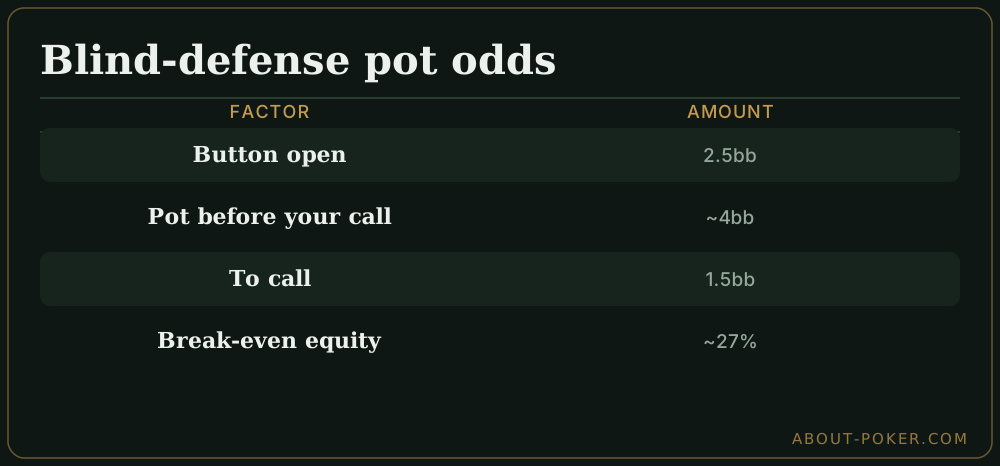
Suppose a button opens to 2.5bb. The pot now contains 2.5bb (their raise) plus your 1bb plus the 0.5bb small blind — about 4bb. To call you add 1.5bb. You’re risking 1.5 to win roughly 4, which means you need about 1.5 ÷ (4 + 1.5) ≈ 27% equity to break even on the call. Most hands that aren’t total trash clear 27% against a wide button range, which is why big-blind defense is so wide.
This is a raw pot-odds estimate; realized equity out of position is lower than raw equity because you won’t always see all five cards profitably. So shade your defends slightly tighter than the naive math suggests — but the price still justifies a broad range.
How wide to actually defend
Against a button open, defending 40% or more of hands from the big blind is standard, mixing calls and 3-bets. Your calling range leans on hands with postflop playability: suited connectors, suited gappers, suited aces, broadways, and any pair. Offsuit hands need more high-card strength or connectivity to make the cut. The complete positional framework lives in cash game preflop strategy, and a big-blind-specific deep dive is in defending the big blind in cash.
Adjust for the raiser’s position: a UTG open represents a much stronger range than a button open, so defend tighter against early-position raisers and wider against late-position steals.
The small blind is not the big blind
Defending the small blind is a different, tighter problem. You act before the big blind, so calling invites them in behind you, and you get worse odds because you’re only posting half a blind. Many winning players adopt a 3-bet-or-fold strategy from the small blind, flatting only rarely. Playing bloated multiway pots out of position with a weak flat is a recipe for losses, so keep your small-blind continuing range disciplined.
A worked example
You’re in the big blind with 8-7 suited. The cutoff, a standard reg, opens to 2.5bb and it folds to you. This is a clear defend. Your hand flops well — straights, flushes, top pair, and strong draws — and the price is excellent at roughly 27% required equity. Calling is fine; against a reg who folds too much to 3-bets, a small 3-bet as a semi-bluff is also strong.
Now change the hand to Q-4 offsuit. Same open, same price. Fold. Q-4o flops badly, is often dominated when it makes a pair, and plays poorly out of position. The pot odds tempt you, but realized equity out of position with an unplayable offsuit hand doesn’t justify the call. The discipline of folding trashy offsuit hands while defending playable suited hands is the core skill of good blind defense.
Adjust for rake and opponents
In raked cash games — especially low stakes — the rake eats into the pots you win, effectively raising the equity you need to defend profitably. In a heavily raked micro game, tighten your defends noticeably. Also adjust for the opener: defend wider against habitual stealers and tighter against players who only open premiums. And prefer defends against opponents who play straightforwardly postflop, since realizing equity out of position is easier against them.
Blind-defense checklist
- Defend the big blind wide against late-position steals (40%+).
- Prioritize suited, connected, and playable hands; dump weak offsuit junk.
- Remember you only need ~27% equity to call a 2.5bb open — but shade for position.
- Defend the small blind tight; consider 3-bet-or-fold.
- Tighten against early-position opens and heavy rake.
- Mix in 3-bets as semi-bluffs against over-folding stealers.
Defend the price, respect your position, and stop letting the button print money uncontested.
Frequently asked
How wide should you defend the big blind?
Very wide against late-position steals. Because you already have one big blind invested and get a discount to call, you can defend a large chunk of hands against a button open — often 40% or more of all hands — including many suited and connected holdings that play well postflop.
Why do you defend the big blind so wide?
Pot odds. If a button opens to 2.5bb, you only need to add 1.5bb to a pot that already holds around 4bb, so you're risking 1.5 to win roughly 4. That price means you only need about 27% equity to call, which most non-trash hands clear against a wide stealing range.
Should you defend the small blind as wide as the big blind?
No. The small blind acts before the big blind and gets worse odds, so you defend far tighter from the small blind. Many players adopt a 3-bet-or-fold approach from the small blind to avoid playing bloated pots out of position against two opponents.