Playing the River in Cash Games
How to play the river in cash games: value bet thin, size bluffs and value the same, use blockers, and defend correctly with minimum defense frequency.
On this page · 6 sections
The river is the only street with no more cards to come, which makes it the purest and highest-stakes decision in poker. There is no equity left to realize and no draw to hit — every chip you bet or call is decided on made-hand strength, ranges, and blockers. Because the pot is at its largest, river mistakes cost the most, and river edges — thin value bets, disciplined bluff-catches, well-chosen bluffs — are where strong cash players separate themselves. The river reduces to three questions: should I value bet, should I bluff, and when facing a bet, should I call?
Value bet thin and often
The most profitable river habit is betting thinner for value than feels comfortable. The test is simple: if a worse hand calls more often than a better hand raises, betting is correct. You do not need to beat the opponent’s whole range — you need worse hands to call. Second pair, a weak top pair, or even ace-high can sometimes be a value bet against a station who calls with any pair. Thin value betting is arguably the single biggest leak-turned-edge in live cash, because most players check back too many rivers out of fear and leave money on the table. When in doubt against a calling type, bet.
Size bluffs and value the same
Your river bluffs should use the same sizing as your value bets. If you bet big only with the nuts and small only when bluffing, observant opponents read you instantly. By choosing a size based on your value range and applying it to your bluffs, you stay balanced and unexploitable. The natural companion is blocker awareness: the best river bluffs hold cards that block the opponent’s calling range and unblock their folds. Holding the ace of the flush suit when you missed, for instance, means the opponent is less likely to have the nut flush and more likely to fold — an ideal card to turn into a bluff.
A worked example
You hold Ah-5h on a final board of Kh-9h-4c-2s-8d — you missed the flush entirely and have only ace-high. The pot is 60bb, and you have bet flop and turn as a semi-bluff. On the river, ace-high rarely wins at showdown, so checking gives up. But you hold the Ah, which blocks the nut flush draw the opponent might have called with, and your line represents Kx and flushes credibly. A river bet of 45bb (75% pot) is a strong bluff: the Ah blocker makes it less likely villain holds a hand strong enough to call, and your value hands bet the same size, so you cannot be read. Now flip it: if you held the exact same line but with Ks-Qc (top pair), you would bet the same 45bb for thin value, because worse Kx and busted draws call. Same size, opposite reason — that is balanced river play.
Defend correctly when facing a bet
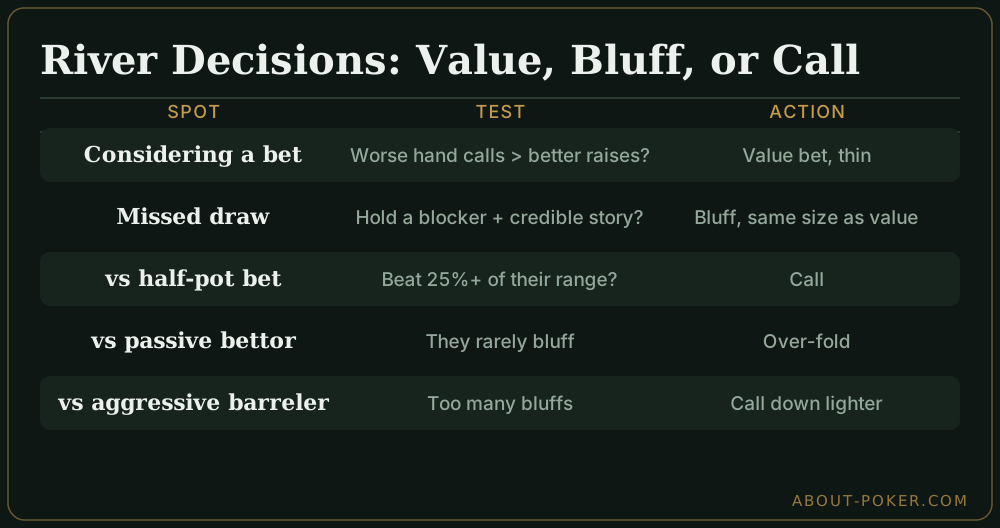
When you face a river bet, your job is to call often enough that you cannot be bluffed for free, while folding your worst hands. Your pot odds set the price: against a half-pot bet you need to win about 25% of the time; against a pot-sized bet, about 33%. Compare that to how often you beat the bettor’s value-and-bluff range and to the specific opponent. Against a passive player who rarely bluffs the river, over-fold — their bets are value. Against an aggressive barreler, call more, because they show up with too many bluffs. Blockers matter here too: hold a card that blocks their value hands and you can call lighter.
Common river mistakes
The biggest is checking back too many thin value hands out of fear of a raise — you win the pot but leave a bet’s worth of value uncollected across thousands of rivers. A close second is bluffing without blockers or a credible story, firing into a range that has to call. A third is sizing bluffs and value differently, handing observant opponents a free read. A fourth is calling down too light against passive players who only value bet, or folding too much against aggressive players who over-bluff. A fifth is ignoring the specific opponent entirely and defaulting to a generic frequency. For a deeper treatment of last-street decisions, see our full guide to cash game river play.
River checklist
Ask whether a worse hand calls more than a better hand raises — if so, value bet, and bet thinner than feels comfortable. Size your bluffs the same as your value bets so you cannot be read. Choose bluffs that block the opponent’s calls and unblock their folds. When facing a bet, price the call with pot odds and compare it to the opponent’s tendency: over-fold to passive players, call down aggressive ones. Most of all, remember the river is where the biggest pots are decided — the discipline to value bet thin and to fold your bluff-catchers against non-bluffers is what turns break-even players into winners.
Frequently asked
How do you decide whether to value bet the river?
Bet for value when a worse hand can call more often than a better hand raises. If you think you beat at least half of the hands that would call your bet, it is a value bet. Thin value betting the river is one of the biggest sources of edge in cash games.
How do pot odds work when facing a river bet?
Your pot odds are the price you are getting to call: bet divided by (pot + bet + call). Against a half-pot river bet you need to be right about 25% of the time to break even; against a pot-sized bet you need about 33%. Compare that to how often you beat the bettor's range.
Should your river bluffs and value bets be the same size?
Yes, as a default. Sizing bluffs and value bets identically makes you unreadable, so opponents cannot exploit a 'big means value, small means bluff' pattern. Pick a size based on your value hands and use it for your bluffs too.