Value Betting Thin in Cash
Thin value betting in cash games means betting hands that only beat a narrow slice of calls. Learn the sizing, targets, and a worked river example.
On this page · 7 sections
Most players leave money on the table not by bluffing too little but by checking hands that would have been called by worse. Thin value betting is the discipline of betting those marginal made hands anyway — and it is one of the biggest separators between breakeven and winning cash players.
What “thin” actually means
A value bet is thin when your hand beats only a small slice of the range that will call. You are not holding the nuts. You might have top pair with a weak kicker, or even second pair, on a river where a lot of missed draws and worse pairs remain in your opponent’s hand. The bet is correct if — and only if — the hands that call you are worse than yours more than half the time.
That “more than half” line is the whole game. If you bet and get called by a range that is 60% worse hands and 40% better, you win money on the bet. If it flips to 40% worse and 60% better, you are turning a showdown-value hand into a losing bet and you should check instead. Thin value lives right around that break point, which is why it feels uncomfortable — you will get shown a better hand often. That is fine. You are being paid by the worse hands the rest of the time.
The break-even math
Here is the core calculation. Suppose the pot is 100 and you bet 40 on the river. For a thin value bet to profit, you only need your hand to be best often enough that the times you get called and win outweigh the times you get called and lose (plus the times villain raises).
If villain calls 40 into a 100 pot, you risk 40 to win 40 from a worse hand. That is even money on the called portion, so you need to be ahead more than 50% of the time you get called — not 50% of villain’s whole range, just the calling portion. This is why sizing down helps: a smaller bet keeps more weak hands in the calling range, dragging that “ahead when called” number above 50%.
A worked river example
You raise on the button with A♦T♦, the big blind calls. Flop is T♠7♣4♦ — you have top pair, top-ish kicker. You bet one-third, villain calls. Turn is the 2♥, you bet again, villain calls. River is the 9♠.
The board reads T-7-4-2-9. Villain’s calling range is full of second pairs (77 is a set, but also hands like T9, 8x with a gutshot that got there, weaker tens like KT, QT, JT, and missed draws). Against this range your A♦T♦ still beats KT, QT, JT, T8, and all the busted straight draws that turned into bluff-catchers. It loses to two pair, sets, and the rivered T9.
Count it out roughly: the worse tens plus busted draws that call outnumber the two-pair-plus combos. You are ahead of the calling range clearly more than half the time. Bet small — about 30% of the pot. That size keeps KT and QT in, hands that would fold to a big bet. This is a textbook thin value spot: you are not thrilled to bet, but checking would forfeit real money that KT and QT are willing to hand you. If you want to sharpen how you approach these last-street decisions, our guide to cash game river play walks through the full decision tree.
Sizing thin value bets
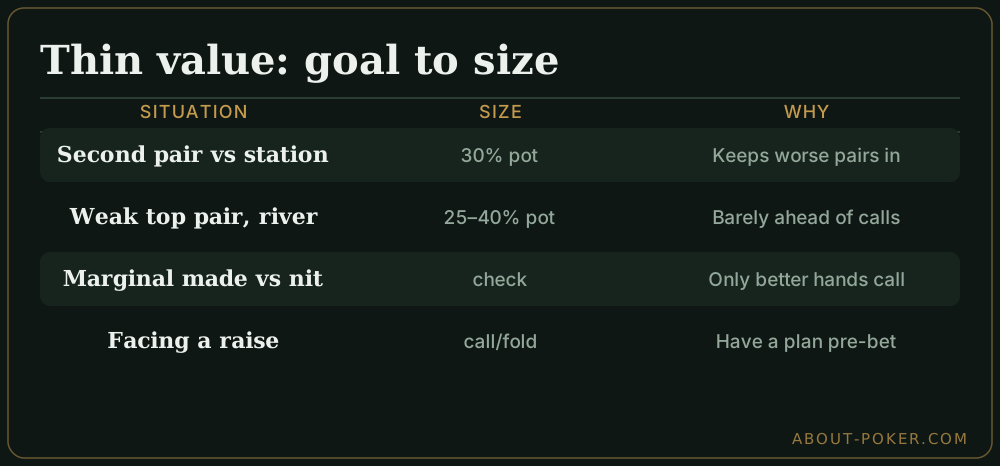
Thin value wants a smaller size than polarized value. Roughly 25–45% of the pot is the standard band. The logic is simple: you are trying to get called by hands that are almost as good as yours, and those hands fold to big bets. A 30% stab gets crying calls from second pair; a pot-sized bet folds everything you beat and only gets called by hands that crush you.
This runs opposite to how you size your bluffs and nutted hands, which is why studying bet sizing in cash games as a full system matters — the correct size is always an answer to “what do I want this bet to do?” Thin value’s answer is: “get the second-best hand to pay a price it is comfortable paying.”
Who to target
Not every opponent is a thin-value target. Segment your table:
- Calling stations are the dream. They call rivers with any pair and even ace-high. Against them, bet thinner and slightly larger — they will pay. See playing against calling stations for the full adjustment.
- Nits and tight regs fold their worse hands to river bets, so your thin value gets called mostly by better. Against them, check more of your marginal made hands and only bet clear value.
- Aggressive players may raise your thin bets as a bluff — which is fine, because now you can call and beat their bluffs, but it means you should have a plan for the raise before you bet.
Common mistakes
The biggest error is checking too many showdown-value hands out of fear. If you find yourself thinking “I’ll just check and see a cheap showdown” on rivers where a worse hand would have called, you are leaking. The second error is sizing too big — a thin value bet is not a normal value bet, and pot-sizing it turns a profitable bet into a fold-out-the-worse-hands mistake. The third is ignoring the opponent: the exact same hand is a clear bet against a station and a clear check against a nit.
Quick checklist before you fire
- Does more than half of the hands that call me lose to my hand? If no, check.
- Is my size small enough (roughly a third pot) to keep weak hands in?
- Have I accounted for the opponent — station, nit, or aggressor?
- Do I have a plan if I get raised?
Get those four right and you will start collecting the small pots that quietly build a winning cash game win-rate.
Frequently asked
What is a thin value bet?
A thin value bet is a bet made with a hand that beats only a small portion of the hands that will call it. You are not betting a monster — you are betting something like second pair or a weak top pair that still gets called by slightly worse. It is 'thin' because your edge over the calling range is small.
How do I know if a value bet is too thin?
Ask whether more than half of the hands that call you are worse than yours. If yes, the bet prints money. If you only beat a handful of the calls and lose to most, the bet is too thin and you should check. Against calling stations the threshold shifts in your favor; against nits it tightens.
What size should a thin value bet be?
Smaller than a polarized value bet. Roughly 25–45% of the pot is standard for thin value on the river, because a small size keeps weaker hands in and gives your opponent a price they feel comfortable paying with the second-best hand.
Should I thin value bet against a calling station?
Yes — this is exactly the player you want to target. Calling stations widen their calling range so more worse hands pay you off. Bet thinner and slightly larger against them, and lean toward value over bluffs.