Stealing Blinds in Cash
Late-position steals are free money when the blinds fold too much. Learn correct stealing ranges, sizing, break-even math, and how to adjust to sticky defenders.
On this page · 6 sections
Stealing the blinds is one of the most reliable sources of profit in cash games, and it’s often underused. Every hand you fold from the button that could have been a profitable open is money you gave to the aggressive players. The idea is straightforward: from late position, when the players behind you fold too often, you can raise with a wide range and collect the blinds uncontested. The blinds are dead money sitting in the middle, and a steal that works even a bit more than half the time can print — even when your actual hand is garbage.
Why steals are profitable
When you open from the button and both blinds fold, you win the small blind plus the big blind without seeing a flop. Because that money was forced into the pot, it’s essentially free. The looser the blinds fold, the wider you can open, since your hand’s strength barely matters when everyone folds preflop. This is the exact pressure that blind defense in cash games exists to counter — the two topics are two sides of the same coin.
The best stealing positions are the button and cutoff, because fewer players act behind you. The button is the premier steal seat, and it ties directly into the broader edge of playing the button in cash games.
The break-even math
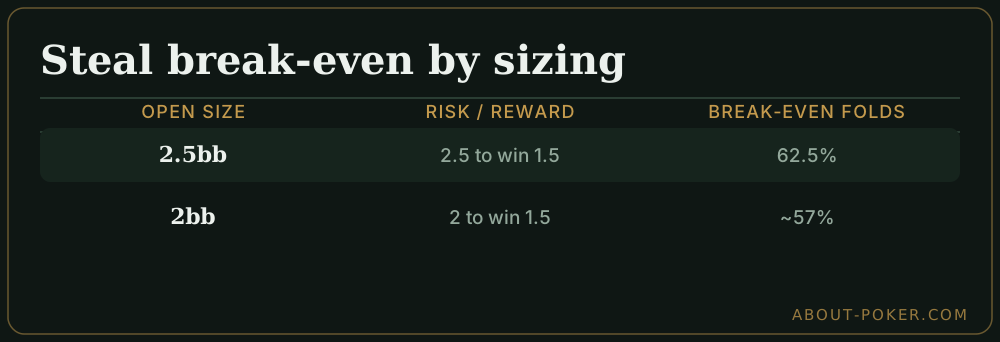
Say you open to 2.5bb to steal. You’re risking 2.5bb to win the 1.5bb already in the pot (the two blinds). Your break-even fold percentage is risk ÷ (risk + reward) = 2.5 ÷ (2.5 + 1.5) = 2.5 ÷ 4 = 62.5%. So if the blinds fold more than about 62.5% of the time, your steal shows an immediate profit before you even consider the equity your hand has when called.
Now use a smaller size — open to 2bb. Break-even fold becomes 2 ÷ (2 + 1.5) = 2 ÷ 3.5 ≈ 57%. A smaller open lowers the fold percentage you need, which is why compact steal sizing is popular. Note that these numbers ignore any equity you retain when called, so your true threshold is even more forgiving.
Correct stealing ranges
From the button against typical blinds, opening 40% to 50% of hands is standard, and against very tight, foldy blinds you can push toward “any two cards.” From the cutoff, tighten somewhat because the button still has position on you. The full positional opening framework is in cash game preflop strategy.
Your steal range should still be weighted toward hands with some playability — suited connectors, suited aces, and broadways — so that when you do get called, you can win pots postflop. But the core justification is fold equity: you’re raising because the blinds fold, not because your hand is strong.
A worked example
You’re on the button with 9-6 offsuit, a hand you’d never play from early position. It folds to you. The small blind is a nit who folds everything, and the big blind is a tight-passive player who rarely defends. This is a textbook steal.
You open to 2bb. Both blinds fold roughly 70% of the time in this lineup. Your break-even fold at this sizing is about 57%, and they fold 70%, so the steal is immediately profitable. Even on the times you get called, 9-6o still flops pairs, straights, and draws often enough to occasionally win postflop. Over hundreds of these spots, raising 9-6o here makes real money — while folding it, as many players do out of habit, simply forfeits the dead blinds to no one.
Adjust to the defenders
Stealing is exploitative, so read the blinds. Against sticky big blinds who defend wide and call down light, tighten your steals and lean on hands that make strong pairs and draws — you can’t rely on fold equity against someone who never folds. Against players who 3-bet aggressively, tighten further or be ready to 4-bet or fold cleanly. And against tables where the blinds are nits, open relentlessly.
The mistake to avoid is stealing on autopilot into opponents who punish it. A steal is only free money when the money is actually free.
Blind-stealing checklist
- Steal widest from the button, tighter from the cutoff.
- Use a small size (2 to 2.5bb) to lower your break-even fold percentage.
- Know the math: 2.5bb open needs ~62.5% folds; 2bb needs ~57%.
- Open near “any two” against nitty, over-folding blinds.
- Tighten against sticky defenders and heavy 3-bettors.
- Weight your range toward playable hands for the times you’re called.
Stop folding the button. When the blinds are foldy, every steal you skip is profit handed to someone else.
Frequently asked
What is blind stealing in poker?
Blind stealing is raising from late position — usually the button, cutoff, or small blind — with a wide range, hoping the blinds fold so you win the pot uncontested. Because the blinds are dead money already in the pot, a steal that succeeds often is profitable even with weak hands.
How wide should you steal from the button?
Very wide when the blinds fold too much — often 40% to 50% of hands or more. If both blinds fold frequently, you can profitably open almost any two cards from the button, tightening only against players who defend aggressively or 3-bet a lot.
What sizing should you use to steal blinds?
A small raise, typically 2 to 2.5 big blinds, is standard for a steal. A smaller size risks less to win the same blinds, improving your break-even fold percentage, while still applying enough pressure to fold out weak hands.