Tilting After a Bad Beat
A bad beat is variance; tilting is a leak. Learn why the pain fires, how tilt wrecks your win rate, and a step-by-step reset to stop bleeding chips.
On this page · 6 sections
You get it in as an 80% favorite, the money goes in clean, and the river betrays you. That sting is real. But here is the distinction that separates winning players from the rest: the bad beat itself cost you one pot, while tilting after it can cost you ten. The beat is variance. The tilt is a leak — and unlike variance, the leak is entirely within your control.
This guide is about the second part: what happens in your head after the beat, why it wrecks your win rate, and a concrete process to reset before it does real damage.
A bad beat is variance, not a verdict
First, get the accounting straight. If you got your money in ahead, you made money on that hand — full stop — regardless of the result. Poker pays you for correct decisions over a large sample, and results on any single hand are noise. A player who stacks off as a big favorite and loses did their job perfectly.
The classic gut-punch: your set of eights runs into a flush that came in on a runner-runner backdoor draw. On the flop, a set is roughly a 90% favorite over a bare flush draw that needs two perfect cards. You did everything right. The 10% happened. This is exactly the kind of outcome that our variance guide teaches you to expect, not to fear. If you never suffered these, it would mean the players chasing against your favorites were folding correctly — and you would make far less money.
Why tilt actually destroys your win rate
The danger is not the emotion; it is the play the emotion produces. Tilt turns a disciplined player into a loose, aggressive, revenge-seeking one. After a bad beat, tilted players typically:
- Play too many hands, trying to win the money back immediately.
- Bluff into stations who obviously never fold, out of spite.
- Call down light to “catch the guy who beat me.”
- Jump stakes to recover faster, compounding the risk.
Each of these bleeds chips. The cruel math is that your edge in a good game might be a few big blinds per 100 hands, but a single tilted session can lose you 5-10 buy-ins. Weeks of patient, correct grinding get erased in an hour because one river card broke your composure. That is why tilt control is one of the highest-ROI skills in the game, and it features prominently in our cash game tips.
A worked example: the $600 bad beat that cost $2,000
You are up $400 at 2/5 playing your A-game. You get it in on the flop with a set against a flush draw for a $600 pot and lose to the runner-runner. Annoying, but you are still down only $200 on the session and you played perfectly.
Now watch tilt work. Furious, you open the next four hands you would normally fold. You three-bet bluff a calling station and get looked up. You call down two streets with ace-high “on principle” and lose. You buy in for a fifth stack and go for a hero bluff on the river. Ninety minutes later you are stuck $2,000. The bad beat cost you one buy-in of equity. The tilt cost you four. That gap is the entire lesson.
A step-by-step reset after a bad beat
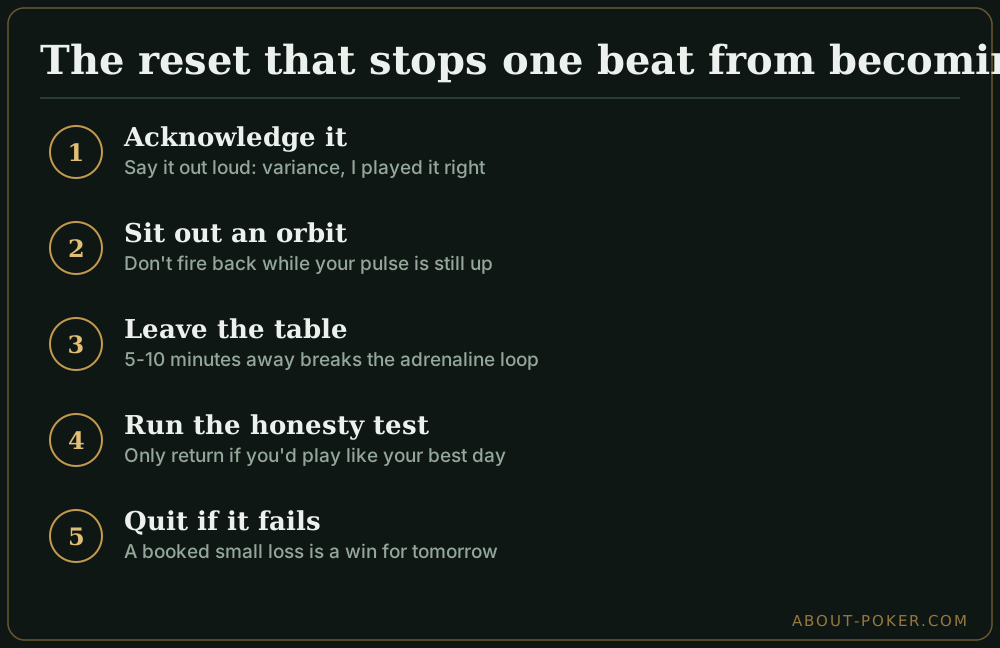
When the beat lands, run this sequence before you play another hand:
- Acknowledge it out loud, briefly. “That was variance, I played it right.” Naming it defuses the story your brain wants to tell about being cheated by the universe.
- Sit out one orbit. Do not fire back into the next pot while your pulse is up. The chips will still be there.
- Stand up and physically leave. Five to ten minutes away from the table breaks the adrenaline loop far better than willpower does.
- Run the honesty test. Ask: would I play the next hand exactly the way I would on my best day? If yes, sit back down. If no, keep waiting.
- If the test keeps failing, quit. A losing session preserved is a winning session tomorrow. Booking a smaller loss is a skilled play, not a surrender.
Setting a stop-loss in advance makes step five automatic, which is far more reliable than deciding in the heat of the moment.
Building longer-term immunity
The best players are not emotionless; they have simply reframed variance so deeply that beats slide off. A few habits build that armor:
- Track results over thousands of hands, not sessions, so single beats shrink into statistical dust. Our downswing guide shows how normal these stretches are.
- Focus your post-game review on decisions, not outcomes. Praise a correct all-in that lost; scold a lucky river that you misplayed into.
- Keep your bankroll deep enough that no single beat threatens your ability to keep playing.
- Rest, eat, and don’t grind while already frustrated — tilt is far easier to trigger when you are depleted.
The one-line takeaway
You cannot control the river card. You can control the ten hands after it. Master that gap and bad beats become what they truly are: expensive-feeling proof that you are getting your money in good.
Frequently asked
Why do bad beats make me tilt so hard?
A bad beat feels unfair because you did everything right and still lost, which triggers a stress and anger response. Your brain treats the lost pot as a threat, and that emotional state suppresses the careful, patient decision-making that makes you a winning player.
Is a bad beat actually bad luck or did I misplay?
A true bad beat is when you got your chips in as a clear favorite and lost to a card that completes an underdog's hand — for example your set losing to a runner-runner flush. If you were behind when the money went in, it was not a bad beat, it was just a losing hand, which is worth reviewing separately.
What is the fastest way to stop tilting mid-session?
Take a physical break. Stand up, leave the table for five to ten minutes, breathe, and do not sit back down until you can honestly say you would play the next hand the same way you would on your best day. If you can't reach that state, quit for the day.