Top Postflop Leaks
The postflop leaks that quietly cost stacks — auto c-betting, missing value, paying off big rivers, and ignoring board texture — with a clear fix for each.
On this page · 6 sections
Preflop discipline gets you into good pots; postflop skill is where the money is actually won and lost. These are the leaks that separate break-even players from real winners — and unlike advanced theory, each one is fixable with a clear rule.
Auto continuation-betting every flop
The most widespread postflop leak is c-betting the flop 100% of the time as the preflop raiser. It worked in the old days when opponents over-folded, but modern players (and even attentive recreational ones) punish it by check-raising and floating. The problem is that some flops simply favor the caller’s range, not yours.
The fix is to bet the flops that hit your range and check the ones that don’t. As the raiser on a board like A♦K♠7♥ — an “ace-high, dry” board — you can bet almost your whole range because you have far more strong aces and kings than the caller. But on a low, connected board like 8♥7♥5♣, which smashes a big-blind defender’s calling range, a reflexive c-bet is often a losing play. Check more, and pick your bluffs carefully. The full framework is in the cash game c-bet strategy guide.
Not betting enough for value
The mirror-image leak is checking hands that should bet, and betting too small when you do. Beginners are so afraid of “only getting called by better” that they check strong-but-not-nutted hands and let free cards roll off. Against the many calling stations at low stakes, this leaves enormous value on the table.
Consider the river. You hold K♠Q♣ on a final board of Q♦9♠4♥2♣8♦. The pot is $100 and your opponent has been passively calling. Many players check here, “just in case.” But a station will call a value bet with any pair, ace-high, or a busted draw far more often than they’ll raise. Betting $60–75 for thin value prints money over time. Learning to fire these bets is the subject of value betting thin in cash.
Paying off big river bets
On the flip side, the biggest single-hand losses come from calling large river bets with hands that can only beat a bluff. When a passive opponent suddenly bets big on the river, especially on a board where draws completed or the board paired, your one pair is usually behind.
Before you call, do the math on their value hands. Ask: “What hands is this player betting big for value here, and does my hand beat enough of them?” If a tight player check-raises the river on Q♠J♠8♠4♦2♠ — a board with a completed flush — your top pair beats essentially none of their value range. The pot odds might look tempting, but you have to actually be winning often enough to call. This ties directly to overvaluing top pair.
Ignoring board texture
Many postflop leaks trace back to one root: not reading the board. A “wet” board (coordinated, with straight and flush possibilities) demands larger bets to charge draws and more caution with one-pair hands. A “dry” board (disconnected, rainbow) lets you bet smaller, bluff more, and value-own thinly.
Practically, on a wet board like J♥T♥9♠ you should size up — 70% pot or more — when you have a big hand, both to build the pot and to make draws pay. On a dry board like K♦7♣2♠, a small 33% bet accomplishes plenty because there’s little to protect against. Matching your sizing to the texture is one of the fastest ways to level up.
Bloating pots out of position
Playing big pots from out of position with medium-strength hands is a subtle but costly leak. Without the informational edge of acting last, you’re guessing on every street, and your opponent controls the pot size. The result: you either fold the best hand or pay off the second-best one.
The fix is pot control. Out of position with a marginal made hand, check more often and keep the pot small rather than bet-bet-betting into a spot where you have no idea where you stand. Save the big pots for when you have position or a genuinely strong hand.
The postflop leak checklist
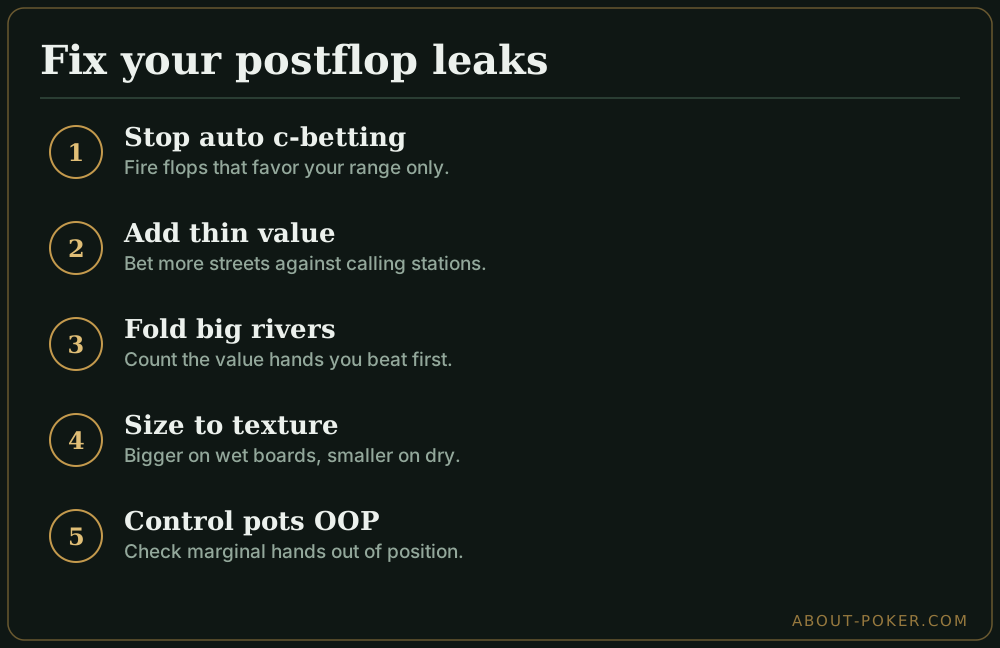
- Bet the flops that favor your range; check the ones that favor theirs.
- Value bet thinly, especially on the river against calling stations.
- Before calling a big river bet, count the value hands you actually beat.
- Size to the board: bigger on wet textures, smaller on dry ones.
- Control the pot out of position with marginal hands.
Postflop poker is a series of small, repeatable decisions. Fix these five leaks and your win rate climbs without learning a single new “move.”
Frequently asked
What is the most common postflop leak?
Auto continuation-betting every flop as the preflop raiser. On boards that favor the caller's range, a reflexive c-bet loses money. Good players check back or check-call on the flops that don't help them and bet the ones that do.
How do I stop paying off big river bets?
Before calling a large river bet, ask what value hands your opponent is betting and whether you beat enough of them. If a passive player fires big on a board where only strong hands make sense, one pair is usually a fold, not a hero call.
Why am I not winning enough with my good hands?
You're probably under-betting for value — checking hands that should bet, or betting too small on the river. Thin value betting, especially on the river against calling stations, is where a large chunk of a winning player's profit comes from.