3-Betting in Cash Games
How to build a profitable 3-betting strategy in cash games: sizing, value and bluff ranges, position, and a worked example versus a wide button open.
On this page · 7 sections
3-betting is the single biggest lever recreational and mid-stakes players leave unpulled. A well-built re-raising strategy wins pots without a showdown, isolates weak openers, and lets you play a bigger pot when you hold the best hand. This guide covers when to 3-bet, how much, and which hands belong in your range.
What a 3-bet actually accomplishes
A 3-bet is the third raise in a betting sequence: the blinds are the first “bet,” an open-raise is the second, and your re-raise is the third. It does three jobs at once. First, it builds the pot when you are ahead, which is why premium value hands re-raise. Second, it denies equity by folding out hands that would otherwise see a cheap flop. Third, it seizes initiative — the 3-bettor is usually the preflop aggressor and gets to fire the first barrel postflop.
Because a 3-bet risks more chips than a flat call, it needs a clear reason. If you cannot say whether you are 3-betting for value (you want worse hands to call or go all-in) or as a bluff (you want better hands to fold), you probably should not be doing it. That distinction shapes your whole preflop plan, which ties directly into your broader cash game preflop strategy.
Building your value and bluff ranges
Think of your 3-betting range as two buckets. The value bucket is hands happy to get all-in preflop or to play a large pot: QQ+, AK, and often JJ and AQs depending on the opener. The bluff bucket is hands with good removal and postflop potential that would be marginal as flat calls — suited aces like A5s-A2s (they block AA and AK), and suited connectors and broadways such as KJs or T9s.
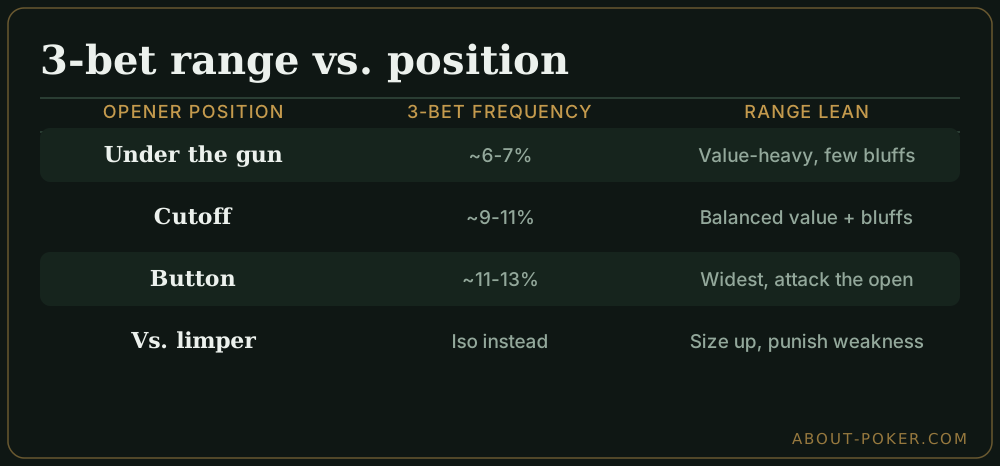
Mixing bluffs with value stops observant opponents from folding every time you re-raise. A reasonable full-ring range versus a 2.5bb open is around 8-10% of hands. In 6-max, where opens are wider, you can push toward 11-13%. Against an early-position open, drop the bluffs almost entirely and re-raise a tight, value-heavy range.
Sizing that charges the caller
Position drives sizing. In position, 3x the open is standard: if the button opens to 2.5bb, you make it about 7.5bb. Out of position you want to bet more — roughly 3.5x to 4x — because you are at a positional disadvantage postflop and want to reduce how many players see the flop. Add about one big blind for every limper already in the pot, since dead money makes callers stickier.
Avoid the common leak of 3-betting tiny (say, 2x the open) out of position. Small sizes invite calls, you get flatted in position, and you play a bloated pot from the worst seat. If you want to know exactly how sizing changes across streets, see the deeper breakdown in bet sizing in cash games.
Position changes everything
The later you are, the more you can 3-bet. From the cutoff or button against a middle-position open, you have position postflop and can profitably re-raise a wider blend. From the blinds you are always out of position, so your 3-bet range gets more polarized: strong value plus true bluffs, with fewer thin “merged” hands like KQo that play badly out of position in a re-raised pot.
The opener’s position matters just as much. A button open covers a huge range, so you attack it aggressively. An under-the-gun open in full ring is tight, so you tighten your response and lean on value.
Worked example: 3-betting a wide button
You are in the big blind with 5h5c in a 100bb 6-max game. The button, a loose-aggressive regular, opens to 2.5bb and everyone folds to you. The button’s opening range here is wide — easily 45% of hands — so a small pair has real value.
You make it 11bb (about 4.4x, sized up because you are out of position). If the button folds their weakest 60%, you win 4bb uncontested a large share of the time. When called, you flop a set roughly 1 in 8.5 times (about 12%) and can stack a strong range. This is a hand that plays better as an occasional 3-bet-or-fold than as a call, precisely because calling out of position with 55 leaves you guessing on most flops. For the flop plans that follow, study playing 3-bet pots in cash games.
Common mistakes to avoid
Do not 3-bet only your monsters — balanced opponents will fold everything and you lose all the fold-equity value. Do not use the same tiny size in and out of position. Do not 3-bet bluff hands that flop poorly (offsuit gappers) when suited equivalents are available. And do not keep firing bluffs against a station who never folds preflop; against that player, tighten to pure value and let them pay you off.
Quick pre-flop 3-bet checklist
- Name the reason: value or bluff. If neither, flat or fold.
- Size 3x in position, 3.5-4x out of position, plus 1bb per limper.
- Weight toward value versus early opens; add bluffs versus late opens.
- Prefer suited-ace and suited-connector bluffs for blockers and playability.
- Against a caller who never folds, cut the bluffs and 3-bet value only.
Frequently asked
What is a good 3-bet size in cash games?
In position, roughly 3x the open works well; out of position, use around 3.5x to 4x to charge callers and reduce the number of players who continue. Add roughly one big blind for each limper already in the pot.
How wide should my 3-bet range be?
Against a standard 2.5bb open you want a mix that lands around 8-11% of hands, weighted toward value with a smaller bluff portion. Widen versus loose late-position opens and tighten versus early-position opens.
Should I 3-bet or flat call in cash games?
Flat when you have position, a stack that plays sets and suited connectors profitably, and no strong reason to fold out equity. 3-bet when you can deny equity, isolate a weak opener, or push a polarized value/bluff strategy.