Playing Against Calling Stations
Calling stations never fold, so stop bluffing them. Learn to value bet relentlessly, size up your good hands, and exploit the one player type that pays you off.
On this page · 7 sections
If you only learn one thing about calling stations, make it this: they do not fold, so you do not bluff. A calling station is the recreational player who calls a bet on the flop, calls again on the turn, and calls the river with second pair “to keep you honest.” That habit costs them money — but only if you exploit it correctly. Firing bluffs at a station is lighting chips on fire; the winning strategy is patient, relentless value betting with sizing tuned to their inability to let go.
Recognize the station
A calling station shows a specific pattern: they enter a lot of pots, rarely raise, and rarely fold once they’ve invested. They call with bottom pair, gutshots, and ace-high, then table it at showdown. They almost never bluff-raise, so when a station finally does raise you, believe them — that passive player type has a hand. Stations sit within the broader group covered in exploiting recreational players, but their calling reflex is what defines them.
Once you’ve labeled a player as a station, your strategy simplifies dramatically. You’re no longer trying to out-think them; you’re trying to build big pots when you have the best hand and stay out of their way when you don’t.
Stop bluffing, full stop
Bluffing works by making better hands fold. A calling station doesn’t fold better hands — or worse ones — so the fundamental mechanism is broken. Every barrel you fire as a bluff is negative EV against this player. Multi-street bluffs, in particular, are a disaster: you’re stacking off with nothing against someone whose whole identity is “I call.”
The discipline here is real. When you miss the flop with a hand you’d normally continuation-bet, just check and give up against a station. Your bluffs will find better homes against opponents who actually fold.
Value bet relentlessly and bigger
The corollary to “don’t bluff” is “value bet everything.” Hands you’d check for pot control against a thinking reg — second pair, weak top pair, thin overpairs — become clear bets against a station, because they’ll call with worse. And crucially, you should size up. A station calls a big bet nearly as often as a small one, so charge them more for the privilege.
Concretely, top pair that merits a half-pot bet against a competent player is often worth three-quarters pot or more against a station. The broader mechanics of matching size to opponent live in bet sizing in cash games, and the art of squeezing profit from marginal holdings is covered in value betting thin in cash.
A worked example
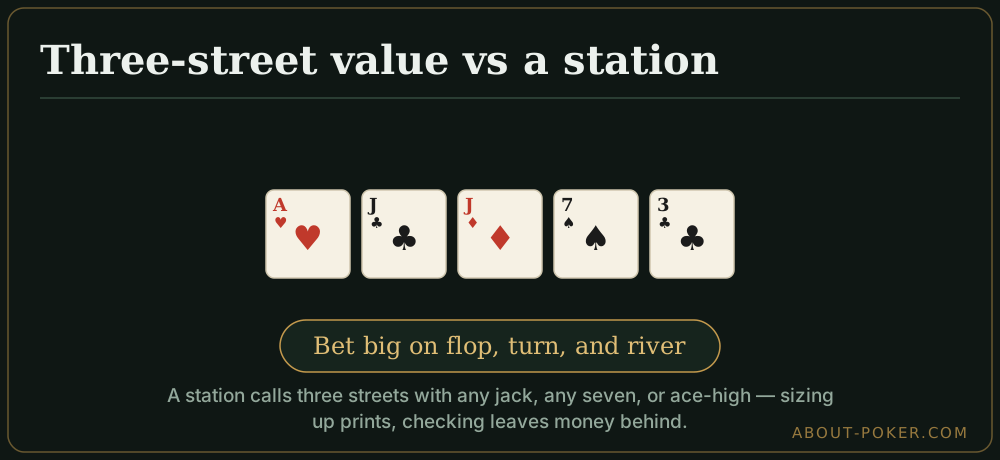
You raise AJ offsuit and a known calling station calls from the big blind. The flop comes J-7-3 rainbow. You have top pair, decent kicker. Against a reg you might bet small to protect and control the pot. Against a station, bet big — say three-quarters pot — because they’ll call with any jack, any seven, gutshots, and even ace-high “to see one more card.”
The turn is an offsuit 4. Bet big again. The river is an offsuit 2. Bet a third time, sizing to just under pot. A station will frequently call all three streets with J-9, J-8, or even 7-x. You’ve extracted a huge pot with one pair by betting into a player who cannot fold, whereas a smaller, “safe” line would have left money on the table.
Handle the times they wake up
Because stations are passive, their aggression is meaningful. If a calling station check-raises or leads big into you, respect it. That second pair you were happily value betting is now likely behind — a station only raises when they’ve hit two pair, a set, or better. Fold your marginal hands to their aggression rather than paying off the rare monster.
This asymmetry is what makes stations so profitable: they tell you exactly when you’re beat, because it’s the only time they take the lead.
Protect your equity, skip the fancy stuff
Since a station will call with a lot of draws, deny them cheap cards. On wet boards, bet enough that their flush and straight draws aren’t getting the right price. You don’t need to balance — they’re not paying attention to your ranges — so just make the mathematically correct value and protection bets and let their calling reflex do the rest.
Calling-station cheat sheet
- Bluffs are negative EV — check and give up with air.
- Value bet thinly and often; they call with worse.
- Size up: a station calls big bets nearly as much as small ones.
- Believe their raises — passive players don’t bluff-raise.
- Bet enough to deny draws a good price on wet boards.
- Skip balance entirely; just make the exploitative play.
Against calling stations, the money is not clever — it’s patient. Wait for a hand, bet it big, and let them pay you.
Frequently asked
How do you beat a calling station?
Stop bluffing and value bet relentlessly. A calling station's defining leak is that they call too much and fold too little, so your bluffs lose money while your value bets get paid off far more than usual. Bet bigger with your strong hands and check back your air.
Should you bluff a calling station?
Almost never. By definition a calling station does not fold, so a bluff simply burns chips against the one player type that will look you up. Reserve your betting for hands that can win at showdown and give up with air instead of firing multiple barrels.
What sizing should you use against a calling station?
Larger than standard with your value hands. Since a station calls regardless, a bigger bet extracts more from the same call. Top pair that you'd bet half pot against a reg can often go three-quarters to full pot against a station.